

Transforming an interior space with lush greenery doesn’t require years of patience. Fast-growing indoor trees offer an immediate solution for those seeking to create a verdant atmosphere without the lengthy wait associated with traditional houseplants. These botanical wonders combine aesthetic appeal with practicality, delivering substantial growth within months rather than years. Whether you’re filling an empty corner in a newly purchased home or revitalising a tired living area, selecting the right species can dramatically alter your environment whilst providing the air-purifying benefits that make indoor plants so valuable.
Why choose a fast-growing indoor tree
Instant visual impact
Fast-growing indoor trees deliver immediate transformation to any space. Unlike slower-growing varieties that may take several years to reach an impressive height, these specimens can add substantial vertical interest within a single growing season. The rapid development means you’ll witness noticeable changes monthly, creating a dynamic living feature that evolves alongside your interior design choices.
Cost-effective investment
Purchasing younger, smaller specimens of fast-growing varieties proves remarkably economical. Rather than investing in mature trees at premium prices, you can acquire juvenile plants and watch them flourish to full size within months. This approach offers:
- Lower initial purchase costs
- Easier transportation and positioning
- Better adaptation to your home’s specific conditions
- Greater satisfaction from nurturing growth
Environmental benefits
The rapid foliage development of fast-growing trees means they quickly establish substantial leaf surface area. This translates to enhanced air purification, increased oxygen production, and improved humidity regulation within your home. Larger leaf masses filter airborne toxins more efficiently, creating a healthier indoor environment in considerably less time than slower-growing alternatives.
Understanding these advantages sets the foundation for selecting the most suitable species for your particular space and requirements.
The best species for an immediate green effect
Ficus varieties
The Ficus benjamina (weeping fig) stands as one of the most popular fast-growing indoor trees. With proper care, it can add 30-60 centimetres annually, developing a graceful canopy of glossy leaves. The Ficus lyrata (fiddle-leaf fig) offers dramatic, violin-shaped foliage and similarly impressive growth rates, making it a favourite amongst interior designers.
Dracaena species
Dracaena marginata and Dracaena fragrans represent excellent choices for those seeking vertical growth with minimal fuss. These architectural plants develop distinctive trunk formations topped with fountain-like foliage clusters. Their tolerance for lower light conditions makes them particularly versatile for various room orientations.
Bamboo palms
Chamaedorea seifrizii brings tropical elegance whilst growing at an impressive pace. This palm variety thrives in indirect light and maintains consistent growth throughout the year, reaching heights of 2-3 metres indoors. Its feathery fronds create instant jungle atmosphere whilst effectively filtering indoor air pollutants.
Rubber plants
Ficus elastica produces large, glossy leaves on sturdy stems that can gain substantial height within months. Available in traditional green or striking burgundy varieties, rubber plants adapt well to indoor conditions and require relatively straightforward maintenance.
Comparative growth rates
| Species | Annual growth | Mature height indoors | Light requirements |
|---|---|---|---|
| Ficus benjamina | 30-60 cm | 2-3 metres | Bright, indirect |
| Dracaena marginata | 25-40 cm | 2-2.5 metres | Low to moderate |
| Bamboo palm | 30-50 cm | 2-3 metres | Indirect light |
| Rubber plant | 40-60 cm | 2-3 metres | Bright, indirect |
Additional rapid growers
The umbrella tree (Schefflera actinophylla) produces distinctive hand-shaped leaf clusters and grows vigorously indoors. Yucca elephantipes offers drought tolerance alongside impressive vertical development, whilst the parlour palm (Chamaedorea elegans) provides compact growth suitable for smaller spaces. The dragon tree (Dracaena draco) and money tree (Pachira aquatica) round out this selection with unique architectural forms and reliable growth patterns.
Having identified suitable species, success depends entirely upon providing appropriate growing conditions and maintenance.
How to care for your indoor trees
Light requirements
Most fast-growing indoor trees thrive in bright, indirect light. Position plants near windows with sheer curtains or several metres from unobstructed south-facing windows. Insufficient light slows growth dramatically, whilst direct sunlight can scorch leaves. Monitor your tree’s response and adjust positioning accordingly, watching for signs such as:
- Pale or yellowing leaves indicating excessive light
- Leggy growth suggesting inadequate illumination
- Leaf drop often caused by sudden light changes
Watering practices
Consistent moisture management proves crucial for maintaining rapid growth. Most species prefer soil that remains lightly moist but never waterlogged. Check the top 5 centimetres of soil regularly, watering thoroughly when this layer feels dry. Ensure containers have adequate drainage holes, and always empty saucers of excess water within 30 minutes of watering.
Feeding schedule
Fast growth demands regular nutrition. Apply a balanced liquid fertiliser every two weeks during the growing season (spring through early autumn), reducing to monthly applications during winter. Dilute fertiliser to half the recommended strength to avoid root burn whilst maintaining steady nutrient availability.
Temperature and humidity
Maintain temperatures between 18-24°C for optimal growth. Most tropical species appreciate humidity levels above 40%, achievable through regular misting, pebble trays filled with water, or room humidifiers. Avoid positioning trees near heating vents, air conditioning units, or draughty doorways where temperature fluctuations stress plants.
Pruning and maintenance
Regular pruning encourages bushier growth and maintains desired shapes. Remove dead or yellowing leaves promptly, and trim back leggy stems to promote branching. Wipe leaves monthly with a damp cloth to remove dust that blocks light absorption and reduces photosynthetic efficiency.
Even with excellent care, certain pitfalls can undermine your tree’s development and vitality.
Mistakes to avoid for optimal development
Overwatering complications
The single most common cause of indoor tree failure remains excessive watering. Saturated soil excludes oxygen from root zones, leading to root rot and subsequent decline. Symptoms include wilting despite moist soil, yellowing leaves, and a musty odour from the growing medium. Always verify soil moisture before watering, and adjust frequency seasonally as growth rates and evaporation change.
Inadequate container size
Fast-growing trees quickly become root-bound when confined to undersized containers. This restriction limits nutrient uptake and water retention, stunting growth despite otherwise ideal conditions. Repot when roots emerge from drainage holes or circle the soil surface, typically every 12-18 months for vigorous growers. Select containers only 5-7 centimetres larger in diameter than the previous pot to avoid overpotting issues.
Neglecting acclimatisation
Sudden environmental changes shock plants, causing leaf drop and growth cessation. When bringing trees home or moving them between rooms, allow gradual adjustment:
- Introduce new light conditions over 7-10 days
- Maintain consistent watering schedules during transitions
- Avoid repotting immediately after purchase
- Monitor closely for stress signals during the adjustment period
Ignoring pest infestations
Common indoor pests such as spider mites, scale insects, and mealybugs multiply rapidly on fast-growing trees with abundant fresh foliage. Inspect plants weekly, particularly leaf undersides and stem joints. Address infestations immediately with insecticidal soap or neem oil applications to prevent widespread damage that compromises growth and aesthetics.
Poor soil quality
Using inappropriate growing medium restricts root development and nutrient availability. Standard potting compost works for most species, but ensure it contains adequate drainage materials such as perlite or bark chips. Avoid garden soil, which compacts in containers and harbours pathogens unsuitable for indoor cultivation.
Beyond fundamental care, thoughtful placement and styling maximise the impact of your indoor trees within your living spaces.
Tips for harmoniously integrating indoor trees into your space
Strategic positioning
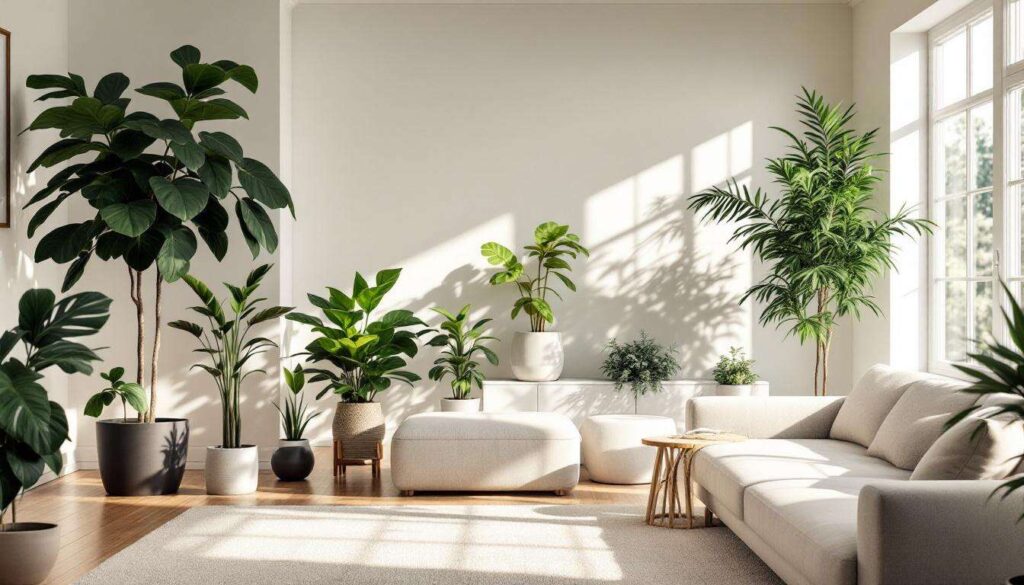
Consider both practical requirements and aesthetic impact when situating indoor trees. Empty corners benefit from tall, vertical specimens that draw the eye upward, whilst open-plan areas accommodate broader, bushier varieties. Ensure adequate clearance from foot traffic whilst maintaining accessibility for maintenance tasks. Position trees where their silhouettes create interesting shadows and where they frame views rather than obstruct them.
Container selection
Pot choice significantly influences overall presentation. Neutral-coloured containers in materials such as ceramic, terracotta, or woven baskets complement various interior styles without competing with the plant itself. Ensure containers feature drainage holes and consider using cachepots for added design flexibility. Scale matters: pots should be proportionate to tree size, typically one-third the height of the plant for visual balance.
Creating focal points
Use indoor trees to anchor seating arrangements or define functional zones within open spaces. A substantial tree beside a reading chair establishes an intimate nook, whilst specimens flanking a fireplace create symmetrical elegance. Layer plants at varying heights by combining floor-standing trees with smaller plants on stands or shelving for dimensional interest.
Complementary styling elements
Enhance your indoor trees with thoughtful accessories:
- Decorative mulches such as polished stones or bark chips
- Subtle uplighting to emphasise foliage and create evening ambiance
- Coordinating plant stands in materials matching existing furniture
- Grouped arrangements with complementary smaller plants
Seasonal adjustments
Rotate trees quarterly to ensure even growth on all sides, as plants naturally lean towards light sources. Adjust positioning seasonally to account for changing natural light angles, moving trees slightly closer to windows during darker months and providing additional distance during intense summer sun periods.
Fast-growing indoor trees offer an accessible solution for anyone seeking to introduce substantial greenery into their living spaces without prolonged waiting periods. By selecting appropriate species, providing consistent care, avoiding common pitfalls, and thoughtfully integrating these plants into your interior design, you’ll create vibrant, healthy focal points that enhance both the aesthetic appeal and environmental quality of your home. The satisfaction of witnessing rapid development adds an engaging, dynamic element to indoor gardening that rewards attention with visible results throughout the seasons.