


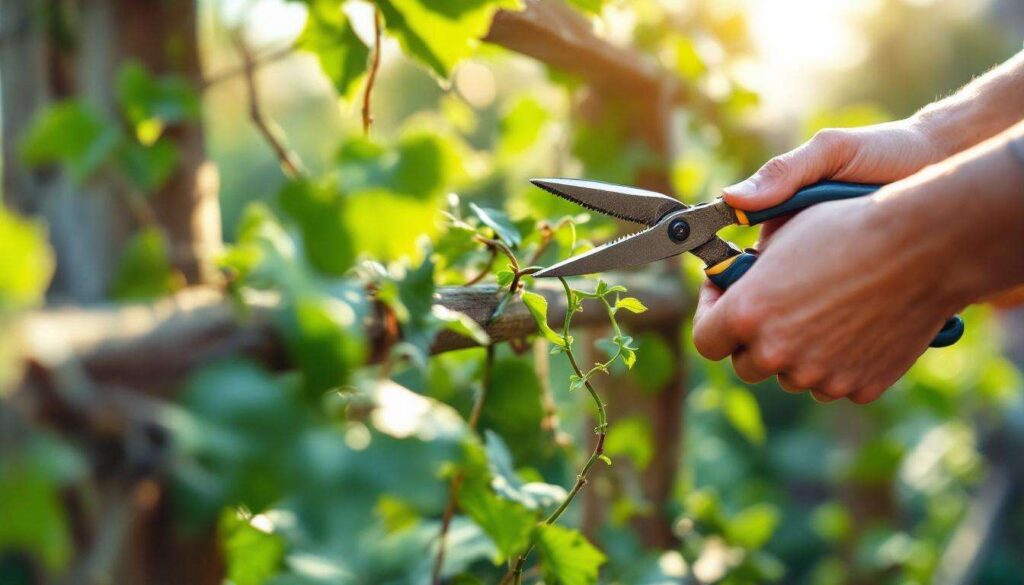
Winter gardening may not seem the most appealing prospect, but January presents a prime opportunity to tackle essential maintenance tasks that will pay dividends throughout the growing season. Pruning climbing plants during this dormant period encourages vigorous growth, promotes better flowering and helps maintain structural integrity. With the right approach and timing, four popular climbing species benefit enormously from careful attention during the coldest month.
Why prune in January ?
The advantages of dormant season pruning
January offers optimal conditions for pruning many climbing plants because they remain in their dormant phase. During this period, sap flow has slowed considerably, which means plants experience minimal stress when cuts are made. The absence of foliage also provides clear visibility of the plant’s structure, making it easier to identify dead, damaged or crossing stems that require removal.
Pruning during dormancy redirects the plant’s energy reserves towards developing strong new growth once spring arrives. This practice also reduces the risk of disease transmission, as many pathogens are less active in cold weather. Furthermore, wounds heal more efficiently when growth resumes in warmer months.
Weather considerations
Whilst January is ideal for pruning, certain weather conditions should be avoided:
- Never prune when temperatures drop below freezing, as frozen tissues are brittle and prone to damage
- Avoid wet or foggy days when fungal spores spread more easily
- Choose dry, frost-free days for the best results
- Morning sessions allow cuts to dry before evening temperatures fall
Understanding these fundamental principles sets the foundation for successful pruning across different climbing species.
The tools needed for pruning
Essential equipment
Having the correct tools makes pruning considerably easier and ensures clean cuts that heal quickly. Sharp, well-maintained equipment prevents crushing or tearing plant tissue, which could create entry points for disease.
| Tool | Purpose | Recommended for |
|---|---|---|
| Secateurs | Cutting stems up to 1.5cm diameter | Most routine pruning tasks |
| Loppers | Cutting thicker stems up to 4cm | Mature woody growth |
| Pruning saw | Removing very thick or awkward branches | Established climbing roses and wisteria |
| Garden gloves | Hand protection | All pruning activities, especially thorny plants |
Maintenance and hygiene
Before starting any pruning work, sterilise all cutting tools using a solution of diluted bleach or methylated spirits. This simple step prevents the spread of diseases between plants. After each use, clean blades thoroughly and apply a light coating of oil to prevent rust. Sharpen blades regularly using a whetstone or file to maintain cutting efficiency.
With the right equipment prepared, attention can turn to specific climbing plants that benefit from January pruning.
Pruning climbing roses
Timing and technique
Climbing roses respond exceptionally well to late winter pruning, making January an ideal month for this task. The primary objectives are removing dead or diseased wood, improving air circulation and encouraging the development of flowering shoots.
Begin by removing any dead, damaged or diseased stems completely, cutting back to healthy wood where the pith appears white or pale green rather than brown. Next, identify the main structural stems and retain these as the plant’s framework. Side shoots that flowered the previous season should be reduced to approximately two or three buds from the main stem.
Training and shaping
Climbing roses benefit from horizontal training, which encourages flowering along the entire length of stems rather than just at the tips. As you prune, gently tie remaining stems to supports, positioning them as horizontally as possible. This technique promotes the production of flowering side shoots.
- Remove crossing or rubbing stems to prevent damage
- Cut just above outward-facing buds to encourage open growth
- Maintain a balanced framework across the support structure
- Aim for stems spaced approximately 45cm apart
Once roses have been addressed, another popular climber requires specific attention during this period.
Caring for wisteria in January
Winter pruning requirements
Wisteria demands two annual pruning sessions, with the January cut being the second and more severe. This winter prune focuses on reducing the whippy summer growth that was shortened during the previous August. The goal is to create short flowering spurs that will produce abundant blooms.
Identify the side shoots that were pruned in summer, now appearing as stems with several buds. Cut these back further to just two or three buds from the main framework. These shortened spurs will develop into the flowering shoots that provide wisteria’s spectacular spring display.
Managing vigorous growth
Wisteria’s enthusiastic growth habit requires firm control to prevent it overwhelming structures or neighbouring plants. During January pruning, assess the overall size and shape, removing any stems that extend beyond the desired boundaries. This also provides an opportunity to thin congested areas, improving light penetration and air movement.
Similar principles of careful pruning apply to another beloved climbing plant with specific requirements.
When and how to prune clematis
Understanding pruning groups
Clematis species fall into three distinct pruning groups, each requiring different treatment. January pruning specifically benefits Group 3 clematis, which flower on the current season’s growth. These include popular varieties that bloom from midsummer onwards.
For Group 3 clematis, cut all stems back to approximately 30cm from ground level, making cuts just above a pair of strong buds. This hard pruning encourages vigorous new growth that will carry flowers later in the year. Without this annual cut, plants become congested with old woody growth and flowering diminishes.
Identifying the correct group
Before pruning any clematis, confirm which group it belongs to:
- Group 1 flowers on old wood in early spring and requires minimal pruning
- Group 2 flowers on old and new wood and needs light pruning after flowering
- Group 3 flowers on new growth and benefits from hard pruning in January
Incorrect pruning can remove flower buds, so accurate identification proves essential. Labels or purchase records help determine the appropriate approach.
Another vigorous climber also benefits from attention during the winter months.
Preparing Virginia creeper for spring
Controlling rapid growth
Virginia creeper exhibits exceptionally vigorous growth, capable of covering large areas quickly. Whilst this makes it excellent for screening, it can become invasive without regular control. January provides an ideal opportunity to restrict growth and remove unwanted stems before the growing season begins.
Cut back stems that have extended beyond their allocated space, removing entire shoots at their point of origin rather than simply shortening them. This approach prevents the development of congested growth and maintains the plant’s natural appearance. Pay particular attention to stems attempting to penetrate guttering, roofing or window frames, as these can cause structural damage.
Maintaining healthy growth
Beyond size control, January pruning improves Virginia creeper’s overall health and appearance. Remove any dead or damaged stems, along with weak growth that will not contribute effectively to the plant’s coverage. Thinning dense areas allows better air circulation, reducing the risk of fungal diseases during humid summer months.
| Pruning objective | Action required |
|---|---|
| Size restriction | Remove entire stems at base |
| Structural protection | Cut stems near buildings or fixtures |
| Health improvement | Thin congested areas and remove dead wood |
| Shape refinement | Prune to maintain desired outline |
Regular January pruning keeps Virginia creeper manageable whilst preserving its attractive qualities as a fast-growing ornamental climber.
Taking time to prune these four climbing plants during January establishes the foundation for healthy, vigorous growth throughout the coming season. The dormant period offers ideal conditions for making cuts with minimal plant stress, whilst clear visibility of plant structures ensures accurate work. Whether addressing the flowering potential of roses and wisteria, managing clematis according to type or controlling Virginia creeper’s exuberance, winter pruning represents an investment that yields rewards in improved plant health, enhanced flowering and better structural form. With sharp tools, dry weather and careful technique, these essential maintenance tasks set gardens on course for a flourishing display.