



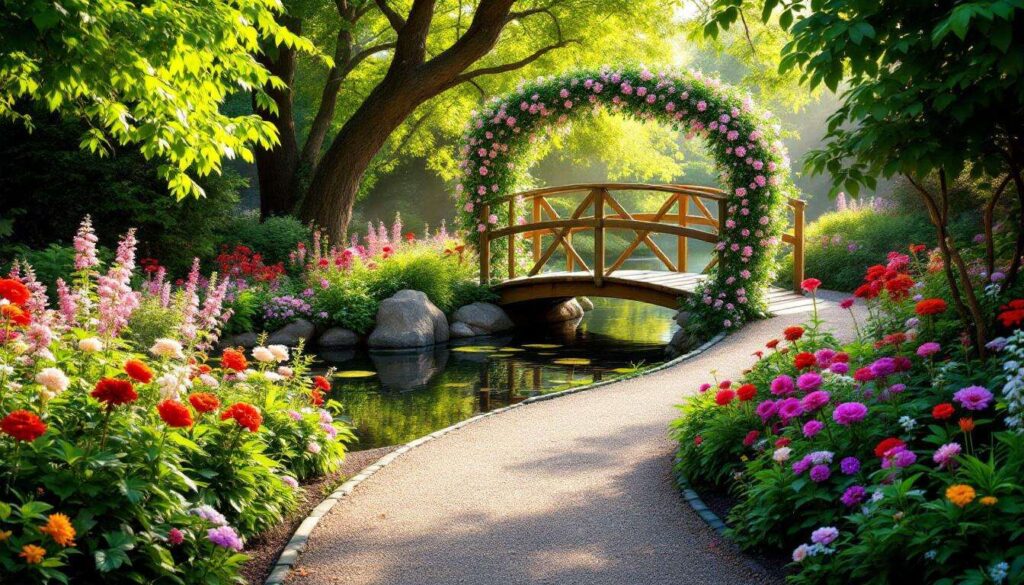
A garden, no matter its size, can feel surprisingly expansive when designed with intention and clever visual techniques. Professional landscapers have long understood that strategic path design serves as one of the most powerful tools for manipulating spatial perception. Rather than accepting the physical limitations of a compact outdoor area, these experts employ specific tricks that guide the eye, create depth, and ultimately transform modest yards into seemingly sprawling retreats. The secret lies not in adding more square footage, but in reshaping how we perceive the space we already have.
Creating a Route with Meandering Paths
The Psychology Behind Curved Walkways
Straight pathways may offer the quickest route from point A to point B, but they also reveal the entire garden at a single glance, making boundaries immediately apparent. Meandering paths, by contrast, introduce an element of mystery and discovery. When a pathway curves gently around plantings or disappears behind a feature, it suggests that more garden exists beyond what is immediately visible. This psychological trick engages visitors and encourages them to explore, creating the impression of a larger, more complex landscape.
Practical Implementation Techniques
Designing an effective meandering path requires careful consideration of several factors:
- Ensure curves appear natural rather than arbitrary by directing them around existing features or planted areas
- Vary the width of the pathway subtly, with narrower sections creating intimate moments and wider areas suggesting openness
- Position focal points at curve endpoints to justify the path’s direction and reward those who follow it
- Avoid excessive meandering in very small spaces, which can appear contrived
Professional landscapers typically recommend gentle S-curves that flow organically through the space. The pathway should feel purposeful, as though it naturally evolved to navigate the garden’s topography and plantings. Even in flat gardens, creating subtle reasons for curves—such as planting beds, specimen trees, or decorative features—makes the design feel authentic and intentional.
Understanding how pathways influence movement naturally leads to considering their visual properties and how different shapes affect spatial perception.
Creating Illusions with Curved and Diagonal Paving
Breaking Up Rectangular Boundaries
Most gardens are bounded by straight fences or walls that emphasise their finite dimensions. Diagonal and curved paving patterns work against these rigid lines, drawing the eye across the space rather than towards its edges. When paving runs at an angle to the garden’s perimeter, it creates visual tension that makes the mind work harder to process boundaries, effectively softening the perception of limitation.
Pattern Selection and Orientation
| Pattern Type | Visual Effect | Best Application |
|---|---|---|
| Diagonal brick or pavers | Widens narrow spaces | Side passages, thin borders |
| Curved stepping stones | Creates depth and flow | Informal garden styles |
| Herringbone at 45 degrees | Adds dynamic movement | Patios and main pathways |
| Radiating circular patterns | Establishes focal points | Central features, intersections |
The choice of paving material also influences the effectiveness of these patterns. Larger format pavers generally make spaces feel more generous, as they require fewer joints and create a more unified surface. Conversely, small unit paving can make areas feel busy and constrained, though when used in flowing patterns, it can successfully guide the eye along desired sightlines.
While paving patterns establish the foundation, the colours selected for these materials play an equally crucial role in spatial perception.
Using Light Colours to Visually Enlarge
The Science of Colour and Space
Light colours possess the remarkable ability to reflect more natural light, creating an airy, open atmosphere that makes spaces feel larger. This principle, borrowed from interior design, applies equally to outdoor environments. Pale stone, cream-coloured pavers, and light-toned gravel all work to bounce light around the garden, reducing shadows and harsh contrasts that can make areas feel cramped and enclosed.
Strategic Colour Application
Professional landscapers employ light colours with precision rather than uniformly applying them throughout a garden. Consider these approaches:
- Use lighter paving in central areas to create an expansive core
- Graduate from light tones near the house to slightly darker shades at boundaries
- Contrast light pathways against darker plantings to emphasise the path’s length
- Select pale aggregates for gravel paths that catch and reflect sunlight
The texture of light-coloured materials also contributes to their effectiveness. Smooth, reflective surfaces maximise light bounce, whilst textured materials in pale shades offer visual interest without sacrificing the space-enhancing benefits. Sandstone, limestone, and pale granite all provide excellent options that combine aesthetic appeal with practical spatial expansion.
Beyond traditional materials, certain design elements can create even more dramatic spatial illusions through reflection and visual trickery.
Integration of Mirrors for a Depth Effect
Strategic Mirror Placement
Garden mirrors represent one of the most dramatic tools for creating perceived depth. When positioned thoughtfully, mirrors can literally double the apparent size of a garden by reflecting existing features and creating the illusion of additional space beyond. The key lies in placement that feels natural—mirrors should suggest windows, archways, or openings rather than obviously reflective surfaces.
Effective Mirror Techniques
To successfully incorporate mirrors without creating jarring or obvious effects, landscapers recommend:
- Positioning mirrors at the end of pathways to suggest continuation of the route
- Framing mirrors with climbing plants or trellis to integrate them into the garden’s structure
- Angling mirrors slightly to avoid direct reflections that reveal their true nature
- Using weatherproof acrylic mirrors designed specifically for outdoor use
- Creating the impression of doorways or windows to other garden areas
Scale and proportion matter considerably when working with garden mirrors. Oversized mirrors can appear theatrical and unconvincing, whilst appropriately sized pieces blend seamlessly into the landscape. Many professionals favour tall, narrow mirrors that mimic the proportions of garden gates or windows, creating believable suggestions of passages to additional spaces.
Whilst mirrors create horizontal depth, manipulating vertical space offers another dimension for expanding perceived garden size.
Including Tall Plantings to Maximise Space
Vertical Interest and Eye Movement
Tall plantings draw the eye upward, creating vertical dimension that makes gardens feel more substantial and less confined. When attention moves skyward, the mind becomes less focused on horizontal boundaries. Columnar trees, tall grasses, and climbing plants all contribute to this effect, adding layers of interest that suggest complexity and depth.
Selection and Positioning
| Plant Type | Height Range | Spatial Benefit |
|---|---|---|
| Columnar conifers | 2-4 metres | Vertical accent without width |
| Ornamental grasses | 1.5-2.5 metres | Movement and height with transparency |
| Climbing roses | 2-3 metres | Vertical coverage with seasonal interest |
| Bamboo varieties | 3-5 metres | Dense screening with upward emphasis |
The placement of tall plantings requires careful thought. Positioning them near boundaries can soften hard edges and create the impression that the garden extends beyond its actual limits. Alternatively, using tall specimens as focal points within the garden draws attention inward, making the journey through the space feel more extensive. Layering plants by height—from ground covers through medium shrubs to tall features—creates depth that makes even compact gardens feel richly developed.
Complementing vertical plantings with structural changes in ground level amplifies the sense of a multi-dimensional, expansive garden.
Adding Levels with Raised Beds
Creating Topographical Interest
Flat gardens can feel monotonous and limited, whilst varied levels introduce complexity that suggests greater spatial extent. Raised beds, sunken seating areas, and gentle terracing all break up the horizontal plane, creating distinct zones that make the garden feel like a collection of interconnected spaces rather than a single confined area.
Design Considerations for Level Changes
Implementing effective level changes requires attention to both aesthetic and practical concerns:
- Ensure raised beds are proportional to the overall garden size
- Use level changes to define different functional areas naturally
- Incorporate steps or gentle slopes that encourage movement between levels
- Select materials for raised structures that complement paving and boundaries
- Consider drainage implications when creating raised or sunken areas
Even modest height variations of 30-45 centimetres can significantly impact spatial perception. These changes force visitors to engage physically with the garden, climbing steps or navigating slopes, which creates a more immersive experience that feels larger than passive observation of a flat space. The visual interruption of a level change also prevents the eye from quickly assessing the garden’s full extent, maintaining an element of discovery.
Raised beds offer the additional advantage of bringing plants closer to eye level, creating layers of interest that fill vertical space and draw attention away from horizontal limitations. When combined with trailing plants that cascade over edges, these structures blur boundaries between levels and create a lush, abundant atmosphere.
Transforming a modest garden into a space that feels generous and expansive requires no magic, only the thoughtful application of proven design principles. Meandering pathways that invite exploration, diagonal paving patterns that challenge rigid boundaries, light colours that open up space, strategic mirrors that suggest depth, tall plantings that draw the eye skyward, and varied levels that create topographical interest all work together to manipulate perception. These techniques, favoured by professional landscapers, demonstrate that spatial experience depends as much on clever design as on actual dimensions. By implementing even a selection of these approaches, any garden can transcend its physical limitations and offer the expansive, welcoming atmosphere of a much larger outdoor retreat.