


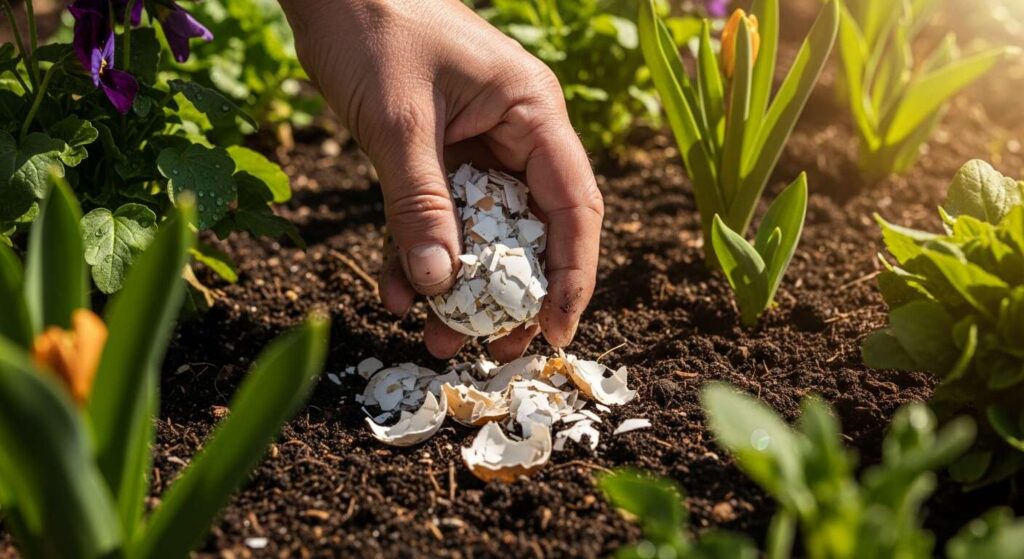
Garden soil holds secrets that botanists have long understood: the strength of a plant begins at the cellular level, where calcium plays a critical structural role. Discarded eggshells, often relegated to the compost bin without a second thought, contain precisely the calcium carbonate that plants require to build resilient cell walls and robust root systems. This simple kitchen waste transforms into a powerful soil amendment, addressing nutritional deficiencies that manifest in weakened stems, stunted growth, and disorders such as blossom end rot in tomatoes and peppers. As organic gardening practices gain momentum, the value of eggshells as a sustainable, cost-effective calcium source has captured renewed attention from both amateur and professional growers across the UK.
The importance of calcium for plant physiology
Cellular structure and membrane integrity
Calcium functions as a fundamental building block in plant cell walls, where it binds pectin molecules to create rigid, stable structures. Without adequate calcium, cell membranes lose their integrity, leading to collapsed tissues and increased vulnerability to pathogens. This mineral enables cells to maintain their shape under stress, whether from wind, rain, or mechanical pressure during growth.
Root development and nutrient uptake
The presence of calcium in soil directly influences root architecture. Plants with sufficient calcium access develop extensive, branching root systems that explore greater soil volumes for water and nutrients. Calcium also regulates the permeability of root cell membranes, controlling which nutrients enter and which remain excluded. This selective permeability ensures that plants absorb essential elements whilst rejecting potentially toxic compounds.
Prevention of physiological disorders
Calcium deficiency manifests in distinctive ways across different plant species:
- Blossom end rot in tomatoes, peppers, and courgettes, characterised by dark, sunken patches on fruit
- Tip burn in lettuce and brassicas, where leaf edges turn brown and necrotic
- Bitter pit in apples, creating corky spots beneath the skin
- Cavity spot in carrots, producing small lesions on root surfaces
These conditions arise not always from insufficient calcium in soil, but often from irregular water supply that disrupts calcium transport within plant tissues. However, maintaining adequate soil calcium levels provides a buffer against such transport disruptions.
Understanding these physiological mechanisms reveals why calcium supplementation matters, but the form in which calcium enters the soil determines its effectiveness and availability to plants.
From kitchen to garden: preparing eggshells for soil
Collection and initial cleaning
The preparation process begins immediately after cracking eggs. Rinsing shells thoroughly removes protein residues that might attract pests or create unpleasant odours during decomposition. A quick rinse under running water suffices, though some gardeners prefer to boil shells briefly to ensure complete sterilisation and easier crushing.
Drying and grinding methods
Proper drying prevents mould growth during storage. Spreading shells on a baking tray in a warm, dry location for several days achieves this naturally, though placing them in a cooling oven after cooking accelerates the process. Once brittle, shells require crushing to increase their surface area and speed calcium release. Several methods prove effective:
| Method | Particle size | Decomposition time | Best application |
|---|---|---|---|
| Hand crushing | Large fragments | 12-24 months | Compost bins, mulch |
| Mortar and pestle | Medium powder | 6-12 months | Direct soil incorporation |
| Coffee grinder | Fine powder | 3-6 months | Seed starting mix, immediate needs |
| Food processor | Variable texture | 6-18 months | General garden use |
Storage and application rates
Crushed eggshells store indefinitely in airtight containers kept in dry conditions. Application rates vary according to soil type and crop requirements, but general guidelines suggest approximately 100-150 grams per square metre annually for vegetable gardens. This translates to roughly the shells from two dozen eggs per square metre, distributed throughout the growing season.
With prepared eggshells ready for use, their interaction with soil chemistry determines how effectively plants access this calcium source.
Soil chemistry: pH, release rate, and microbial partners
Calcium carbonate and soil acidity
Eggshells consist of approximately 95% calcium carbonate, a compound that gradually neutralises acidic soils. This liming effect occurs slowly as shells decompose, preventing the pH spikes that rapid lime application might cause. Soils with pH below 6.5 benefit most from eggshell additions, as the calcium carbonate dissolves more readily in acidic conditions, releasing calcium ions that plants absorb through their roots.
Decomposition timeline and availability
The rate at which eggshells release calcium depends on multiple factors:
- Particle size: finer powders dissolve within months, whilst larger fragments persist for years
- Soil moisture: consistent dampness accelerates breakdown
- Soil pH: acidic environments speed dissolution
- Microbial activity: bacteria and fungi produce acids that dissolve calcium carbonate
- Temperature: warmer conditions enhance both microbial activity and chemical reactions
Beneficial microorganisms and calcium cycling
Soil bacteria and fungi play crucial roles in making eggshell calcium available to plants. Certain bacterial species produce organic acids during their metabolic processes, creating localised acidic zones that dissolve calcium carbonate. Mycorrhizal fungi, forming symbiotic relationships with plant roots, extend their hyphal networks to eggshell fragments, extracting calcium and transporting it directly to their plant partners in exchange for carbohydrates.
These biological processes explain why eggshells incorporated into active, living soils provide more immediate benefits than those added to sterile or compacted earth. The question naturally arises: how do eggshells compare with commercial calcium amendments ?
Comparing eggshell, lime, and gypsum
Chemical composition and solubility
Three common calcium sources differ significantly in their chemistry and behaviour:
| Amendment | Chemical formula | Calcium content | pH effect | Solubility |
|---|---|---|---|---|
| Eggshells | CaCO₃ | 37-40% | Raises pH slowly | Low, acid-dependent |
| Garden lime | CaCO₃ or Ca(OH)₂ | 32-40% | Raises pH rapidly | Moderate to high |
| Gypsum | CaSO₄·2H₂O | 18-23% | Neutral effect | Moderate, pH-independent |
Cost and environmental considerations
Eggshells represent zero-cost waste diversion, transforming discarded material into valuable soil amendment. Garden lime costs approximately £5-10 per 25-kilogram bag, whilst gypsum ranges from £8-15 for similar quantities. Beyond financial savings, eggshells eliminate transport emissions and packaging waste associated with commercial products. The average UK household produces roughly 150-200 eggshells annually, equivalent to 1.5-2 kilograms of calcium carbonate.
Application scenarios and optimal choices
Each calcium source suits specific situations. Eggshells excel for gradual, gentle pH adjustment in established gardens with moderate calcium needs. Garden lime addresses severe acidity quickly, ideal for new plots or lawns requiring rapid pH correction. Gypsum provides calcium without altering pH, making it suitable for alkaline soils or when adding calcium to crops that prefer neutral to slightly acidic conditions.
Theoretical comparisons inform decisions, but practical experience from real gardens reveals how these amendments perform under actual growing conditions.
Practical results: testimonies from community gardens in the UK
Observations from urban growing spaces
Community gardens across British cities have documented their experiences with eggshell amendments. Allotment holders report noticeable improvements in tomato and pepper crops, with reduced incidence of blossom end rot after incorporating crushed shells into planting holes. One London community garden recorded a 40% decrease in calcium-deficiency symptoms across brassica crops following two seasons of regular eggshell application.
Long-term soil improvement projects
Several established community gardens maintain detailed records of soil amendments and crop performance. Gardens that consistently added eggshells to their composting systems observed:
- Gradual pH increases from 5.8 to 6.4 over three years in previously acidic plots
- Enhanced earthworm populations, likely due to improved soil structure and calcium availability
- Reduced need for commercial lime applications, generating cost savings
- Improved fruit set in calcium-demanding crops such as apples and stone fruits
Challenges and practical solutions
Gardeners acknowledge that eggshells work gradually rather than dramatically. Those expecting immediate results often express initial disappointment, though patience yields rewards. Some community gardens established collection schemes, encouraging members to bring eggshells from home to supplement individual supplies. Pre-crushing shells before distribution ensures consistent particle size and more predictable decomposition rates across different plots.
The evidence from botanical research and practical gardening experience converges on a simple conclusion: eggshells represent a valuable, accessible calcium source that strengthens plant structure whilst reducing waste. Their slow-release nature suits long-term soil building rather than emergency intervention, making them ideal for gardeners committed to sustainable practices. By transforming kitchen waste into plant nutrition, this approach exemplifies the circular economy principles increasingly vital to modern horticulture. Whether crushed coarsely for compost or ground finely for direct application, eggshells offer UK gardeners an effective method to enhance soil fertility, support robust plant growth, and prevent calcium-deficiency disorders without relying solely on commercial amendments.