


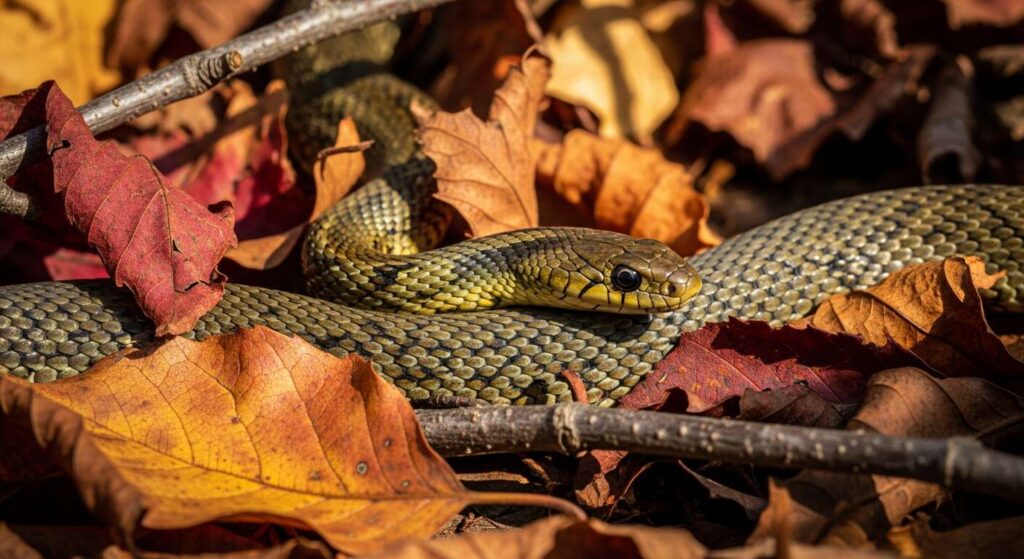
Garden snakes are amongst the most common reptiles encountered in British gardens and green spaces. As cold-blooded creatures, these fascinating animals face significant challenges when winter approaches and temperatures plummet. Understanding their survival strategies during the harshest months reveals remarkable adaptations that have enabled these species to thrive across diverse climates for millions of years.
What is a garden snake ?
Common species and identification
The term garden snake typically refers to harmless, non-venomous snake species frequently found in residential gardens and rural landscapes. In the United Kingdom, the most common garden snake is the grass snake, whilst in North America, the garter snake represents the archetypal garden-dwelling serpent. These reptiles share several distinctive characteristics that make them easily recognisable to gardeners and nature enthusiasts alike.
Garden snakes generally exhibit the following features:
- Slender bodies ranging from 45 to 120 centimetres in length
- Distinctive striped or patterned scales in various colour combinations
- Round pupils and smooth scales
- Non-aggressive temperament towards humans
- Preference for moist environments near water sources
Ecological role and behaviour
Garden snakes play a vital role in maintaining ecological balance within their habitats. As predators, they control populations of slugs, insects, small rodents, and amphibians, making them beneficial allies for gardeners seeking natural pest management solutions. Their ectothermic nature means they rely entirely on external heat sources to regulate body temperature, which profoundly influences their seasonal behaviour patterns.
Understanding what constitutes a garden snake provides essential context for examining their remarkable winter survival mechanisms.
The winter behaviour of snakes
Brumation versus hibernation
Unlike warm-blooded mammals that undergo true hibernation, snakes experience a physiological state called brumation. This distinction is crucial for understanding reptilian winter survival. During brumation, snakes enter a period of dormancy characterised by dramatically reduced metabolic activity, but they do not achieve the deep sleep state associated with mammalian hibernation.
| Characteristic | Hibernation (mammals) | Brumation (reptiles) |
|---|---|---|
| Metabolic state | Deep sleep, minimal activity | Dormant but responsive |
| Awakening | Rare, only if disturbed | Periodic during warm spells |
| Water needs | None | Occasional drinking required |
| Duration | Continuous months | Intermittent periods |
Seasonal activity patterns
As autumn progresses and temperatures decline, garden snakes gradually reduce their activity levels. They cease feeding entirely, as their digestive systems cannot function effectively in cold conditions. During mild winter days, brumating snakes may emerge briefly to bask in sunlight or drink water before returning to their shelters. This behaviour distinguishes brumation from true hibernation and reflects the unique thermoregulatory challenges faced by reptiles.
These behavioural adaptations are driven by compelling biological imperatives that ensure species survival.
Why do snakes hibernate ?
Thermoregulation challenges
Snakes are ectothermic organisms, meaning they cannot generate internal body heat like mammals and birds. Their body temperature mirrors ambient environmental conditions, creating severe limitations during winter months. When temperatures drop below approximately 10 degrees Celsius, snakes become increasingly lethargic as their metabolic processes slow dramatically. Below 5 degrees Celsius, most physiological functions cease entirely, making activity impossible and survival precarious.
Energy conservation strategy
Brumation serves as a critical energy conservation mechanism. By entering dormancy, snakes drastically reduce their caloric requirements during periods when food sources become scarce or entirely unavailable. The metabolic slowdown enables them to survive for months without feeding, relying instead on fat reserves accumulated during warmer seasons.
Key survival benefits include:
- Preservation of precious energy reserves throughout foodless months
- Protection from lethal freezing temperatures
- Avoidance of predators during vulnerable periods
- Synchronisation of reproductive cycles with optimal environmental conditions
Evolutionary adaptation
Brumation represents millions of years of evolutionary refinement, enabling snake species to colonise temperate regions with harsh winters. This adaptation has proven so successful that many snake species have expanded their ranges far beyond tropical zones where year-round activity remains possible. Understanding why snakes brumate naturally leads to examining where they seek refuge during these challenging months.
Where do garden snakes hide during winter ?
Natural hibernacula
Garden snakes seek specific locations called hibernacula where environmental conditions remain stable and temperatures stay above freezing. These critical refuges share common characteristics: protection from the elements, insulation from extreme temperature fluctuations, and positioning below the frost line where ground temperatures remain relatively constant.
Common natural hibernacula include:
- Abandoned burrows created by small mammals such as rabbits, badgers, or rodents
- Rock piles and crevices that provide thermal mass and protection
- Cavities beneath tree roots or within decaying logs
- Natural caves and underground fissures
- Dense leaf litter in sheltered woodland areas
Human-made structures
Garden snakes have demonstrated remarkable adaptability by exploiting human-created environments for winter shelter. These artificial hibernacula often provide superior thermal properties compared to natural alternatives, explaining their popularity amongst snake populations in residential areas.
Favoured artificial sites include:
- Building foundations and basement walls that retain heat
- Compost heaps generating warmth through decomposition
- Stone walls with deep crevices
- Spaces beneath sheds, patios, and decking
- Drainage systems and culverts
Communal denning behaviour
Many garden snake species exhibit communal brumation, with dozens or even hundreds of individuals sharing the same hibernaculum. This behaviour offers significant survival advantages through collective heat retention and traditional site fidelity. Snakes may travel considerable distances—often exceeding one mile—to reach established hibernacula, following scent trails left by conspecifics. These traditional sites may be used continuously for decades or even centuries.
Knowing where snakes shelter raises important questions about their physiological survival mechanisms.
How do garden snakes survive low temperatures ?
Metabolic suppression
During brumation, garden snakes achieve profound metabolic depression, reducing their energy expenditure to minimal levels. Heart rate, breathing frequency, and all bodily functions slow dramatically, allowing snakes to survive on stored fat reserves accumulated during active months. This metabolic suppression can reduce energy consumption by up to 90 per cent compared to summer activity levels.
Physiological adaptations
Garden snakes possess several remarkable physiological adaptations that enhance cold tolerance. Their cellular structures resist damage from reduced temperatures, and some species can survive brief exposure to sub-zero conditions without tissue damage. However, prolonged freezing proves fatal, making hibernaculum selection critical for survival.
| Adaptation | Function | Survival benefit |
|---|---|---|
| Reduced metabolism | Minimises energy use | Extends fat reserve duration |
| Cellular protection | Prevents ice crystal formation | Avoids tissue damage |
| Behavioural thermoregulation | Positioning in warmest zones | Maintains viable temperature |
| Group aggregation | Collective heat retention | Increases ambient warmth |
Strategic positioning and opportunistic activity
Within hibernacula, snakes position themselves strategically to maximise warmth and minimise exposure to lethal cold. They seek the deepest, most insulated portions of their refuges. During unseasonably warm periods, garden snakes may temporarily emerge to bask, drink, or adjust their position before temperatures drop again. This flexibility distinguishes brumation from rigid hibernation and demonstrates the sophisticated behavioural repertoire these reptiles employ.
These individual survival strategies create broader consequences for garden ecosystems as a whole.
The impacts of hibernation on the garden ecosystem
Seasonal pest population dynamics
The winter absence of garden snakes creates significant shifts in prey population dynamics. Without predation pressure from snakes, populations of slugs, insects, and small rodents may experience temporary increases during mild winter periods. However, this effect remains limited by the dormancy of many prey species and the presence of other predators such as birds and mammals.
Spring emergence and ecological renewal
When garden snakes emerge from brumation in spring, they exert immediate predatory pressure on burgeoning prey populations. This timing coincides with peak reproductive periods for many prey species, allowing snakes to replenish depleted energy reserves rapidly. The synchronised emergence of snake populations creates concentrated predation events that help regulate ecosystem balance during this critical transitional period.
Benefits to gardeners and land managers
Understanding snake brumation patterns offers practical advantages for those managing gardens and green spaces. Knowledge of hibernaculum locations enables protective measures that support beneficial snake populations whilst avoiding unwanted encounters. Supporting healthy snake populations provides:
- Natural, chemical-free pest control throughout growing seasons
- Reduced slug and rodent damage to crops and ornamental plants
- Enhanced biodiversity and ecological resilience
- Educational opportunities for observing native wildlife
Garden snakes represent valuable ecological assets whose winter survival strategies reveal sophisticated adaptations honed over millions of years. By seeking protected hibernacula ranging from natural burrows to human-made structures, these remarkable reptiles endure months of dormancy through metabolic suppression and strategic shelter selection. Their brumation period profoundly influences garden ecosystems, creating seasonal fluctuations in predator-prey dynamics that resolve with spring emergence. Recognising the importance of suitable hibernation sites and protecting these critical refuges ensures that garden snake populations continue providing ecological benefits whilst enriching our understanding of reptilian biology and adaptation.