

Garden birds face numerous challenges during the colder months, with access to fresh water proving particularly difficult when temperatures plummet below freezing. A frozen bird bath can leave our feathered visitors struggling to find hydration, yet a remarkably simple solution exists that requires nothing more than an ordinary tennis ball. This ingenious method has gained popularity amongst wildlife enthusiasts and ornithologists alike, offering a practical way to maintain accessible water sources without electricity or complex equipment.
How the tennis ball trick works
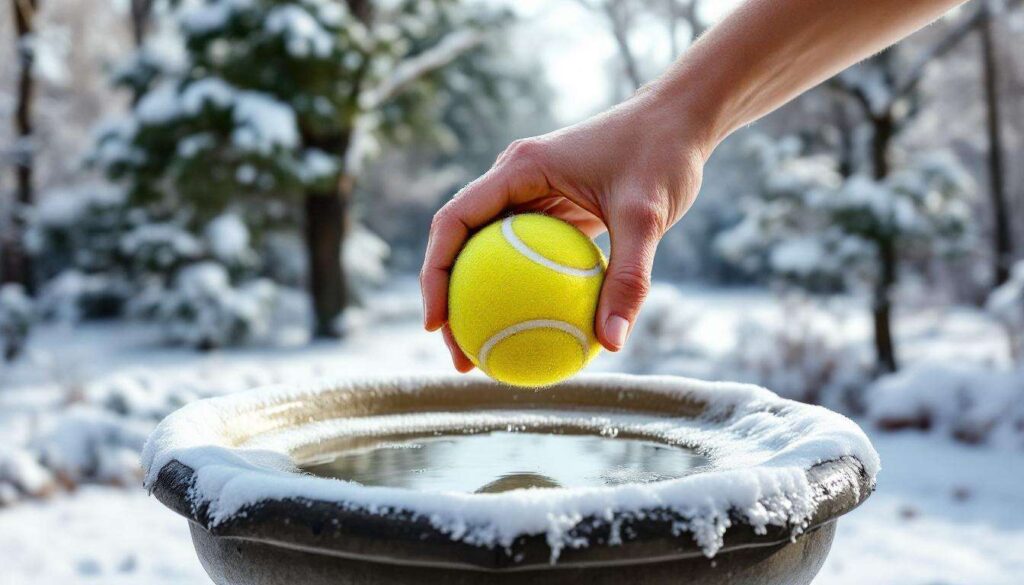
The tennis ball method operates on a straightforward principle of constant movement preventing ice formation. When placed in a bird bath, the ball floats on the water’s surface and responds to even the slightest breeze, creating gentle ripples that disrupt the freezing process.
The science behind the movement
Water requires stillness and sustained cold temperatures to freeze completely. The tennis ball’s continuous motion achieves several important effects:
- Breaks up ice crystals as they begin to form on the surface
- Creates small waves that distribute warmer water from below
- Prevents a solid ice sheet from developing across the entire surface
- Maintains at least a small area of liquid water for birds to access
Practical implementation
Simply place a clean tennis ball directly onto the water surface of your bird bath. The ball should move freely without obstruction. For larger bird baths, using two or three tennis balls increases effectiveness. The fuzzy exterior of the tennis ball provides excellent grip for wind movement whilst remaining lightweight enough to respond to gentle breezes.
Understanding why bird baths freeze helps explain why this simple solution proves so effective.
Why bird baths freeze in winter
The freezing of bird baths results from basic thermodynamic principles that govern water’s behaviour in cold conditions. When ambient temperatures drop below zero degrees Celsius, water begins its transformation from liquid to solid state.
Factors affecting freezing rates
| Factor | Impact on freezing |
|---|---|
| Air temperature | Below 0°C initiates freezing process |
| Wind exposure | Accelerates heat loss from water surface |
| Water volume | Smaller volumes freeze faster |
| Material of bath | Metal conducts cold more rapidly than stone or ceramic |
The freezing process
Ice formation typically begins at the water’s surface where contact with cold air is greatest. As temperatures remain below freezing, ice gradually thickens and extends deeper into the water. Shallow bird baths freeze completely within hours during severe cold snaps, whilst deeper vessels may retain liquid water beneath a surface layer of ice.
The location of your bird bath significantly influences how quickly it freezes and how well prevention methods work.
Selecting the right location for the bird bath
Strategic placement of a bird bath can substantially reduce freezing problems before they occur. The surrounding environment plays a crucial role in maintaining water accessibility throughout winter.
Optimal positioning considerations
A sheltered location offers multiple advantages for winter bird bath maintenance:
- Protection from harsh winds that accelerate cooling
- Partial shade that moderates temperature fluctuations
- Proximity to shrubs or hedges providing natural windbreaks
- Southern exposure to maximise sunlight during shorter winter days
- Sufficient distance from feeding stations to prevent contamination
Locations to avoid
Certain positions create additional freezing challenges. Avoid placing bird baths in completely exposed areas where wind chill intensifies cold effects. Similarly, deep shade under dense evergreens prevents any solar warming that might naturally keep water liquid during milder winter days. Low-lying areas where cold air settles overnight also prove problematic for maintaining ice-free conditions.
Maintaining accessible water delivers numerous advantages for both birds and observers during the winter season.
The benefits of keeping bird baths ice-free
Providing reliable water sources throughout winter creates significant positive impacts for garden bird populations whilst offering rewards for those who maintain them.
Advantages for bird welfare
Access to liquid water addresses critical survival needs that many people overlook when considering winter bird care:
- Enables essential hydration when natural sources freeze
- Allows birds to clean and maintain feather condition
- Supports thermoregulation through preening with water
- Reduces energy expenditure searching for water sources
- Increases local bird survival rates during harsh weather
Benefits for bird watchers
An ice-free bird bath attracts greater variety and numbers of species to gardens. Winter visitors including fieldfares, redwings and blackcaps actively seek reliable water sources. This concentration of birds provides excellent observation opportunities and supports citizen science projects monitoring winter bird populations.
Whilst the tennis ball method proves highly effective, several alternative approaches exist for preventing ice formation.
Other methods to prevent bird baths from freezing
Various techniques offer different levels of effectiveness depending on climate severity, budget and available resources.
Heated bird bath solutions
Electric heating elements provide the most reliable protection against freezing but require power sources and ongoing electricity costs. Thermostatically controlled heaters activate only when temperatures approach freezing, improving energy efficiency. Solar-powered heating options exist but prove less effective during overcast winter conditions when sunlight remains limited.
Regular water replacement
The simplest non-mechanical approach involves frequent water changes using lukewarm water. This method requires commitment:
- Replace frozen water with fresh lukewarm liquid twice daily
- Never use hot water which can crack ceramic or stone baths
- Remove ice carefully without damaging the bath surface
- Combine with tennis ball method for extended effectiveness
Adding floating objects
Besides tennis balls, other floating items such as ping pong balls or small plastic bottles partially filled with water create similar movement effects. Cork pieces also work well, though they offer less surface area for wind interaction.
Understanding why water access matters so critically helps motivate consistent maintenance efforts throughout the coldest months.
The importance of water for birds in winter
Water represents an often underestimated necessity for bird survival when temperatures drop and natural sources become inaccessible.
Physiological water requirements
Birds require water for multiple essential functions beyond simple hydration. Digestion of seeds and dried foods demands adequate fluid intake. Metabolic processes generating body heat during cold weather increase water needs. Additionally, birds cannot produce concentrated urine like mammals, making regular water intake crucial for waste elimination.
Feather maintenance needs
Proper feather condition provides vital insulation against winter cold. Birds use water to:
- Clean dirt and debris from plumage
- Realign feather barbules for optimal insulation
- Stimulate preening gland secretions that waterproof feathers
- Remove parasites that compromise feather integrity
Natural water scarcity
Winter conditions eliminate many water sources that birds rely upon during warmer months. Ponds freeze solid, streams ice over, and puddles disappear. Even snow, whilst providing some moisture, requires significant energy expenditure to melt and consume, potentially causing more harm than benefit during extreme cold.
Maintaining ice-free bird baths through simple methods like the tennis ball trick provides essential support for garden birds facing winter’s harshest conditions. This straightforward approach requires minimal investment whilst delivering substantial benefits for local bird populations. Combined with appropriate positioning and supplementary techniques when necessary, a single tennis ball can transform a frozen bird bath into a vital winter resource. By understanding both the practical mechanics and underlying importance of accessible water, garden bird enthusiasts can make meaningful contributions to wildlife welfare throughout the coldest months whilst enjoying increased opportunities to observe visiting species.