

Gardens across Britain face an increasing challenge as climate patterns shift and water restrictions become more frequent. Traditional watering methods often fail to deliver moisture where plants need it most, leaving shallow-rooted applications that evaporate quickly or run off without penetrating the soil. The hose-drip spiral system offers a solution that transforms how we nurture shrubs and ornamental plants, delivering water slowly and precisely to encourage deep root development and drought resilience.
Understanding the principle of the drip irrigation hose
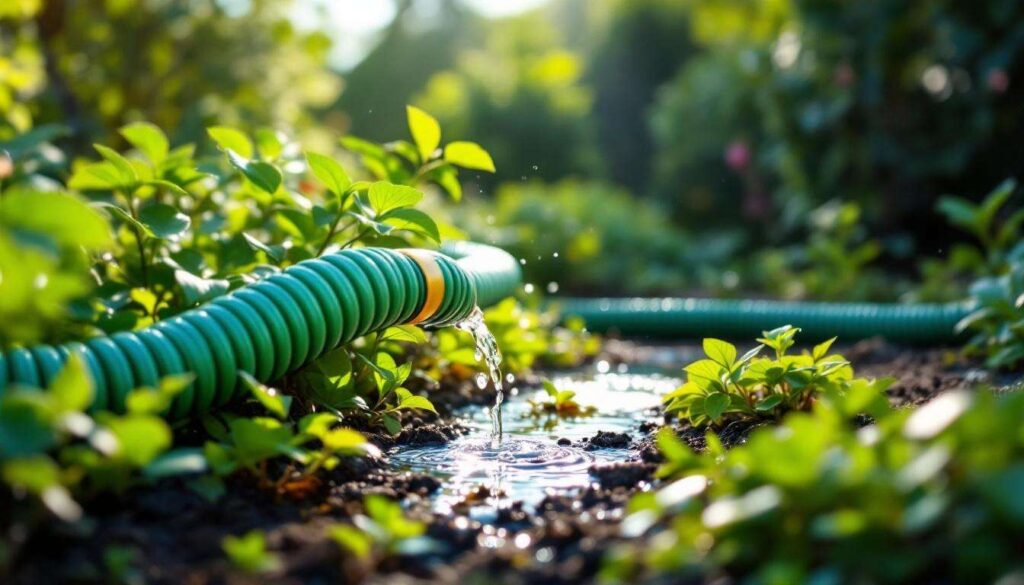
The drip irrigation hose operates on a fundamentally different principle from conventional watering methods. Rather than delivering large volumes of water quickly across the soil surface, this system releases moisture gradually through tiny perforations or porous material along the hose length.
The mechanics of slow water release
Drip irrigation hoses function through controlled water emission that maintains consistent moisture levels without overwhelming the soil’s absorption capacity. The hose material contains either laser-drilled holes or a porous structure that allows water to seep out at rates typically between two to four litres per hour per metre of hose. This gradual release ensures that water infiltrates vertically rather than spreading horizontally across the surface.
The spiral configuration maximises coverage around individual shrubs by creating multiple water delivery points. As the hose coils around the plant’s root zone, each section contributes to a comprehensive watering pattern that mimics natural rainfall absorption.
Types of drip hoses available
Gardeners can choose from several drip irrigation options:
- Soaker hoses: manufactured from recycled rubber with porous walls that weep water along their entire length
- Drip tape: thin-walled plastic tubing with emitters spaced at regular intervals
- Inline drip tubing: more durable polyethylene hoses with pressure-compensating emitters
- Micro-drip systems: adjustable emitters attached to distribution tubing for precise placement
Each type suits different applications, with soaker hoses proving particularly effective for shrub beds where uniform moisture distribution matters most. The choice between systems depends on water pressure, garden layout, and the specific moisture requirements of your plants.
Having established how these systems work, the question naturally arises: what specific advantages do they offer for shrubs struggling with water stress ?
The benefits of drip irrigation for thirsty shrubs
Shrubs represent a significant investment in garden aesthetics and property value, yet they often suffer during dry spells because traditional watering methods fail to meet their physiological needs.
Water efficiency and conservation
Drip irrigation systems deliver up to 90% water efficiency compared to 50-70% for sprinkler systems. This dramatic improvement stems from eliminating evaporation losses and preventing runoff. For thirsty shrubs such as hydrangeas, rhododendrons, and camellias, this means more water reaches the root zone where it’s actually needed.
| Watering method | Water efficiency | Evaporation loss |
|---|---|---|
| Hand watering | 60-70% | High |
| Sprinkler systems | 50-70% | Very high |
| Drip irrigation | 85-95% | Minimal |
Enhanced plant health and growth
Consistent moisture levels promote stronger root development and reduce plant stress. Shrubs watered through drip systems show several advantages:
- Reduced foliar diseases because leaves remain dry
- More uniform growth patterns without the stress cycles of feast-or-famine watering
- Better nutrient uptake as minerals dissolve gradually in consistent moisture
- Improved flowering and fruiting due to stable hydration
The targeted delivery also prevents weed germination in surrounding areas, as only the intended plants receive water. This selective watering reduces competition for nutrients and moisture whilst minimising maintenance requirements.
Time and labour savings
Once installed, drip systems operate automatically or with minimal intervention. Gardeners save hours previously spent dragging hoses and monitoring hand-watering sessions. The system works independently, maintaining optimal moisture even during holidays or busy periods when garden attention might otherwise lapse.
These practical benefits become even more impressive when we examine how the water actually moves through the soil profile.
How drip irrigation reaches deeper layers of soil
The true advantage of slow watering lies beneath the surface, where vertical water penetration encourages roots to grow downward rather than spreading shallowly.
Soil infiltration dynamics
When water is applied slowly, soil particles have time to absorb moisture without becoming saturated. The water moves through soil pores via capillary action and gravity, following the path of least resistance downward. Quick watering overwhelms this capacity, causing water to pool on the surface or run horizontally along impermeable layers.
Clay soils particularly benefit from slow application rates. Their fine particle structure absorbs water slowly but retains it well once infiltrated. Drip irrigation allows clay to reach optimal moisture levels without creating waterlogged conditions that suffocate roots.
Root zone development
Plants respond to water availability by directing root growth toward moisture sources. Deep watering encourages deep roots, creating plants better equipped to withstand drought. Shallow watering produces shallow root systems that require frequent irrigation and remain vulnerable to heat stress.
The spiral configuration around shrubs creates a moisture column that extends downward, with the following depth penetration observed in typical garden soils:
- Sandy soils: 30-45 cm depth after 2-3 hours of drip irrigation
- Loamy soils: 25-35 cm depth after 2-3 hours
- Clay soils: 15-25 cm depth after 3-4 hours
Moisture retention in deeper layers
Deeper soil layers maintain moisture longer because they experience less evaporation and temperature fluctuation. Water delivered to these zones remains available to plants for extended periods, reducing irrigation frequency whilst maintaining plant health. This moisture reservoir effect proves invaluable during dry spells when surface soil dries rapidly.
Understanding these principles makes the practical implementation much more straightforward.
Practical guide to installing a hose-drip spiral
Installing a drip spiral system requires minimal tools and can be completed in an afternoon, even for gardening novices.
Materials and preparation
Gather the following before beginning:
- Drip irrigation hose (calculate 2-3 metres per shrub depending on size)
- Main supply line or connector to outdoor tap
- Pressure regulator (typically 1-1.5 bar for drip systems)
- End caps or flush valves
- Ground staples or securing pins
- Timer or controller (optional but recommended)
Clear the area around each shrub of weeds and debris. Mark the drip line of the shrub’s canopy, as this indicates where feeder roots concentrate and where water should be delivered.
Installation steps
Begin by connecting the pressure regulator to your water source, as excessive pressure damages drip systems and causes uneven water distribution. Run the main supply line to your shrub bed, then cut sections of drip hose for each plant.
For each shrub, create a spiral pattern starting approximately 15 cm from the stem and extending to just beyond the canopy drip line. Make 2-3 complete loops, spacing them evenly. Secure the hose with ground staples every 30-40 cm to prevent movement.
Connect each spiral to the main supply line using appropriate fittings. Flush the system before installing end caps to remove any debris. Test the system at full pressure, checking for leaks and ensuring even water distribution along each hose section.
Seasonal adjustments
Drip systems require minimal maintenance but benefit from seasonal attention. In autumn, flush lines thoroughly before winter. In spring, inspect for damage from frost or wildlife. Adjust watering duration as plants grow and seasonal rainfall patterns change.
With the physical system in place, attention turns to maximising its performance through proper management.
Tips for optimising the efficiency of slow watering
Even perfectly installed systems underperform without appropriate operation and maintenance strategies.
Watering duration and frequency
The goal is infrequent but thorough watering that encourages deep root growth. Rather than daily light watering, run the system 2-3 times weekly for longer periods. Calculate duration based on:
- Soil type and drainage characteristics
- Plant species and maturity
- Weather conditions and evapotranspiration rates
- Season and growth stage
A general guideline suggests running drip systems for 45-90 minutes per session depending on soil type, with clay soils requiring longer run times to achieve equivalent penetration.
Monitoring soil moisture
Regular monitoring prevents both under and over-watering. Simple methods include:
- Inserting a screwdriver or probe to check moisture depth
- Using a moisture meter for precise readings
- Observing plant indicators such as leaf turgor and growth vigour
- Digging small test holes to visually inspect soil moisture
Adjust watering schedules based on these observations rather than following rigid timetables that ignore actual conditions.
System maintenance
Drip systems clog when mineral deposits or algae accumulate in emitters. Prevent problems through:
- Annual acid flushing to dissolve mineral buildup
- Installing filters at the water source
- Regular visual inspections for blocked emitters
- Replacing damaged sections promptly
These practices extend system life whilst maintaining consistent performance that keeps shrubs healthy through varying conditions.
Beyond individual garden benefits, these watering practices contribute to broader environmental goals.
Preserving the environment through reasoned watering
Water conservation extends beyond personal garden management to encompass wider ecological responsibility.
Reducing water consumption
Domestic gardens account for substantial water use during summer months, with outdoor watering representing up to 70% of household water consumption in peak season. Drip irrigation dramatically reduces this demand, preserving water resources for essential uses whilst maintaining garden health.
The cumulative effect of widespread adoption would significantly reduce pressure on water treatment facilities and natural water sources during drought periods when supplies become stressed.
Preventing nutrient runoff
Excessive watering washes fertilisers and soil nutrients into drainage systems, contributing to eutrophication of waterways. Targeted drip irrigation keeps nutrients in the root zone where plants utilise them, reducing environmental contamination whilst improving fertiliser efficiency.
Supporting sustainable gardening practices
Drip irrigation integrates seamlessly with other sustainable approaches:
- Mulching over drip lines further reduces evaporation
- Collecting rainwater for drip systems maximises resource efficiency
- Choosing appropriate plants reduces irrigation demands
- Soil improvement enhances water retention and reduces watering needs
These complementary practices create resilient gardens that thrive with minimal resource input whilst supporting local ecosystems through reduced chemical runoff and water consumption.
The hose-drip spiral represents more than a watering technique; it embodies a shift toward intelligent garden management that recognises the interconnection between plant health, resource conservation, and environmental stewardship. By delivering water where plants need it most, at rates soil can absorb effectively, this system creates stronger shrubs whilst reducing waste. The initial investment in materials and installation time yields returns through reduced water bills, healthier plants, and the satisfaction of gardening in harmony with natural processes. As water becomes increasingly precious, adopting efficient irrigation methods transitions from optional improvement to essential practice for responsible gardeners.