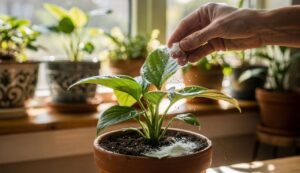
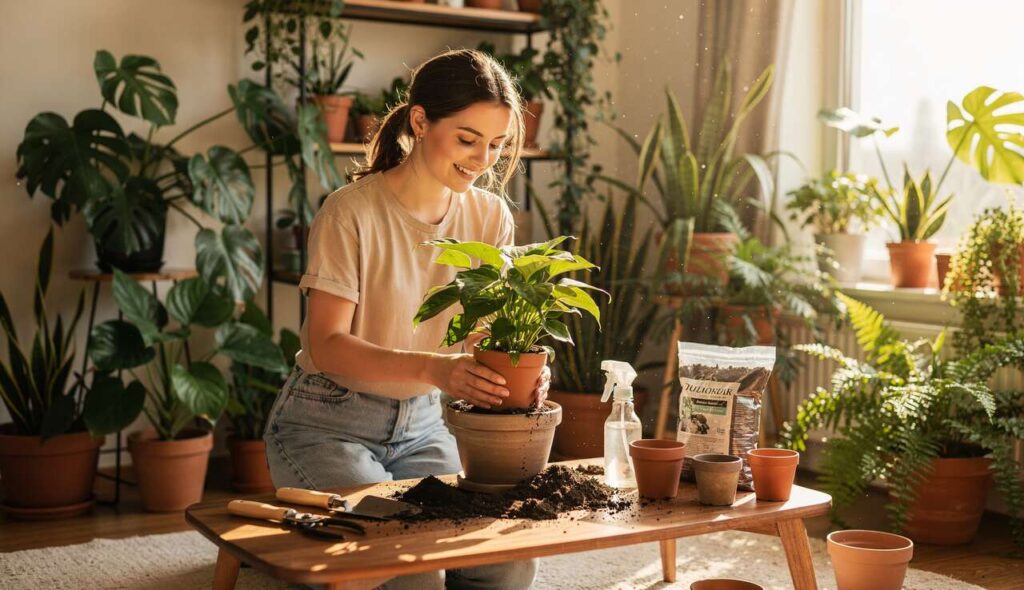
Houseplants bring life and colour into our homes, but they require proper care to thrive. One of the most critical aspects of plant maintenance is knowing when to transfer them into larger containers. Many plant owners overlook the signs that their green companions need more space, leading to stunted growth and declining health. Recognising these indicators early can make the difference between a flourishing plant and one that struggles to survive.
Roots are overflowing from the pot
The most obvious indication that your plant needs a new home is when roots begin to emerge from the drainage holes or curl around the surface of the soil. This phenomenon, known as being root-bound, occurs when the root system has exhausted all available space within the container.
Visible root growth patterns
When you lift your plant from its pot, you should observe healthy roots distributed throughout the soil. However, if you notice a dense network of roots forming a tight spiral around the soil mass, this signals severe overcrowding. The roots may appear matted or tangled, creating a solid barrier that prevents water and nutrients from reaching the centre of the root ball. In extreme cases, the roots may have completely replaced the soil, leaving little to no growing medium visible.
Consequences of root overcrowding
Root-bound plants face several challenges that compromise their vitality:
- Reduced nutrient absorption due to limited soil volume
- Impaired water uptake as roots become compressed
- Increased susceptibility to disease and pest infestations
- Structural weakness as the root system cannot support the plant adequately
Beyond the visible root system, plants often exhibit other symptoms that indicate they’ve outgrown their current accommodation.
Plant growth is slowing down
A noticeable decline in growth rate frequently signals that your plant has reached the limits of its container. When a previously vigorous plant suddenly produces smaller leaves or stops generating new shoots, the root system may lack sufficient space to support continued development.
Comparing growth patterns
Monitoring your plant’s development over time helps identify when growth stagnates. A healthy plant should produce new leaves or stems regularly during its growing season. If you observe a marked reduction in new growth despite proper lighting, watering, and fertilisation, the container size may be the limiting factor.
| Growth indicator | Healthy plant | Root-bound plant |
|---|---|---|
| New leaf production | Regular during growing season | Minimal or absent |
| Leaf size | Consistent with mature foliage | Progressively smaller |
| Stem length | Normal internodal spacing | Shortened or stunted |
Seasonal considerations
It’s essential to distinguish between natural dormancy and growth problems caused by inadequate space. Many plants naturally slow their growth during winter months when light levels decrease. However, if your plant fails to resume normal growth when spring arrives, despite receiving appropriate care, container size may be the culprit.
Alongside growth issues, watering patterns often reveal important information about your plant’s needs.
The soil dries out rapidly
When you find yourself watering your plant with increasing frequency, yet the soil seems to dry out within a day or two, this suggests the root system has consumed most of the available soil volume. A disproportionate ratio of roots to soil means there’s insufficient medium to retain moisture adequately.
Water retention challenges
Healthy potting soil should maintain moisture for several days, depending on the plant species and environmental conditions. When roots dominate the pot, they displace the soil that would normally hold water reserves. This creates a situation where the plant requires constant watering to prevent dehydration, which is neither practical nor beneficial for long-term plant health.
Testing soil moisture levels
To determine whether rapid drying indicates a need for repotting, assess the following factors:
- Insert your finger approximately two centimetres into the soil to check moisture depth
- Observe whether water runs straight through the pot without being absorbed
- Notice if the soil pulls away from the container edges when dry
- Monitor how quickly the soil transitions from saturated to bone dry
If the soil cannot maintain adequate moisture despite appropriate watering practices, your plant likely needs more space. Physical instability often accompanies these moisture-related concerns.
The plant becomes unstable
A plant that tips over easily or leans precariously in its pot demonstrates a fundamental imbalance between the above-ground growth and the container’s capacity to anchor it securely. This instability poses risks both to the plant itself and to surrounding objects.
Top-heavy growth patterns
As plants mature, they develop larger canopies that require substantial root systems for support. When the roots cannot spread adequately within a confined space, they fail to provide the structural foundation necessary to keep the plant upright. This problem is particularly common with tall plants or those with dense foliage that creates weight at the top.
Safety and aesthetic concerns
An unstable plant presents several difficulties:
- Risk of falling and breaking stems or leaves
- Potential damage to furniture or floors if the pot topples
- Unsightly appearance as the plant leans or requires external support
- Stress on the root system as it struggles to maintain balance
Whilst physical props can temporarily address stability issues, they don’t resolve the underlying problem of inadequate root space. Visual changes in the foliage often accompany these structural problems.
Leaves are discoloured or drooping
When a plant’s leaves lose their vibrant colour or begin to wilt despite proper watering and lighting, the root system may be struggling within its confined environment. Nutrient deficiencies and stress from overcrowding manifest through various foliar symptoms.
Identifying stress-related discolouration
Leaves may display yellowing, browning, or pale patches when the plant cannot access adequate nutrients. In a root-bound situation, even regular fertilisation may prove ineffective because the roots lack sufficient soil contact to absorb nutrients properly. The discolouration typically begins with older leaves and progresses to newer growth if the condition persists.
Distinguishing between causes
Before attributing leaf problems to pot size, eliminate other potential causes:
- Check for pests on leaf undersides and stems
- Verify that watering frequency matches the plant’s requirements
- Assess light levels to ensure they meet species-specific needs
- Review fertilisation schedule and nutrient balance
If these factors are appropriate yet the plant continues to decline, repotting may restore its vitality. Sometimes the container itself provides clues about the need for change.
The pot is visibly damaged or discoloured
Physical deterioration of the container itself can necessitate repotting, even if the plant hasn’t completely outgrown the space. Cracks, chips, mineral deposits, and structural weakness compromise both the pot’s functionality and appearance.
Types of container damage
Pots experience various forms of wear over time. Plastic containers may become brittle and crack, particularly when exposed to sunlight or temperature fluctuations. Terracotta pots can develop chips or breaks, especially around the rim. Mineral accumulation from hard water creates unsightly white deposits on porous materials, whilst algae growth may discolour the exterior of containers kept in humid conditions.
When damage requires action
| Damage type | Impact on plant | Urgency |
|---|---|---|
| Cracks in drainage holes | Compromised water flow | High |
| Rim chips | Potential root damage | Medium |
| Surface discolouration | Aesthetic only | Low |
| Structural instability | Risk of collapse | High |
Damaged containers may also harbour bacteria or fungi in cracks and crevices, creating health risks for your plant. Repotting into a fresh, intact container eliminates these concerns whilst providing an opportunity to refresh the growing medium.
Understanding these warning signs empowers plant owners to provide timely care that keeps their green companions thriving. Whether you notice roots escaping through drainage holes, observe declining growth rates, struggle with rapid soil drying, deal with an unstable plant, spot worrying leaf changes, or identify container damage, each indicator points towards the same solution. Repotting at the appropriate time prevents stress, promotes healthy development, and ensures your plants continue to enhance your living space for years to come. By remaining attentive to these signals and responding promptly, you create optimal conditions for robust plant growth and long-term vitality.