


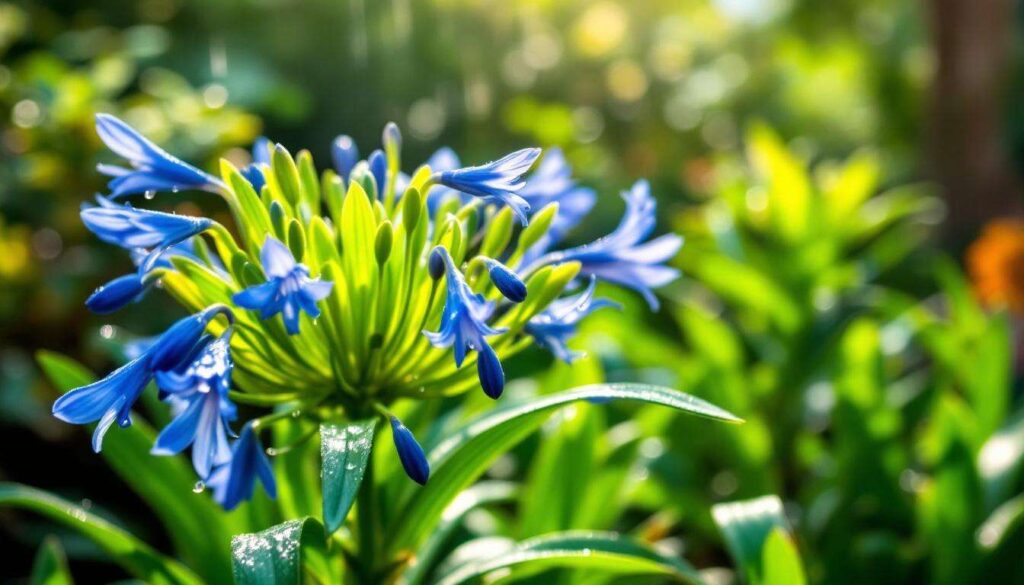
Agapanthus, with their striking blue or white blooms, transform gardens into vibrant displays of colour throughout the summer months. Yet these beloved perennials face a hidden threat that catches many gardeners off guard. When heavy rainfall saturates the soil, these South African natives become vulnerable to a silent killer that can devastate entire clumps within weeks. Experienced horticulturists have identified a crucial post-rain ritual that dramatically reduces the risk of plant loss, though it remains surprisingly unknown amongst casual gardeners.
Introduction to agapanthus: a prized ornamental plant
Agapanthus, commonly known as African lily or lily of the Nile, has established itself as a cornerstone of contemporary garden design across Britain. These herbaceous perennials originate from the rocky hillsides and coastal regions of South Africa, where they have adapted to survive in well-drained soils with seasonal rainfall patterns.
Botanical characteristics and varieties
The genus encompasses approximately ten species and countless cultivars, divided into two main categories:
- Deciduous varieties that lose their foliage in winter and demonstrate greater cold tolerance
- Evergreen types that retain their strap-like leaves year-round but require frost protection
- Dwarf cultivars reaching 30-45cm, ideal for containers and compact spaces
- Tall specimens growing up to 120cm, creating dramatic focal points in borders
Growing conditions and popularity
The plant’s popularity stems from its architectural foliage and spectacular spherical flower heads that appear from June through September. Gardeners appreciate their relatively low maintenance requirements and ability to thrive in sunny positions with minimal intervention. However, this perception of resilience can lead to complacency regarding their specific drainage needs, particularly during periods of excessive rainfall.
Understanding these fundamental characteristics becomes essential when addressing the challenges that wet weather presents to these otherwise robust plants.
The consequences of rain on agapanthus
Prolonged rainfall creates conditions that fundamentally contradict the natural habitat preferences of agapanthus. The impact extends beyond simple waterlogging, triggering a cascade of physiological stress responses within the plant.
Soil saturation and oxygen deprivation
When heavy rain saturates the soil, it displaces air pockets that normally provide essential oxygen to the root system. Agapanthus roots require adequate aeration to maintain cellular respiration and nutrient uptake. Waterlogged conditions effectively suffocate the roots, leading to cellular damage within 48-72 hours of continuous saturation.
Physical stress on plant structure
The weight of accumulated water affects agapanthus in several ways:
- Flower stalks become top-heavy and prone to snapping or bending
- Water collects in the crown where leaves emerge, creating stagnant pools
- Foliage splays outward, exposing the vulnerable central growing point
- Soil erosion around the root crown compromises structural stability
| Rainfall Duration | Soil Condition | Risk Level |
|---|---|---|
| 1-2 days | Moist but draining | Low |
| 3-5 days | Saturated surface | Moderate |
| 6+ days | Standing water | Critical |
These physical and environmental stresses create the perfect conditions for pathogenic organisms to establish themselves, setting the stage for potentially fatal infections.
The danger of rot: understanding the issue
Crown rot represents the most serious threat to agapanthus following sustained rainfall. This condition, primarily caused by fungal pathogens, can destroy mature plants within a fortnight if left unchecked.
Pathogenic organisms responsible
Several fungal species exploit the weakened state of waterlogged agapanthus:
- Phytophthora species thrive in saturated soils and attack root systems
- Pythium fungi cause rapid deterioration of crown tissue
- Fusarium pathogens enter through damaged tissue and spread systemically
- Secondary bacterial infections compound the damage initiated by fungi
Visible symptoms and progression
Crown rot manifests through a characteristic sequence of symptoms. Initially, the outer leaves develop yellowing at their base, often dismissed as normal senescence. Within days, this discolouration spreads upward whilst the leaf bases become soft and mushy to the touch. A distinctive foul odour emanates from affected tissue as cellular breakdown accelerates.
Why agapanthus are particularly vulnerable
The plant’s growth architecture contributes to its susceptibility. Agapanthus produce thick, fleshy rhizomes that sit at or just below soil level, with leaves emerging from a central crown. This crown naturally forms a funnel shape that collects and holds water, particularly after heavy rain when the foliage has been flattened or spread apart. The trapped moisture, combined with organic debris and soil particles, creates an ideal microenvironment for pathogen proliferation.
Recognising these risk factors highlights why immediate post-rain intervention proves so effective in preventing catastrophic losses.
The simple action that changes everything
The overlooked step that experienced gardeners swear by involves manually draining the crown and removing accumulated water from the plant’s centre. This straightforward intervention dramatically reduces rot incidence when performed within 24 hours of rainfall cessation.
The technique explained
The process requires minimal equipment and takes mere minutes per plant:
- Gently grasp the foliage and lift it upward to open the crown area
- Tilt the entire leaf mass to one side, allowing trapped water to pour out
- Use clean hands or a soft cloth to absorb remaining moisture from the crown
- Remove any debris, dead leaves, or organic matter lodged in the centre
- Ensure the crown area is as dry as possible before releasing the foliage
Scientific rationale
This intervention works by eliminating the stagnant water reservoir where fungal spores germinate most readily. Pathogens require sustained moisture contact with plant tissue to penetrate protective barriers. By removing standing water, gardeners break the infection cycle before it establishes. The technique also improves air circulation around the crown, further inhibiting fungal development.
Optimal timing and frequency
Perform this drainage procedure after each significant rainfall event, particularly during the growing season when plants are actively producing new tissue. Morning intervention proves most effective, as it allows the crown to dry thoroughly throughout the day. During periods of consecutive rainy days, daily checks become advisable for valuable specimens or plants in heavy soils.
Beyond this critical drainage step, several complementary practices enhance agapanthus resilience during wet periods.
Care tips after the rain
Comprehensive post-rain management extends beyond crown drainage to address multiple vulnerability factors simultaneously.
Soil improvement strategies
Enhancing drainage capacity provides long-term protection:
- Incorporate horticultural grit or sharp sand into heavy clay soils at a ratio of 1:3
- Create slightly raised planting mounds to elevate crowns above waterlogged areas
- Apply a 5cm layer of gravel mulch around plants to facilitate surface water dispersal
- Avoid organic mulches that retain moisture against the crown
Structural support and maintenance
Preventing physical damage reduces infection entry points. Install discrete support hoops around mature clumps before the flowering season to prevent rain-induced collapse. Remove spent flower stems promptly, cutting them back to the base to eliminate potential rot vectors.
Monitoring and early intervention
| Check Frequency | What to Inspect | Action Required |
|---|---|---|
| Daily during wet spells | Crown moisture levels | Drain if water present |
| Weekly in normal weather | Leaf base condition | Remove yellowing leaves |
| Monthly throughout season | Overall plant health | Apply preventative fungicide if needed |
Container-grown specimens
Potted agapanthus require particular attention as drainage holes can become blocked. After heavy rain, tip containers slightly to expel excess water and ensure saucers are emptied. Consider moving pots under cover during prolonged wet periods, though this should be temporary as plants require full sun exposure.
These practical measures gain credibility through the experiences of gardeners who have witnessed their effectiveness firsthand.
Testimonials from convinced gardeners
Horticultural societies and online gardening communities document numerous accounts of gardeners who have adopted this crown-draining technique with remarkable results.
Professional perspectives
Margaret Thompson, head gardener at a renowned botanical garden, reports that implementing systematic post-rain drainage reduced agapanthus losses from approximately 15% to less than 2% across their extensive collection. She emphasises that the technique requires minimal time investment relative to the value of mature specimens, some of which have been established for decades.
Amateur gardener experiences
Home gardeners express similar enthusiasm. One enthusiast from Surrey recounts losing an entire border of prize agapanthus to crown rot following an exceptionally wet summer, prompting research into prevention methods. After discovering the drainage technique and applying it religiously the following season, despite comparable rainfall, not a single plant succumbed to rot. The gardener now considers this five-minute routine as essential as deadheading.
Regional variations in adoption
Gardeners in traditionally wet regions of Britain, particularly Scotland and the north of England, report that this practice has become standard protocol amongst local horticultural groups. Conversely, those in drier southeastern counties often remain unaware of the technique until experiencing an unusually wet season, highlighting how regional climate patterns influence knowledge dissemination within the gardening community.
Agapanthus need not be vulnerable to wet weather when gardeners understand and implement appropriate protective measures. The simple act of draining accumulated water from plant crowns, combined with improved soil drainage and vigilant monitoring, transforms these South African natives into reliably robust garden performers even during Britain’s unpredictable summers. The testimonials from experienced gardeners underscore that this overlooked step delivers results far exceeding the minimal effort required, preserving valuable specimens and maintaining the spectacular floral displays that make agapanthus indispensable in contemporary garden design.