

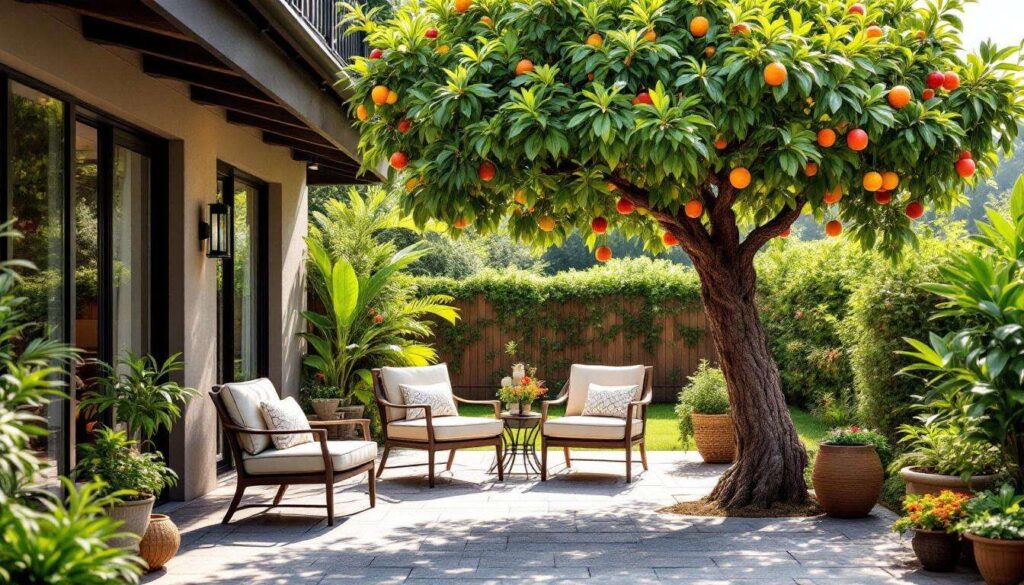
Creating an inviting outdoor space requires careful consideration when selecting trees that enhance rather than damage your patio. The perfect specimen combines aesthetic appeal with practical benefits whilst respecting the structural integrity of paved surfaces. Finding a tree that offers cooling shade during summer months, produces delicious fruit, and maintains a root system that won’t disrupt your carefully laid paving stones represents the ideal solution for homeowners seeking both beauty and functionality in their garden design.
Choosing the right tree for your patio
Understanding space limitations
Selecting an appropriate tree begins with assessing available space both above and below ground. Patio environments typically offer limited growing areas, making it essential to choose varieties that thrive in confined conditions. Container-grown specimens or trees with naturally compact growth habits prove most successful in these settings.
The mature size of your chosen tree determines its long-term suitability. Consider both canopy spread and height when making your selection, ensuring adequate clearance from buildings, walls, and overhead structures. Dwarf and semi-dwarf varieties often provide the perfect compromise between manageable dimensions and productive capacity.
Root system considerations
The underground architecture of your tree matters just as much as its visible structure. Trees with aggressive root systems can quickly undermine paving, creating costly damage and safety hazards. Look for varieties known for their non-invasive root habits that develop fibrous rather than thick, woody roots near the surface.
- Fibrous root systems distribute weight evenly
- Shallow lateral roots pose the greatest threat to paving
- Container planting naturally restricts root spread
- Regular root pruning maintains manageable growth
Understanding these fundamental characteristics helps narrow your selection to trees that will flourish without compromising your patio’s structural integrity, leading naturally to specific criteria that prevent pavement damage.
Criteria for avoiding pavement cracks
Root depth and spread patterns
Trees with deep taproots rather than spreading lateral roots present fewer risks to paved surfaces. Species that naturally develop downward-growing root systems seek moisture and nutrients at depth, reducing pressure on surface-level structures. This growth pattern proves particularly valuable in patio settings where underground space may be limited.
| Root characteristic | Risk to paving | Preferred option |
|---|---|---|
| Shallow lateral roots | High | Avoid |
| Deep taproot system | Low | Recommended |
| Fibrous roots | Medium | Acceptable with monitoring |
| Aggressive surface roots | Very high | Unsuitable |
Container versus in-ground planting
Planting in large containers offers the most reliable protection against pavement damage. This approach physically contains the root system whilst allowing the tree to develop healthily. Select containers with minimum dimensions of 60-80 centimetres diameter for dwarf fruit trees, ensuring adequate drainage holes prevent waterlogging.
In-ground planting requires careful preparation, including the installation of root barriers around the planting hole. These physical barriers direct root growth downward and away from paved areas, though they require professional installation for maximum effectiveness.
Maintaining appropriate distances
Even well-behaved trees need sufficient space from paved areas. As a general rule, plant trees at least two to three metres from patio edges when planting in the ground. This buffer zone accommodates natural root spread whilst protecting your investment in hardscaping. With these protective measures understood, attention turns to selecting varieties that excel at providing shade.
The best trees for providing shade
Canopy characteristics for optimal coverage
Effective shade trees develop dense, spreading canopies that filter sunlight without completely blocking it. The ideal patio tree creates dappled shade that reduces temperatures by several degrees whilst maintaining air circulation. Look for varieties with naturally rounded or umbrella-shaped crowns that extend horizontally rather than growing predominantly upward.
Recommended shade-producing varieties
Several fruit-bearing trees combine excellent shade provision with compact growth habits suitable for patios:
- Japanese maple cultivars offer delicate foliage and artistic branching patterns
- Crab apple trees provide spring blossoms and autumn colour alongside moderate shade
- Amelanchier species deliver multi-season interest with manageable proportions
- Ornamental cherry varieties create spectacular displays whilst remaining reasonably sized
Seasonal shade considerations
The best patio trees offer deciduous foliage that provides cooling shade during warm months whilst allowing winter sunlight to reach your outdoor space. This natural cycle maximises comfort throughout the year, reducing heating costs in cooler months whilst creating pleasant outdoor conditions during summer. Understanding shade requirements naturally leads to examining specific fruit-bearing options that combine productivity with aesthetic appeal.
Fruit trees suitable for patios
Dwarf and patio fruit tree varieties
Modern breeding programmes have developed numerous compact fruit trees specifically designed for small spaces. These varieties maintain full-sized fruit production whilst remaining manageable in height and spread. Grafted onto dwarfing rootstocks, they rarely exceed two to three metres in height, making them perfect for patio cultivation.
| Fruit type | Suitable varieties | Maximum height | Container size needed |
|---|---|---|---|
| Apple | M27 rootstock cultivars | 1.5-2m | 45-60cm |
| Pear | Quince C rootstock | 2-2.5m | 50-65cm |
| Cherry | Gisela 5 rootstock | 2-3m | 60-75cm |
| Fig | Brown Turkey, Petite Negra | 2-2.5m | 50-60cm |
Self-fertile options for single-tree planting
Space constraints often limit patio gardeners to a single tree, making self-fertile varieties essential. These cultivars produce fruit without requiring a pollination partner, ensuring reliable crops even in isolation. Popular self-fertile options include most fig varieties, certain apple cultivars like ‘Scrumptious’ or ‘Sunset’, and self-compatible cherry varieties such as ‘Stella’.
Mediterranean and citrus options
In sheltered patio environments, Mediterranean fruit trees thrive when given winter protection. Citrus trees, particularly kumquats, calamondins, and Meyer lemons, adapt beautifully to container culture and tolerate being moved indoors during cold periods. Olive trees offer architectural interest alongside eventual fruit production, though they require several years to establish before bearing. Having selected an appropriate variety, proper maintenance ensures long-term success and productivity.
How to care for your patio tree
Watering and feeding requirements
Container-grown trees require consistent watering throughout the growing season, as their restricted root systems cannot access moisture beyond the pot. During warm weather, daily watering may prove necessary, whilst winter demands reduce to weekly checks. Insert your finger into the compost; if dry below the surface, water thoroughly until it drains from the base.
Feed containerised fruit trees with balanced liquid fertiliser every fortnight during spring and summer, switching to high-potassium formulations as fruit develops. This nutritional support compensates for the limited soil volume available to roots.
Pruning and training techniques
Regular pruning maintains manageable proportions whilst encouraging productive growth. Fruit trees benefit from annual winter pruning to remove crossing branches, diseased wood, and excessive growth. Summer pruning of vigorous shoots helps control size and directs energy into fruit production rather than vegetative expansion.
- Remove dead, damaged, or diseased wood immediately
- Thin crowded branches to improve air circulation
- Maintain an open centre for light penetration
- Prune to outward-facing buds to encourage spreading growth
Winter protection strategies
Container-grown trees face greater exposure to frost damage than their in-ground counterparts. Protect roots by wrapping pots with bubble wrap or hessian during cold periods, and move tender varieties to sheltered locations or unheated greenhouses. Mulching the compost surface with bark chips provides additional insulation against temperature fluctuations.
Selecting and maintaining the right tree transforms your patio into a productive, shaded retreat that enhances rather than damages your outdoor space. By choosing varieties with non-invasive root systems, appropriate mature sizes, and self-fertile characteristics, you create a sustainable garden feature that delivers beauty, comfort, and fresh fruit for many years. Proper care through consistent watering, regular feeding, and thoughtful pruning ensures your investment flourishes, providing seasonal interest and practical benefits whilst respecting the structural integrity of your carefully designed patio environment.