



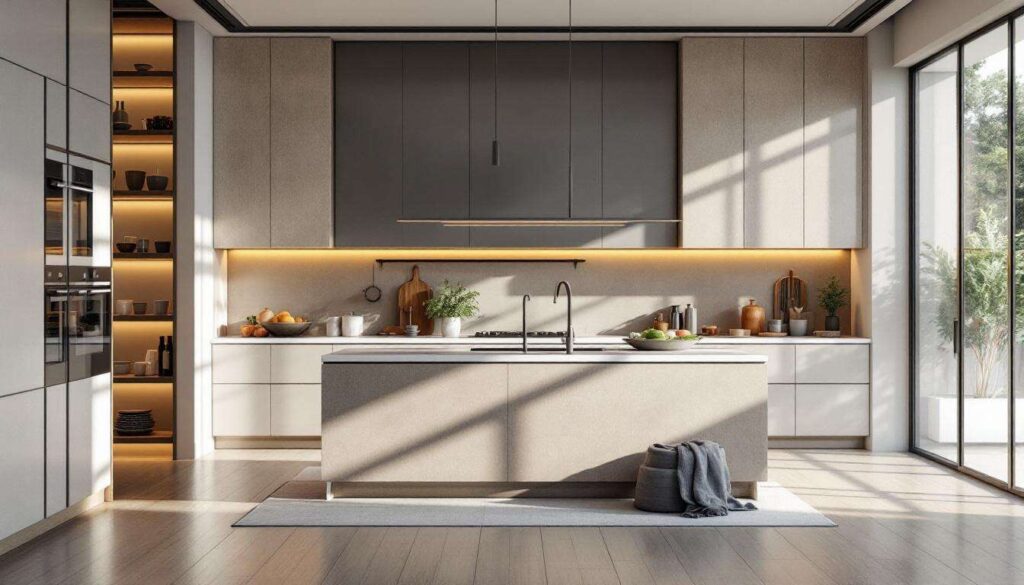
The kitchen has long been considered the heart of the home, where functionality meets daily life. For decades, designers have relied on a specific spatial arrangement to optimise workflow and efficiency. However, recent declarations from industry professionals suggest that this traditional approach no longer serves the needs of contemporary households. As lifestyles evolve and technology advances, the way we interact with our kitchens has fundamentally changed, prompting experts to rethink established design principles.
The origins of the kitchen work triangle
The birth of an efficiency concept
The kitchen work triangle emerged in the 1940s as a revolutionary design principle developed by the University of Illinois School of Architecture. This concept positioned three primary work areas—the sink, cooker, and refrigerator—at the points of an imaginary triangle. The goal was to minimise unnecessary movement whilst preparing meals, creating an efficient workflow that reduced fatigue and saved time.
The mathematical principles behind the triangle
Design experts established specific measurements to ensure optimal functionality. The recommended parameters included:
- Each leg of the triangle should measure between 1.2 and 2.7 metres
- The total perimeter should not exceed 7.9 metres
- No major traffic paths should cross through the triangle
- No obstacles should interrupt the flow between the three points
This formula worked exceptionally well for the post-war era, when kitchens were primarily utilitarian spaces designed for a single cook preparing three meals daily. The standardised approach provided architects and builders with a reliable framework that could be applied to various kitchen sizes and configurations.
Understanding these historical foundations helps explain why the shift away from this model represents such a significant change in kitchen design philosophy.
Why the work triangle is becoming obsolete
Multiple cooks and collaborative cooking
Modern households rarely feature a single designated cook working in isolation. Today’s kitchens accommodate multiple people simultaneously, whether family members preparing meals together or hosts entertaining guests whilst cooking. The rigid triangle configuration creates bottlenecks and conflicts when more than one person attempts to access the primary work zones.
Expanded appliance portfolios
Contemporary kitchens contain significantly more appliances than their mid-century counterparts. The traditional triangle accounted for only three elements, but today’s spaces must incorporate:
- Dishwashers and additional sinks
- Microwaves and combination ovens
- Coffee stations and beverage centres
- Wine refrigerators and dedicated storage
- Warming drawers and steam ovens
Open-plan living challenges
The prevalence of open-plan layouts has fundamentally altered kitchen functionality. These spaces now serve as social hubs rather than isolated work areas. The work triangle concept fails to address the need for seamless integration with dining and living zones, nor does it consider sight lines, entertainment requirements, or the desire for inclusive cooking experiences.
These limitations have prompted designers to develop more flexible approaches that better reflect how people actually use their kitchens today.
The impact of new lifestyles on kitchen layout
Remote work and increased home time
The rise of remote working has dramatically increased the time people spend at home, intensifying kitchen usage throughout the day. Spaces must now accommodate breakfast preparation, lunch breaks, afternoon snacks, and evening meals—often with multiple household members requiring access simultaneously. This constant activity demands greater flexibility than the traditional triangle provides.
Changing family structures and dining habits
Modern families exhibit diverse structures and eating patterns. Meal preparation has evolved from formal, scheduled events to more casual, staggered arrangements. Some household members may be preparing breakfast whilst others assemble packed lunches or heat leftovers. The kitchen must support these overlapping activities without creating congestion or conflict.
Technology integration requirements
Smart home technology has introduced new considerations for kitchen design. Charging stations, integrated screens, voice-activated controls, and connected appliances require thoughtful placement that the work triangle never anticipated. These technological elements need accessible positioning without disrupting workflow or aesthetic appeal.
Recognising these lifestyle shifts has led designers to develop innovative solutions that prioritise adaptability and user experience.
New kitchen design trends for 2026
The kitchen work zones concept
The emerging alternative to the triangle is the zones-based approach, which divides the kitchen into dedicated activity areas. Rather than focusing on three points, this method creates distinct zones for:
- Food preparation and cutting
- Cooking and heating
- Cleaning and waste management
- Storage and pantry access
- Serving and plating
Each zone contains the necessary tools, appliances, and storage for its specific function, allowing multiple users to work simultaneously without interference.
Galley-style efficiency reimagined
Designers are revisiting the galley kitchen concept with contemporary enhancements. Modern interpretations feature parallel work surfaces with carefully planned zones along each side, creating multiple workflow paths rather than a single triangular route. This configuration particularly suits narrow spaces whilst accommodating collaborative cooking.
Island-centric layouts
Kitchen islands have evolved from simple preparation surfaces to multifunctional hubs incorporating cooking, cleaning, and storage facilities. The island-centric design distributes work areas around this central feature, creating a more organic workflow that adapts to various activities and user numbers.
These innovative approaches offer practical solutions for contemporary living requirements whilst maintaining efficiency.
How to embrace the kitchen design of the future
Assessing your household needs
Before redesigning your kitchen, conduct a thorough analysis of how your household actually uses the space. Consider the number of regular cooks, peak usage times, and specific activities that occur in your kitchen. This honest assessment provides the foundation for creating a layout that serves your unique requirements rather than adhering to outdated conventions.
Prioritising flexibility and adaptability
Future-focused kitchen design emphasises adaptable spaces that can accommodate changing needs. Incorporate moveable elements, adjustable storage solutions, and multipurpose surfaces that can be reconfigured as circumstances evolve. This flexibility ensures your kitchen remains functional regardless of lifestyle changes.
Working with design professionals
Collaborating with experienced kitchen designers who understand contemporary trends ensures optimal results. These professionals can translate your lifestyle requirements into practical layouts whilst addressing technical considerations such as plumbing, electrical requirements, and building regulations. Their expertise helps avoid costly mistakes whilst maximising functionality.
Implementing these strategies creates kitchens that genuinely enhance daily life rather than constraining it.
The advantages of the new kitchen layout
Enhanced functionality for modern living
Zone-based layouts provide superior functionality for contemporary households. Multiple people can work comfortably without competing for access to essential areas. Specialised zones ensure that everything needed for specific tasks is conveniently located, reducing unnecessary movement and increasing efficiency.
Improved social interaction
Modern kitchen designs facilitate social connection rather than isolating the cook. Open configurations with multiple work areas allow hosts to interact with guests whilst preparing food, transforming cooking from a solitary task into a shared experience that enhances entertainment and family time.
Better accommodation of technology
New layouts naturally incorporate technological requirements without compromising aesthetics or functionality. Dedicated charging stations, integrated appliances, and smart home controls fit seamlessly into zone-based designs, supporting the connected lifestyle that characterises contemporary living.
Increased property value
Kitchens designed according to current trends typically offer better return on investment. Prospective buyers recognise the practical advantages of modern layouts, making properties with updated kitchens more attractive and valuable in competitive housing markets.
The kitchen work triangle served its purpose admirably for many decades, providing a reliable framework when household needs were more uniform and predictable. However, the dramatic changes in how we live, work, and socialise have rendered this approach insufficient for contemporary requirements. The shift towards zone-based layouts and flexible configurations represents a natural evolution rather than a rejection of efficiency principles. By embracing these new design philosophies, homeowners can create kitchens that genuinely support their lifestyles whilst remaining adaptable for future changes. The most successful kitchen designs will always be those that prioritise the actual needs of the people using them over adherence to outdated conventions.