



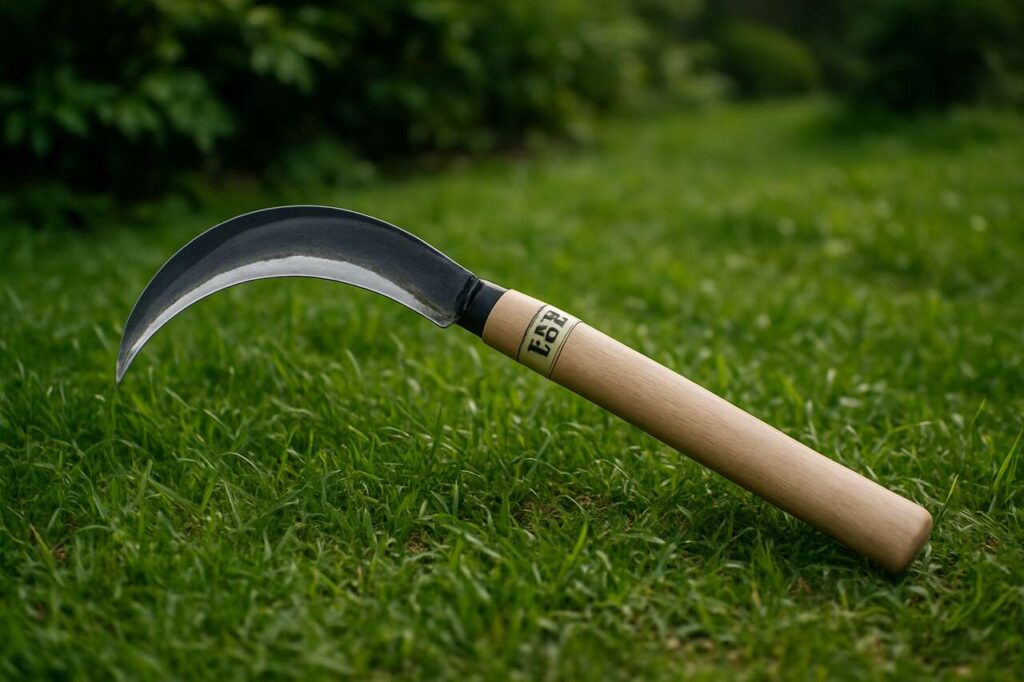
Weeding ranks amongst the most tedious tasks in garden maintenance, yet it remains essential for healthy plant growth and an attractive outdoor space. Traditional tools often require awkward bending, repetitive strain, and considerable physical effort. Japanese gardening implements offer a compelling alternative, combining centuries of refined design with practical efficiency. The Japanese weeding sickle stands out as a particularly effective tool, transforming what many consider a chore into a manageable, even satisfying activity. Its distinctive curved blade and ergonomic design reflect a philosophy where form follows function, delivering results that conventional weeding tools struggle to match.
What is a Japanese sickle ?
Origins and traditional design
The Japanese sickle, known as kama in its homeland, traces its heritage back several centuries to agricultural communities across Japan. Farmers originally developed this tool for harvesting rice and clearing vegetation in paddy fields. The traditional design features a short wooden handle attached to a sharply curved blade, typically forged from high-carbon steel. This configuration differs markedly from Western sickles, which generally possess longer handles and less pronounced curves.
Japanese blacksmiths perfected the kama through generations of refinement, creating variations suited to specific tasks. The blade’s curvature allows for efficient cutting with a pulling motion, reducing the effort required compared to pushing or sawing movements. Regional variations emerged across Japan, with blade lengths, handle styles, and steel compositions adapted to local vegetation types and soil conditions.
Modern adaptations for weeding
Contemporary manufacturers have adapted the traditional kama specifically for weeding purposes, creating tools that retain the core design principles whilst addressing modern gardening needs. These weeding sickles typically feature:
- Shorter blade lengths ranging from 10 to 15 centimetres for precision work
- Serrated or smooth edge options depending on weed types
- Ergonomic wooden, bamboo, or composite handles for comfortable grip
- Protective sheaths for safe storage and transport
- Left-handed and right-handed configurations
The modern Japanese weeding sickle maintains the pulling action that makes the tool so effective, allowing gardeners to slice through weed stems and roots with minimal effort. This design proves particularly valuable for those with back problems or limited mobility, as it enables effective weeding from a kneeling or squatting position without excessive bending.
Understanding the tool’s heritage and design evolution helps gardeners appreciate why this implement delivers such impressive results compared to conventional alternatives.
The benefits of the Japanese sickle for weeding
Ergonomic advantages
The Japanese weeding sickle’s ergonomic design reduces physical strain significantly compared to traditional weeding methods. The curved blade naturally aligns with the wrist’s movement arc, minimising joint stress during repetitive cutting motions. Gardeners can maintain a more comfortable posture, reducing lower back strain that commonly afflicts those who spend extended periods weeding with conventional tools.
The short handle provides excellent control and precision, allowing users to target specific weeds without disturbing surrounding plants. This controlled approach proves invaluable in densely planted beds where conventional hoes might damage desirable vegetation.
Efficiency and effectiveness
The blade’s sharpness and curvature enable clean cuts through tough weed stems and shallow root systems with single strokes. This efficiency translates to faster weeding sessions and less fatigue. The tool excels at:
- Severing tap roots below soil level
- Clearing dense patches of annual weeds
- Working in confined spaces between plants
- Removing weeds from pathways and gravel areas
- Harvesting herbs and cutting back overgrown vegetation
Versatility across garden tasks
Beyond weeding, the Japanese sickle serves multiple purposes in garden maintenance. Gardeners employ it for harvesting vegetables, cutting back perennials, dividing plants, and clearing ground cover. This versatility makes it a valuable addition to any tool collection, offering functionality that extends well beyond its primary purpose.
| Task | Effectiveness | Effort Required |
|---|---|---|
| Shallow-rooted weeds | Excellent | Low |
| Deep-rooted perennials | Good | Moderate |
| Dense weed patches | Excellent | Low |
| Precision weeding | Outstanding | Very low |
These practical benefits explain why Japanese weeding sickles have gained popularity amongst gardeners seeking efficient, body-friendly tools. Selecting the appropriate model for your specific requirements ensures you maximise these advantages.
How to choose the right Japanese sickle for your needs
Blade characteristics
Blade selection represents the most critical decision when purchasing a Japanese weeding sickle. Blade length typically ranges from 10 to 18 centimetres, with shorter blades offering greater precision and longer ones providing increased reach. Consider the types of weeds you encounter most frequently and the density of your planting schemes.
The blade edge comes in two primary configurations. Smooth edges deliver clean cuts through soft stems and are easier to sharpen, whilst serrated edges grip and cut through tougher, fibrous vegetation more effectively. Some models feature partially serrated blades, combining both advantages.
Handle design and materials
Handle comfort directly affects your weeding experience, particularly during extended sessions. Traditional wooden handles offer excellent grip and absorb vibration, whilst modern composite materials provide durability and weather resistance. Handle length varies between 10 and 15 centimetres, with longer handles suited to those with larger hands.
Consider these factors when evaluating handles:
- Grip circumference and shape compatibility with your hand size
- Material texture and moisture resistance
- Balance point relative to blade weight
- Presence of hand guards or finger grooves
Steel quality and construction
High-carbon steel blades maintain sharp edges longer and resist bending under pressure. Japanese manufacturers often use traditional steel grades such as Yasuki steel, prized for edge retention and durability. Stainless steel alternatives require less maintenance but may not hold edges as effectively.
Examine the blade-to-handle connection, which should feature solid construction without movement or flex. Tang construction, where the blade extends into the handle, provides superior strength compared to socket-mounted designs.
Armed with knowledge about selecting the appropriate tool, you can move forward to master the techniques that make Japanese sickles so effective in practice.
Effective techniques for weeding with a Japanese sickle
Proper grip and posture
Mastering the correct grip ensures safety and efficiency when using a Japanese weeding sickle. Hold the handle firmly with your dominant hand, positioning your thumb along the handle’s length for control. Your wrist should remain relatively straight, allowing the blade’s curve to do the work rather than forcing cuts through wrist rotation.
Adopt a comfortable kneeling or squatting position close to your work area. This proximity provides better control and reduces the temptation to overreach, which can lead to awkward postures and potential injury. Use a kneeling pad or garden kneeler to protect your knees during extended weeding sessions.
Cutting techniques for different weed types
The pulling motion forms the foundation of effective Japanese sickle technique. Position the blade behind the weed stem at or slightly below soil level, then draw it towards you with steady pressure. The curved blade naturally slices through the stem as you pull, severing the weed cleanly.
For various weed types, adapt your approach:
- Annual weeds with shallow roots: slice horizontally just below the surface
- Tap-rooted perennials: angle the blade downwards to cut deeper
- Spreading weeds: work systematically from one edge, clearing as you progress
- Grass clumps: insert the blade beneath the crown and lever upwards whilst cutting
Safety considerations
The Japanese sickle’s sharp blade demands respect and careful handling. Always cut away from your body and keep your free hand clear of the blade’s path. When moving between weeding areas, sheath the blade or carry the tool with the blade pointing downwards and away from you.
Wear appropriate protective equipment, including sturdy gardening gloves and closed-toe footwear. Be particularly cautious when working on slopes or uneven ground, where slips could result in contact with the blade. Store the tool securely when not in use, preferably in its sheath and out of reach of children.
Proper technique not only improves weeding efficiency but also extends your tool’s working life, which brings us to the important matter of maintenance and care.
Maintenance and durability: extending the life of your Japanese sickle
Cleaning and storage practices
Proper cleaning after each use prevents rust and maintains blade sharpness. Remove soil and plant debris with a stiff brush, then wipe the blade with a damp cloth. Dry thoroughly with a clean towel, paying particular attention to the blade-handle junction where moisture can accumulate. Apply a thin layer of camellia oil or similar protective coating to carbon steel blades before storage.
Store your Japanese sickle in a dry location, preferably hanging or in a tool rack where air can circulate around it. Always use the protective sheath to prevent accidental contact and to shield the blade from moisture. Avoid storing in damp sheds or directly on concrete floors, which can promote rust formation.
Sharpening techniques
Regular sharpening maintains cutting efficiency and reduces the effort required during weeding. Japanese sickle blades typically feature a single bevel edge, sharpened on one side only. Use a medium-grit whetstone or diamond sharpening stone, maintaining the original bevel angle of approximately 20 to 25 degrees.
Follow this sharpening process:
- Secure the blade safely or hold it firmly against a stable surface
- Draw the stone along the bevelled edge from handle to tip
- Maintain consistent angle and pressure throughout each stroke
- Remove any burr from the flat side with light strokes
- Test sharpness carefully on paper or light vegetation
Addressing wear and damage
Inspect your sickle regularly for signs of wear, including loose handles, blade chips, or rust spots. Address minor rust immediately by removing it with fine steel wool and applying protective oil. Handle looseness may require tightening screws or, in traditional tang construction, careful wedging.
Blade chips or significant damage often necessitate professional attention or replacement. Attempting to grind out deep chips can alter the blade’s temper and geometry, compromising performance. Many Japanese tool suppliers offer blade replacement services, allowing you to retain your familiar handle whilst restoring cutting capability.
With proper maintenance ensuring your tool remains in excellent condition, the next consideration involves acquiring your Japanese weeding sickle at the right price and from reliable sources.
Buying a Japanese sickle: where and at what price ?
Retail options and suppliers
Japanese weeding sickles are available through various channels, each offering distinct advantages. Specialist garden tool retailers stock quality models and provide expert advice on selection. Online marketplaces offer broader choice and competitive pricing, though examining tools physically before purchase proves valuable for assessing build quality and handle comfort.
Consider purchasing from:
- Specialist Japanese tool importers for authentic traditional designs
- Garden centres with comprehensive tool sections
- Online retailers specialising in horticultural equipment
- Agricultural suppliers serving professional growers
- Craft tool suppliers stocking traditional implements
Price ranges and value considerations
Japanese weeding sickle prices vary considerably based on manufacturing quality, materials, and brand reputation. Entry-level models start around £15 to £25, offering basic functionality suitable for occasional use. Mid-range options priced between £30 and £50 typically feature better steel quality and more refined construction.
Premium traditional Japanese sickles from renowned manufacturers can cost £60 to £100 or more, reflecting superior materials, hand-forging techniques, and exceptional edge retention. These represent long-term investments for serious gardeners who value tool quality and longevity.
| Price Range | Quality Level | Typical Features |
|---|---|---|
| £15-£25 | Basic | Standard steel, simple handle |
| £30-£50 | Mid-range | High-carbon steel, ergonomic design |
| £60-£100+ | Premium | Traditional forging, premium materials |
Evaluating value and authenticity
Price alone does not guarantee quality or suitability for your needs. Examine product descriptions carefully, looking for specifics about steel type, manufacturing methods, and country of origin. Authentic Japanese-made tools generally command higher prices but offer superior performance and durability compared to mass-produced alternatives.
Read customer reviews focusing on long-term performance rather than initial impressions. Consider the availability of replacement parts or sharpening services, which can significantly extend tool lifespan. Some suppliers offer trial periods or satisfaction guarantees, reducing the risk associated with purchasing unfamiliar tools.
The Japanese weeding sickle represents a worthwhile investment for gardeners seeking efficient, ergonomic solutions to persistent weeding challenges. Its distinctive curved blade design, rooted in centuries of agricultural tradition, delivers practical advantages that conventional tools cannot match. From reducing physical strain to enabling precision work amongst delicate plants, this versatile implement transforms weeding from arduous chore to manageable task. Selecting the appropriate model requires consideration of blade characteristics, handle design, and steel quality, whilst proper technique and regular maintenance ensure optimal performance and longevity. Whether purchased as an entry-level tool or premium investment, a Japanese weeding sickle offers exceptional value for those committed to maintaining healthy, weed-free gardens through effective, body-friendly methods.