

The peace lily has long captivated homeowners with its elegant white blooms and air-purifying qualities, but positioning this beloved houseplant requires more than aesthetic consideration. Feng shui practitioners emphasise that plant placement directly influences the flow of energy throughout living spaces, affecting everything from mental clarity to relationship harmony. As awareness grows about creating balanced environments that support wellbeing, understanding where to position a peace lily becomes essential for maximising both its practical benefits and energetic contributions to your home.
The importance of feng shui in interior design
Feng shui represents an ancient Chinese practice that examines how spatial arrangements affect energy flow, or chi, within environments. This philosophy has gained considerable traction in contemporary interior design as people increasingly recognise the connection between their surroundings and overall quality of life.
Understanding chi and energy flow
Chi refers to the life force energy that moves through spaces, influencing mood, productivity, and relationships. When chi flows smoothly, occupants typically experience greater harmony and vitality. Conversely, blocked or stagnant energy can contribute to feelings of lethargy, frustration, or discord. Feng shui principles guide the arrangement of furniture, colours, and natural elements to encourage beneficial energy patterns throughout the home.
The role of plants in feng shui
Plants occupy a particularly significant position in feng shui practice because they represent the wood element, symbolising growth, vitality, and renewal. Living plants introduce natural energy into indoor spaces, helping to purify air whilst softening harsh architectural lines. However, not all plants carry equal energetic value, and placement determines whether their influence proves beneficial or counterproductive. The peace lily stands out amongst houseplants for its unique combination of aesthetic appeal and energetic properties.
Beyond their symbolic meaning, plants create tangible improvements in indoor environments that align with feng shui objectives of promoting health and comfort.
The benefits of a peace lily for your home
The peace lily offers multiple advantages that extend beyond mere decoration, making it an ideal choice for those seeking to enhance their living spaces through feng shui principles.
Air purification qualities
Research has demonstrated that peace lilies effectively remove common indoor pollutants from the air. These plants absorb toxins through their leaves and roots, converting harmful substances into harmless compounds. The specific contaminants peace lilies address include:
- Formaldehyde from furniture and building materials
- Benzene from cleaning products and plastics
- Trichloroethylene from solvents and adhesives
- Ammonia from household cleaners
- Xylene and toluene from paints and varnishes
Symbolic significance in feng shui
The peace lily carries powerful symbolic meaning within feng shui practice. Its white flowers represent purity, tranquillity, and spiritual harmony, whilst the plant’s ability to thrive in low-light conditions symbolises resilience and adaptability. The rounded leaves contrast with sharp-edged furnishings, helping to soften potentially aggressive energy and create a more balanced atmosphere.
Low maintenance requirements
Unlike many houseplants that demand constant attention, peace lilies prove remarkably forgiving. They tolerate irregular watering schedules and adapt to various light conditions, making them suitable for busy households. This resilient nature aligns with feng shui principles of effortless harmony, as the plant maintains its beneficial presence without creating additional stress for occupants.
Understanding these benefits provides context for strategic placement decisions that maximise the peace lily’s positive influence.
Where to place a peace lily according to feng shui experts
Feng shui practitioners recommend specific locations for peace lilies based on the bagua map, an energetic grid that divides spaces into nine zones, each corresponding to different life aspects.
Eastern and southeastern positions
The eastern sector governs health and family relationships, whilst the southeast relates to wealth and abundance. Positioning a peace lily in these areas strengthens the wood element naturally associated with these directions. The plant’s growth energy reinforces prosperity intentions and supports family harmony through its calming presence.
Avoiding unfavourable locations
Certain placements can diminish the peace lily’s benefits or create energetic imbalances. Feng shui experts advise against positioning peace lilies in:
- The centre of rooms, which can obstruct chi flow
- Directly opposite main entrances, potentially blocking incoming opportunities
- Bedrooms if the occupant experiences sleep difficulties, as plants continue metabolic processes at night
- Bathrooms, where water element dominance may overwhelm the plant’s wood energy
Considering natural light and energy
Whilst feng shui provides energetic guidance, practical considerations remain essential. Peace lilies require indirect natural light to maintain their vitality. Positioning plants where they receive adequate illumination ensures they continue performing their air-purifying functions and maintain the vibrant energy that contributes to positive chi flow.
These general principles find specific application when considering individual rooms throughout the home.
Recommended rooms and spaces for the peace lily
Different areas of the home benefit uniquely from peace lily placement, with each location offering distinct advantages for energy flow and practical function.
Living rooms and communal areas
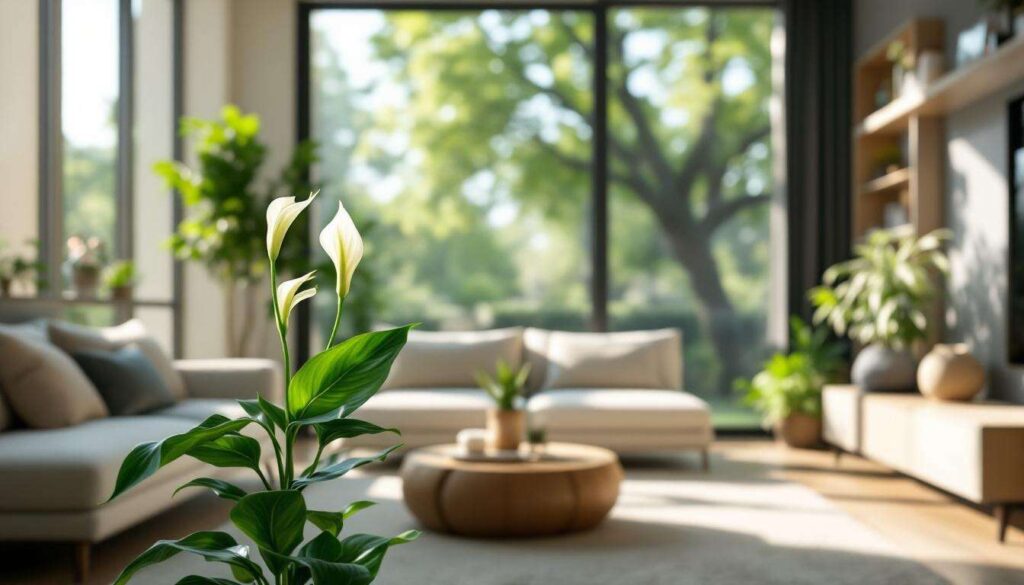
The living room serves as a primary gathering space where family members and guests interact. Placing a peace lily here promotes harmonious conversation and creates a welcoming atmosphere. Position the plant near seating areas but not directly between people, allowing it to soften energy without interfering with social connection. Corner placements work particularly well, activating otherwise stagnant spaces whilst maintaining clear pathways.
Home offices and workspaces
Professional environments benefit enormously from peace lily presence. The plant’s air-purifying qualities improve concentration, whilst its calming energy reduces stress associated with demanding tasks. Feng shui experts recommend positioning peace lilies on desks or nearby shelves within the wealth corner (furthest left from the entrance) to support career advancement and financial success.
Entrance halls and reception areas
The entrance represents how energy enters your home, making it a crucial zone for feng shui consideration. A peace lily positioned near the entrance, but not blocking the doorway, welcomes positive chi whilst filtering incoming energy. This placement creates an immediate impression of tranquillity and care, setting the tone for the entire home.
| Room | Primary benefit | Optimal placement |
|---|---|---|
| Living room | Social harmony | Corner positions near seating |
| Home office | Enhanced focus | Desk or wealth corner |
| Entrance hall | Positive welcome | Near entrance, not blocking |
| Kitchen | Health support | Eastern wall or windowsill |
Successful placement requires ongoing attention to ensure the peace lily maintains its beneficial influence.
Tips for maintaining an optimal peace lily
Proper care ensures your peace lily continues providing both practical and energetic benefits, maintaining the positive chi flow essential to feng shui principles.
Watering and humidity requirements
Peace lilies communicate their watering needs clearly through slight drooping when thirsty. Water thoroughly when the top inch of soil feels dry, allowing excess water to drain completely. These plants appreciate humidity, so occasional misting or placement on pebble trays filled with water enhances their vitality. Consistent care maintains the vibrant energy necessary for positive feng shui influence.
Light and temperature considerations
Although peace lilies tolerate low light, they flourish in bright, indirect illumination. Avoid direct sunlight, which scorches leaves and diminishes the plant’s energetic contribution. Maintain temperatures between 18-24°C, avoiding draughts and sudden temperature fluctuations that stress the plant and disrupt its stable energy.
Cleaning and energy maintenance
Dust accumulation on leaves reduces photosynthetic efficiency and symbolically represents stagnant energy. Wipe leaves monthly with a damp cloth to maintain the plant’s air-purifying capacity and energetic clarity. Remove spent flowers and yellowing leaves promptly, as dying plant material introduces declining energy that contradicts feng shui principles of vitality and growth.
Recognising when to relocate
If your peace lily struggles despite proper care, consider relocating it. Plants respond to energetic environments, and persistent difficulties may indicate unfavourable placement. Trust both practical observation and intuitive guidance when adjusting positions to optimise both plant health and energy flow.
Strategic placement of peace lilies throughout your home creates multiple focal points of positive energy whilst improving air quality and aesthetic appeal. The combination of feng shui wisdom and practical plant care transforms these elegant specimens into powerful contributors to household harmony. By positioning peace lilies in eastern sectors, communal spaces, and work areas whilst maintaining their health through appropriate care, you establish living elements that continuously support wellbeing and balanced energy flow throughout your living environment.