



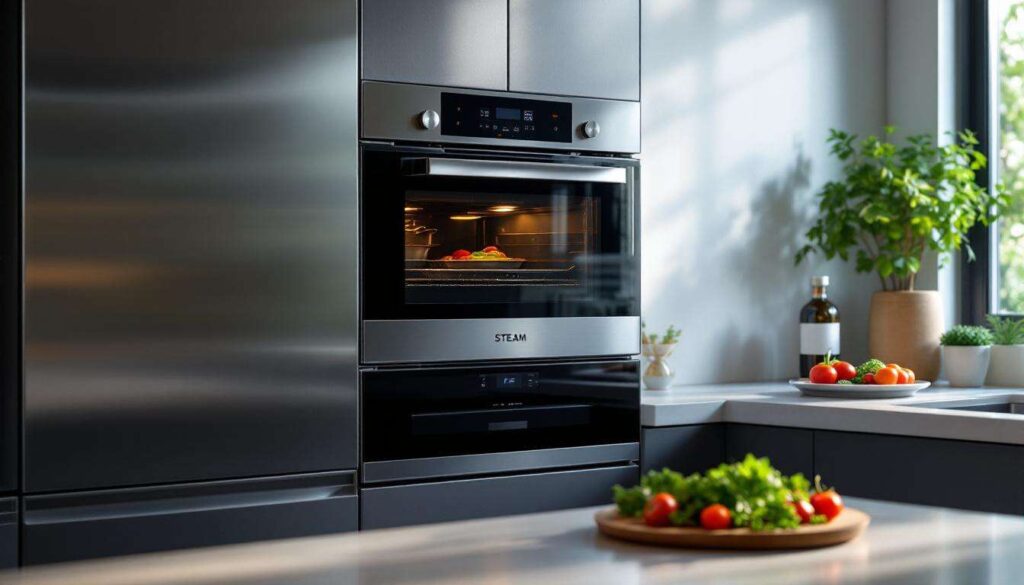
Kitchen appliances have long been subject to evolution, with each generation bringing innovations that promise to transform our daily routines. The microwave oven, once hailed as a revolutionary device that would change cooking forever, now faces growing criticism from consumers and culinary experts alike. Its dominance in kitchens across the country appears increasingly threatened by emerging technologies that offer superior versatility, better taste results, and improved energy efficiency. Many households are now questioning whether this ubiquitous appliance deserves its place on the worktop, particularly as alternatives become more affordable and accessible.
The end of an era: why say goodbye to the microwave ?
Changing consumer expectations
Modern households demand more from their kitchen appliances than simple convenience. The microwave, whilst undeniably fast, has become synonymous with compromised food quality and limited cooking capabilities. Consumers increasingly prioritise taste, texture, and nutritional value over mere speed, leading to a fundamental reassessment of the microwave’s role in contemporary cooking.
Several factors contribute to this shift in perception:
- Growing awareness of how microwaving affects food texture and moisture distribution
- Increased interest in home cooking and culinary techniques that preserve flavour
- Recognition that microwaves excel at reheating but struggle with actual cooking tasks
- Desire for appliances that can perform multiple functions rather than single-purpose devices
Health and nutritional concerns
Research into microwave cooking has raised questions about nutrient retention and the potential formation of harmful compounds in certain foods. While microwaves remain safe when used correctly, the uneven heating patterns can create hot spots that degrade vitamins and minerals more rapidly than conventional cooking methods. This concern resonates particularly with health-conscious consumers who invest time and money in quality ingredients.
These evolving priorities naturally lead to examining what specific shortcomings have made the microwave vulnerable to replacement.
The limitations of the microwave: obsolescence and performance
Technical constraints that cannot be overcome
The fundamental technology behind microwave ovens imposes inherent limitations that no amount of refinement can eliminate. Microwaves heat food by causing water molecules to vibrate, which creates several unavoidable problems. Foods with varying moisture content heat unevenly, resulting in the familiar scenario of scalding hot edges surrounding a frozen centre.
| Limitation | Impact on cooking |
|---|---|
| Uneven heating | Inconsistent results requiring frequent stirring |
| No browning capability | Inability to create desirable textures and flavours |
| Limited capacity | Unsuitable for batch cooking or larger dishes |
| Material restrictions | Cannot use metal containers or certain plastics |
The soggy food problem
Perhaps the most universally recognised failing of microwave cooking is its tendency to produce disappointingly soggy results. Crisps become chewy, bread turns rubbery, and pastries lose their appealing crunch. This occurs because microwaves generate steam within food but provide no mechanism for removing moisture or creating the dry heat necessary for browning and crisping.
Understanding these persistent problems helps explain why alternative technologies have gained such traction amongst discerning home cooks.
The rise of new cooking appliances
Air fryers leading the revolution
The explosive popularity of air fryers represents the most visible challenge to microwave dominance. These compact convection ovens circulate superheated air around food, creating crispy exteriors whilst cooking thoroughly. Sales figures demonstrate their appeal, with millions of units sold annually as consumers discover they can achieve results comparable to deep frying with minimal oil.
Multi-cookers and combination devices
Modern appliances increasingly combine multiple functions in single units. Pressure cookers with air frying capabilities, steam ovens with convection settings, and toaster ovens with multiple cooking modes offer unprecedented versatility. These devices occupy similar counter space to microwaves whilst delivering far broader functionality.
- Instant Pots that pressure cook, slow cook, sauté, and steam
- Combi-steam ovens that blend moisture and dry heat
- Halogen ovens providing rapid cooking with browning
- Smart ovens with pre-programmed settings for specific dishes
This diversification of kitchen technology sets the stage for identifying which appliance might ultimately succeed the microwave as the go-to reheating and quick-cooking solution.
The convection oven: future microwave replacement ?
How convection technology works
Convection ovens employ circulating hot air to cook food evenly and efficiently. A fan distributes heat throughout the cooking chamber, eliminating cold spots and reducing cooking times compared to traditional ovens. This technology delivers the speed advantage that made microwaves popular whilst producing superior taste and texture.
Practical advantages for everyday use
Compact countertop convection ovens now match microwaves in convenience whilst surpassing them in performance. They reheat leftovers without sogginess, crisp foods effectively, and handle a wider range of cooking tasks. The ability to brown, roast, bake, and toast makes them genuinely multi-functional appliances.
These performance benefits become even more compelling when environmental considerations enter the equation.
Ecological advantages of microwave alternatives
Longevity and repairability
Modern convection ovens typically outlast microwaves significantly. Their simpler mechanical components and more robust construction mean fewer units ending up in landfills. Many models feature replaceable parts and straightforward repair procedures, contrasting sharply with microwaves that are often discarded when magnetrons fail.
Reduced food waste
Superior reheating capabilities mean leftovers taste better when warmed in convection ovens, encouraging households to consume rather than discard previously cooked food. The improved palatability of reheated meals represents a subtle but meaningful environmental benefit through reduced food waste.
Environmental considerations naturally extend to the ongoing costs of operating these appliances.
Cost and energy consumption: essential comparison
Initial investment versus long-term value
Quality countertop convection ovens cost more initially than basic microwaves, but this price gap has narrowed considerably. When factoring in longer lifespan and greater versatility, the total cost of ownership often favours convection technology.
| Factor | Microwave | Convection oven |
|---|---|---|
| Average purchase price | £60-£150 | £80-£200 |
| Expected lifespan | 5-7 years | 10-15 years |
| Energy per use | Lower for small portions | More efficient for full loads |
Energy efficiency considerations
Microwaves consume less energy for small reheating tasks, but convection ovens prove more efficient when cooking complete meals or larger quantities. The overall energy impact depends heavily on usage patterns, with households that primarily reheat small portions finding microwaves slightly more economical, whilst those cooking full meals benefit from convection efficiency.
The microwave’s reign as the default quick-cooking appliance appears increasingly precarious. Convection ovens and multi-functional devices offer compelling alternatives that address the microwave’s fundamental limitations whilst providing superior cooking results. As these technologies become more affordable and energy-efficient, the question shifts from whether microwaves will be replaced to how quickly this transition will occur. Consumer preferences for better-tasting food, combined with environmental awareness and the appeal of versatile appliances, suggest that many kitchens will indeed bid farewell to the microwave in favour of more capable alternatives.