

Garden enthusiasts are constantly seeking innovative ways to create safer environments for wildlife. Whilst many focus on planting native species or installing bird feeders, a surprisingly effective method involves something far simpler: old tennis balls. These seemingly ordinary objects can play a crucial role in protecting vulnerable creatures like birds and hedgehogs from common garden hazards. This straightforward approach requires minimal effort yet delivers substantial benefits for local wildlife populations.
Introduction to Tennis Balls in the Garden
Understanding the Hidden Dangers in Gardens
Gardens often contain unexpected hazards that pose serious threats to wildlife. Netting used to protect vegetables and fruits, bamboo canes supporting plants, and various sharp garden structures can injure or trap small animals. Birds frequently become entangled in netting, whilst hedgehogs may suffer injuries from exposed stakes and poles. These dangers are particularly prevalent during breeding seasons when animals are more active and vulnerable.
The Tennis Ball Solution
Placing tennis balls on top of garden canes and stakes creates a visible barrier that prevents injuries. The bright colour and increased surface area make these hazards more noticeable to wildlife, particularly birds flying at dusk or dawn. This simple modification transforms potentially lethal objects into safer garden features. The method has gained recognition amongst wildlife conservation groups as an accessible and cost-effective protective measure.
Beyond their protective function, tennis balls serve multiple purposes in garden safety strategies, making them an invaluable tool for anyone committed to wildlife-friendly gardening practices.
Protecting Birds: a Simple Gesture
Common Threats to Garden Birds
Birds face numerous challenges when navigating gardens, particularly during nesting season. Sharp bamboo canes and metal stakes used for supporting plants can cause severe injuries or even death. Many species, including thrushes, robins, and blackbirds, fly close to the ground when foraging, making them especially vulnerable to these hazards. Eye injuries are particularly common and often prove fatal.
How Tennis Balls Provide Protection
The protective mechanism works through several key factors:
- Increased visibility of potential hazards through bright colouration
- Cushioning effect that reduces impact injuries
- Enlarged surface area that prevents penetration wounds
- Weather-resistant material suitable for year-round use
Statistics on Bird Safety
| Hazard Type | Annual Bird Injuries | Prevention Success Rate |
|---|---|---|
| Exposed canes | Thousands | 85% with tennis balls |
| Garden netting | High numbers | 70% with proper coverage |
| Glass surfaces | Significant | 60% with markers |
Research by wildlife organisations demonstrates that implementing these preventative measures significantly reduces bird casualties in domestic gardens. The effectiveness of tennis balls as protective devices has been documented across various garden types and sizes.
Whilst birds benefit considerably from this intervention, other garden inhabitants also require our attention and protection.
Hedgehogs: why Protect Them ?
The Declining Hedgehog Population
Hedgehogs have experienced a dramatic population decline across Britain, with numbers falling by approximately 50% in rural areas and 30% in urban environments over recent decades. These nocturnal mammals face threats from habitat loss, pesticide use, and garden hazards. Their natural foraging behaviour brings them into contact with various garden dangers, making protective measures essential.
Garden Hazards Affecting Hedgehogs
These creatures encounter multiple risks whilst navigating gardens:
- Sharp stakes and canes causing injuries to their sensitive snouts
- Netting and mesh trapping their legs and bodies
- Ponds and water features lacking escape routes
- Garden machinery and tools left at ground level
- Chemical pesticides reducing their food sources
The Role of Tennis Balls in Hedgehog Safety
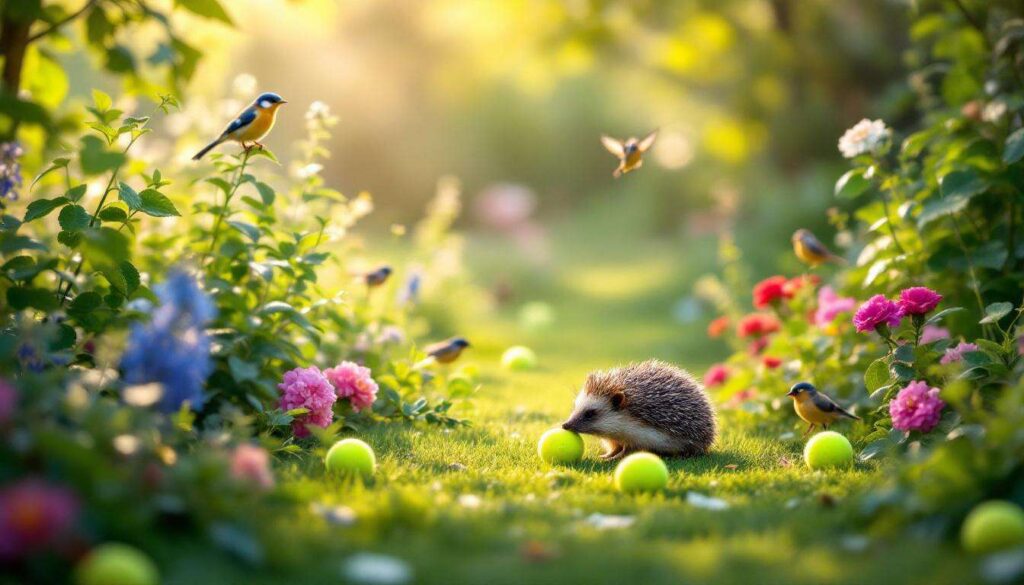
Tennis balls positioned on ground-level stakes prevent hedgehogs from accidentally impaling themselves whilst foraging. These animals have poor eyesight and rely primarily on their sense of smell, making visual hazards particularly dangerous. The soft, yielding surface of a tennis ball provides a safe contact point rather than a sharp, penetrating edge. This protection is especially vital during autumn when hedgehogs are actively feeding to prepare for hibernation.
Understanding how to implement these protective measures correctly ensures maximum effectiveness for all garden wildlife.
How to Use Tennis Balls Effectively
Installation Methods
Proper installation requires minimal tools and time. Using a sharp knife or drill, create a small cross-shaped incision in the tennis ball. Push the ball firmly onto the top of each cane or stake, ensuring a secure fit. The ball should sit snugly without sliding down. For thicker posts, slightly enlarge the incision to accommodate the diameter.
Strategic Placement Guidelines
Consider these placement recommendations:
- Cover all exposed canes and stakes throughout the garden
- Pay particular attention to vegetable patches and growing areas
- Include supports in flower beds where birds frequently land
- Replace tennis balls annually or when they show significant wear
- Use brightly coloured balls for maximum visibility
Maintenance and Seasonal Considerations
Tennis balls require regular inspection to maintain their protective qualities. Check them monthly for deterioration, particularly after harsh weather. Replace any that have become brittle, cracked, or discoloured. During winter months, ensure balls remain securely attached as strong winds can dislodge them. Consider applying a small amount of waterproof adhesive for additional security in exposed locations.
These practical applications contribute to broader environmental advantages that extend beyond individual animal protection.
Environmental Benefits
Promoting Biodiversity
Protecting wildlife through simple measures like tennis ball placement supports ecosystem health. Birds and hedgehogs serve vital ecological functions, including pest control, seed dispersal, and soil aeration. Maintaining healthy populations of these species creates a more balanced garden environment. This approach aligns with sustainable gardening principles that prioritise coexistence with nature rather than domination.
Reducing Waste Through Repurposing
Using old tennis balls gives these items a second life rather than sending them to landfill. Tennis balls are notoriously difficult to recycle due to their composite materials, making repurposing particularly valuable. This practice exemplifies circular economy principles by extending product lifecycles and reducing environmental impact.
Encouraging Wildlife-Friendly Practices
Implementing protective measures often inspires broader wildlife conservation efforts. Gardeners who begin with tennis balls frequently adopt additional practices such as creating hedgehog highways, installing bee hotels, or establishing wildflower meadows. This cascading effect amplifies the positive environmental impact far beyond the initial intervention.
Building upon these protective foundations, additional strategies can further enhance garden safety and appeal for wildlife.
Tips for a Welcoming Garden
Creating Safe Pathways
Establish clear routes for hedgehogs by cutting small gaps in fences and removing barriers between gardens. These corridors enable hedgehogs to roam freely, accessing food sources and potential mates. Maintain ground-level vegetation that provides cover whilst allowing movement. Avoid using gravel boards at fence bases, as these prevent passage.
Water Features with Escape Routes
Ensure all ponds and water features include gently sloping sides or strategically placed rocks and branches. These escape routes prevent drowning incidents amongst hedgehogs and other small mammals. Position chicken wire ramps in steep-sided ponds to provide additional safety measures.
Natural Food Sources and Shelter
Enhance your garden’s appeal with these elements:
- Log piles providing insect habitats and hedgehog shelter
- Native plant species attracting natural prey
- Compost heaps offering warm nesting sites
- Leaf litter left in corners for foraging opportunities
- Chemical-free gardening maintaining healthy ecosystems
Seasonal Considerations
Adapt your garden management to wildlife needs throughout the year. Delay autumn tidying until spring to preserve hibernation sites. Avoid disturbing potential nesting areas during breeding seasons. Provide supplementary food during harsh winters when natural sources become scarce. These thoughtful adjustments create year-round sanctuary spaces.
The practice of using tennis balls to protect garden wildlife represents a perfect intersection of simplicity and effectiveness. This accessible method demonstrates how small actions can generate significant positive outcomes for vulnerable species. By covering exposed canes and stakes, gardeners create safer environments for birds and hedgehogs whilst simultaneously reducing waste. The broader implications extend beyond individual protection, fostering biodiversity and encouraging sustainable gardening practices. Implementing these measures alongside complementary strategies such as creating wildlife corridors and maintaining natural habitats transforms gardens into genuine sanctuaries. Every tennis ball placed represents a commitment to coexisting harmoniously with nature, proving that meaningful conservation begins with straightforward, practical gestures in our own outdoor spaces.