


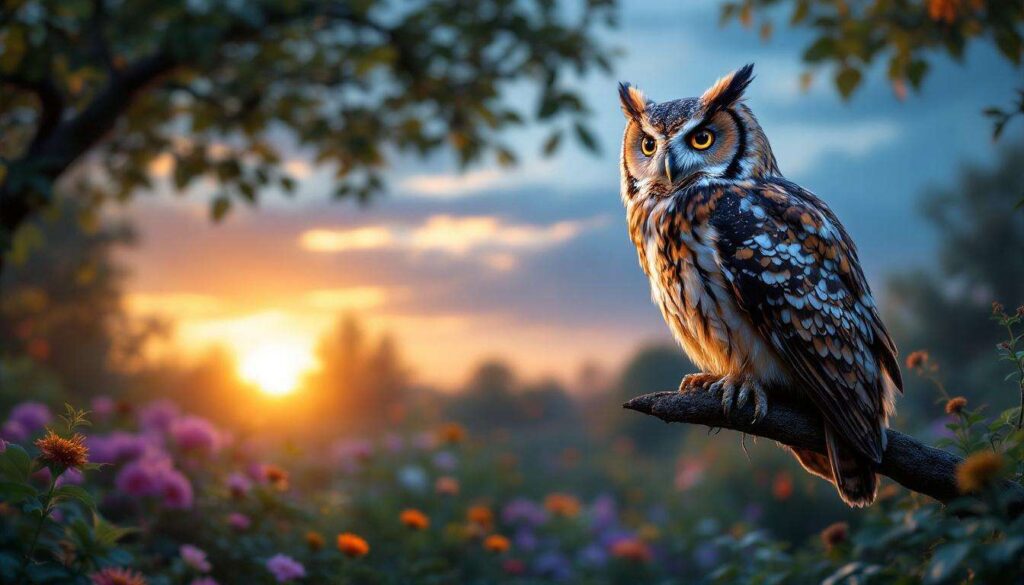
The presence of owls in residential gardens has become an increasingly sought-after phenomenon among wildlife enthusiasts and homeowners alike. These magnificent nocturnal raptors offer far more than their haunting calls and graceful flight patterns. By understanding their needs and creating an environment conducive to their survival, you can transform your outdoor space into a thriving ecosystem whilst benefiting from their natural pest control abilities.
Why attract owls to your yard ?
Natural pest control benefits
Owls provide exceptional pest management services that far surpass conventional methods. A single barn owl family can consume up to 3,000 rodents during a breeding season, making them invaluable allies in controlling populations of mice, voles, and rats that damage property and spread disease.
| Owl species | Primary prey | Annual consumption |
|---|---|---|
| Barn owl | Voles, mice | 1,000-2,000 rodents |
| Tawny owl | Small mammals, birds | 500-1,000 prey items |
| Little owl | Insects, earthworms | 800-1,200 invertebrates |
Ecological and educational advantages
Beyond pest control, attracting owls contributes to biodiversity conservation and offers unique educational opportunities. Children and adults alike can learn about nocturnal ecosystems, predator-prey relationships, and the importance of preserving natural habitats. The presence of these birds indicates a healthy, balanced environment with sufficient food sources and minimal disturbance.
- Reduced reliance on chemical rodenticides
- Enhanced garden biodiversity
- Opportunities for wildlife observation and photography
- Contribution to local conservation efforts
Understanding these benefits provides the foundation for creating an environment that supports these remarkable predators throughout the year.
Create a suitable habitat for nocturnal raptors
Preserve natural features and vegetation layers
Owls require diverse habitat structures that mimic their natural environments. Maintaining mature trees with cavities provides essential roosting sites, whilst dense shrubs offer cover for hunting and protection from weather. A layered vegetation approach creates multiple hunting zones at different heights, accommodating various owl species with distinct preferences.
- Retain dead or dying trees when safe to do so
- Allow fallen logs and branches to remain as ground cover
- Plant native hedgerows for shelter and prey habitat
- Create open grassland areas for hunting
Provide water sources and perching opportunities
Although owls obtain most moisture from their prey, accessible water sources support the broader ecosystem that sustains them. Strategic perching posts positioned throughout your garden enable owls to survey hunting grounds effectively. Install sturdy poles or preserve dead tree snags at heights of 3-5 metres in open areas adjacent to cover.
These habitat modifications establish the physical framework owls need, but their success depends equally on ensuring an abundant food supply.
Choose the right plants to attract prey
Native grasses and wildflower meadows
The foundation of an owl-friendly garden lies in supporting healthy prey populations. Native grasses such as tufted hair-grass, red fescue, and cock’s-foot provide seeds and cover for small mammals and invertebrates. Wildflower meadows containing species like oxeye daisy, field scabious, and bird’s-foot trefoil attract insects that form the base of the food chain.
Berry-producing shrubs and seed-bearing plants
Incorporating plants that sustain prey species throughout seasons ensures year-round food availability for owls. Berry-producing shrubs attract small birds and mammals, whilst seed-heads left standing through winter provide essential nutrition during scarce months.
- Hawthorn and blackthorn for berries and dense cover
- Teasel and sunflowers for seed-eating birds
- Native fruit trees supporting diverse invertebrates
- Bramble patches offering shelter and food sources
This botanical diversity creates a thriving ecosystem, but owls also require dedicated nesting facilities to establish permanent residence.
Install suitable nesting boxes for owls
Selecting appropriate box designs
Different owl species require specific nesting box dimensions and entrance configurations. Barn owls prefer large, enclosed boxes with interior dimensions of approximately 38cm x 38cm x 60cm, whilst tawny owls favour open-fronted designs or natural cavities. Position boxes at heights of 3-5 metres on mature trees or buildings, ensuring stability and weather protection.
| Owl species | Box type | Entrance diameter | Optimal height |
|---|---|---|---|
| Barn owl | Enclosed | 12-15cm | 3-5m |
| Tawny owl | Open-fronted | 20cm opening | 4-6m |
| Little owl | Enclosed | 7-8cm | 2-4m |
Placement and maintenance considerations
Strategic placement significantly influences occupancy rates. Install boxes facing north or east to avoid excessive sun exposure, with clear flight paths and proximity to hunting grounds. Use untreated wood with drainage holes and avoid painting interiors. Annual cleaning between September and January removes old nesting material and parasites, preparing boxes for the next breeding season.
Whilst proper housing attracts owls, environmental conditions must also support their nocturnal lifestyle and sensitive behaviours.
Regulate lighting to avoid disturbing the birds
Understanding light pollution impacts
Artificial lighting represents a significant threat to owl populations by disrupting hunting patterns, disorienting prey, and interfering with breeding behaviours. Owls rely on exceptional low-light vision and acute hearing to locate prey; excessive illumination diminishes these advantages and can cause them to abandon otherwise suitable territories.
Implementing owl-friendly lighting strategies
Creating darkness zones within your garden preserves essential hunting habitat whilst maintaining necessary security lighting. Focus illumination downwards using shielded fixtures, employ motion sensors to minimise active periods, and choose warm-spectrum bulbs below 2,700 Kelvin that produce less disruptive wavelengths.
- Install timers limiting lighting to essential hours
- Position lights away from nesting boxes and hunting areas
- Use amber or red-spectrum bulbs near wildlife zones
- Create dark corridors connecting habitat features
These lighting modifications complete the physical environment, allowing you to appreciate these remarkable birds without compromising their welfare.
Enjoy and observe owls safely
Responsible observation practices
Observing owls requires patience and respect for their space and routines. Use binoculars or spotting scopes to maintain appropriate distances, typically 20-30 metres minimum. Avoid approaching nests during breeding season from March through August, as disturbance can cause abandonment. Never use playback calls or artificial lures, which cause unnecessary stress and energy expenditure.
Recording and contributing to conservation
Documenting owl presence through photographs and observations contributes valuable data to conservation organisations. Submit sightings to local wildlife trusts and national recording schemes, noting species, behaviour, and habitat details. This citizen science informs conservation strategies and helps track population trends across regions.
- Photograph from a distance using appropriate equipment
- Record vocalisations without disturbing birds
- Share observations with local ornithological societies
- Participate in national owl surveys and monitoring programmes
Transforming your garden into an owl sanctuary requires thoughtful planning and ongoing commitment to wildlife-friendly practices. By providing suitable habitat, abundant prey, appropriate nesting facilities, and minimising disturbance through careful lighting management, you create conditions where these magnificent raptors can thrive. The rewards extend beyond effective pest control to encompass the profound satisfaction of supporting biodiversity and experiencing the privilege of sharing your space with one of nature’s most captivating predators. Your efforts contribute to broader conservation initiatives whilst enriching your connection to the natural world that exists just beyond your doorstep.