

Keeping indoor plants lush and vibrant requires more than just watering and sunlight. Strategic pruning plays a crucial role in maintaining healthy, full foliage whilst preventing leggy, sparse growth. Many plant enthusiasts overlook this essential practice, yet understanding proper pruning techniques can transform straggly specimens into thriving centrepieces. Whether cultivating pothos, ficus, or monstera, mastering the art of trimming encourages denser growth patterns and promotes overall plant vitality.
Why prune indoor plants ?
Promoting bushier growth patterns
Pruning stimulates dormant buds along stems, encouraging plants to produce multiple new shoots rather than extending single branches. When apical meristem tissue at growing tips is removed, plants redirect energy towards lateral growth, creating fuller, more compact forms. This process proves particularly effective for species like coleus, basil, and philodendron that naturally respond to pruning with vigorous branching.
Removing unhealthy or damaged foliage
Dead, diseased, or yellowing leaves drain resources from healthy growth whilst potentially harbouring pests or pathogens. Regular removal of compromised foliage allows plants to concentrate energy on productive tissue. Brown leaf tips, spotted foliage, or withered stems should be eliminated promptly to maintain plant health and aesthetic appeal.
Controlling size and shape
Indoor spaces impose natural limitations on plant dimensions. Pruning enables gardeners to maintain manageable proportions whilst shaping plants to complement interior design. Strategic cuts prevent plants from outgrowing their designated spaces or developing unbalanced, awkward silhouettes that detract from their ornamental value.
Understanding these fundamental benefits establishes the foundation for selecting appropriate equipment to execute pruning tasks effectively.
Necessary tools for pruning
Essential cutting implements
Proper tools ensure clean cuts that heal quickly whilst minimising stress to plants. The following equipment forms a comprehensive pruning toolkit:
- Bypass secateurs for stems up to 1.5 centimetres diameter
- Sharp scissors for delicate foliage and small stems
- Pruning shears with long handles for reaching interior growth
- Sterilising solution containing rubbing alcohol or diluted bleach
- Clean cloth for wiping blades between cuts
Maintenance and hygiene considerations
Tool cleanliness prevents disease transmission between plants. Sterilising blades before each pruning session and between individual plants protects against spreading bacterial or fungal infections. Sharp implements create precise cuts that heal rapidly, whilst dull blades crush tissue, leaving ragged wounds vulnerable to pathogens.
| Tool type | Recommended use | Sterilisation frequency |
|---|---|---|
| Bypass secateurs | Woody stems, thick branches | Before each plant |
| Scissors | Soft stems, leaves | Every 3-4 cuts |
| Pruning shears | Dense interior growth | Before each session |
With appropriate equipment assembled and maintained, attention turns to optimal timing and methodology for pruning activities.
When and how to perform pruning
Seasonal timing considerations
Spring represents the ideal pruning window when plants enter active growth phases. Increased daylight hours and warmer temperatures promote rapid healing and vigorous new growth following cuts. Avoid heavy pruning during dormant winter periods when plants lack energy reserves for recovery, though light maintenance pruning remains acceptable year-round.
Identifying proper cutting locations
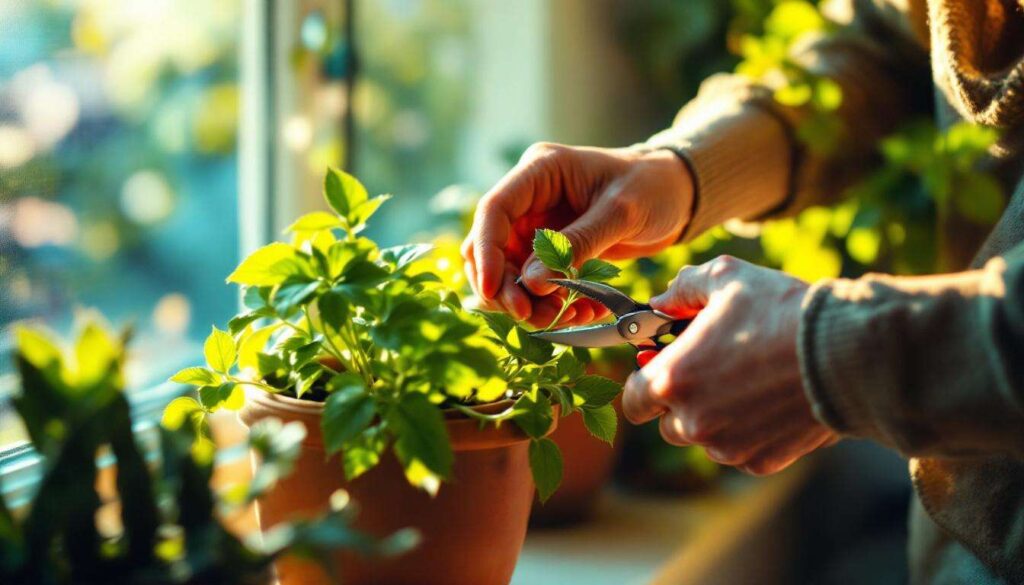
Cuts should be made approximately 5 millimetres above leaf nodes, the points where leaves attach to stems. This positioning preserves dormant buds whilst preventing unsightly stubs. Angle cuts at 45 degrees to shed moisture and reduce rot risk. For pinching soft growth, simply remove stem tips between thumb and forefinger.
Step-by-step pruning technique
Follow this systematic approach for effective pruning:
- Assess plant structure and identify leggy or overgrown areas
- Remove dead or damaged material first
- Trim back longest stems by one-third to one-half their length
- Make cuts just above outward-facing nodes for balanced growth
- Step back periodically to evaluate overall shape
- Remove no more than 25 per cent of total foliage in one session
Proper technique establishes the groundwork for implementing strategies that maximise post-pruning growth potential.
Tips for encouraging growth
Optimising environmental conditions
Pruned plants require adequate resources to produce new growth. Ensure bright, indirect light exposure appropriate to species requirements. Maintain consistent watering schedules, allowing soil to partially dry between waterings whilst avoiding complete dehydration that stresses recovering plants.
Nutritional support following pruning
Apply balanced liquid fertiliser at half-strength fortnightly during active growing seasons. Nitrogen promotes leafy growth, whilst phosphorus and potassium support root development and overall vigour. Avoid over-fertilising, which produces weak, leggy growth despite abundant foliage.
Strategic pinching for continuous bushiness
Regular tip pinching maintains compact forms without formal pruning sessions. Remove growing tips every few weeks on fast-growing species like tradescantia or Swedish ivy. This ongoing maintenance prevents plants from becoming sparse whilst encouraging perpetual branching.
Even with careful technique, certain errors commonly compromise pruning outcomes and plant health.
Managing common pruning mistakes
Avoiding excessive removal
Over-pruning shocks plants and depletes energy reserves needed for recovery. Removing more than one-quarter of foliage simultaneously stresses plants and may trigger dormancy or decline. When substantial reduction is necessary, spread pruning across multiple sessions separated by several weeks.
Preventing infection through proper hygiene
Contaminated tools transmit diseases between plants. Sterilise equipment thoroughly, particularly when working with specimens showing signs of illness. Dispose of diseased material in sealed bags rather than composting to prevent pathogen spread.
Recognising species-specific requirements
Different plants respond variably to pruning intensity. Research individual species before implementing aggressive cutting programmes:
- Succulents require minimal pruning and heal slowly
- Ferns rarely need pruning beyond frond removal
- Trailing plants like pothos tolerate frequent, heavy pruning
- Flowering specimens may require timing around bloom cycles
Learning from these common pitfalls reinforces the value of establishing consistent care routines.
The importance of regular maintenance
Establishing inspection routines
Weekly plant examinations identify issues before they escalate. Check for yellowing leaves, pest activity, or uneven growth patterns requiring corrective pruning. Early intervention prevents minor problems from developing into major structural issues or health crises.
Long-term benefits of consistent care
Regular pruning maintains desired plant proportions whilst promoting sustained vitality. Plants receiving ongoing attention develop stronger root systems, denser foliage, and greater resistance to environmental stresses. Consistent maintenance reduces the need for drastic corrective measures that compromise plant aesthetics.
Documenting plant responses
Recording pruning dates and subsequent growth patterns helps refine techniques for individual specimens. Note which plants respond vigorously to aggressive pruning versus those requiring gentler approaches. This knowledge base enables increasingly effective care tailored to specific collection needs.
Strategic pruning transforms indoor plants from sparse specimens into lush, full displays. By understanding the rationale behind pruning, assembling proper tools, timing interventions appropriately, and avoiding common mistakes, plant enthusiasts can cultivate thriving indoor gardens. Regular maintenance routines ensure plants remain healthy, attractive, and appropriately sized for their environments whilst maximising their ornamental impact throughout the year.