



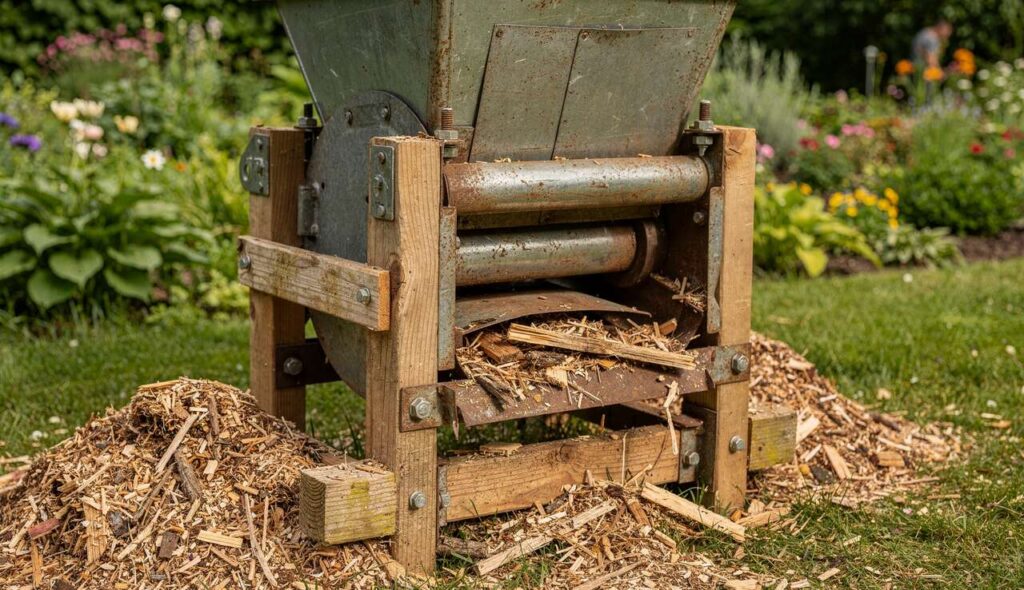
Garden waste accumulates quickly, especially during pruning seasons and autumn leaf falls. Commercial shredders often come with hefty price tags and questionable durability, leading many gardeners to explore alternative solutions. Building a garden shredder from readily available materials offers a practical answer to this common challenge, combining functionality with cost-effectiveness. This approach allows gardeners to create equipment tailored to their specific needs whilst reducing dependency on expensive commercial machinery. The satisfaction of constructing a tool that transforms garden waste into valuable mulch or compost material adds another dimension to the gardening experience.
Why build your own garden shredder ?
Financial advantages over commercial models
Commercial garden shredders typically range from £150 to over £500, depending on capacity and features. Building your own shredder can reduce costs by up to 70%, as many components can be sourced from recycled materials or purchased inexpensively from hardware suppliers. The initial investment in construction materials often proves significantly lower than purchasing even a basic commercial model, whilst the resulting machine can match or exceed the performance of mid-range commercial alternatives.
Customisation to suit specific garden requirements
A homemade shredder offers complete control over design specifications. Gardeners can adjust the following elements according to their needs:
- Hopper size to accommodate typical branch diameters
- Motor power based on the volume of material to process
- Height and mobility features for comfortable operation
- Collection system tailored to available storage space
Environmental considerations and waste reduction
Constructing a shredder from repurposed materials contributes to circular economy principles. Old lawnmower engines, discarded metal frames, and surplus timber can find new purpose in a functional garden tool. This approach diverts materials from landfill whilst creating equipment that helps transform garden waste into valuable resources. The resulting mulch reduces the need for purchased soil amendments and eliminates trips to waste disposal facilities.
Understanding these compelling reasons provides the foundation for embarking on this rewarding project, which begins with gathering the appropriate materials and tools.
Materials and tools necessary for a homemade shredder
Essential components for construction
The core materials required include a robust metal frame, typically constructed from angle iron or square steel tubing. A suitable motor forms the heart of the system, with petrol lawnmower engines or electric motors rated between 2.5 to 5 horsepower proving most effective. The cutting mechanism requires either circular saw blades, chipper blades, or purpose-made shredding discs, depending on the chosen design approach.
| Component | Specification | Approximate cost |
|---|---|---|
| Motor/engine | 3-5 HP petrol or 2000W electric | £40-£80 (second-hand) |
| Metal framework | 25mm square tubing, 3-4 metres | £30-£50 |
| Cutting blades | Circular saw blades or chipper blades | £15-£35 |
| Bearings and shaft | 20-25mm diameter steel shaft | £20-£30 |
| Belts and pulleys | V-belt system with adjustable tension | £15-£25 |
Required tools for assembly
Successful construction demands access to welding equipment or strong bolting systems for frame assembly. An angle grinder proves essential for cutting and shaping metal components, whilst a drill with metal bits enables precise hole placement. Additional tools include spanners, measuring tape, safety equipment, and marking implements for accurate component positioning.
Optional enhancements for improved functionality
Consider incorporating wheels for mobility, a collection bag or box system, and a protective guard around moving parts. These additions enhance usability and safety without significantly increasing construction complexity or cost.
With materials assembled and tools prepared, the actual construction process can commence following a systematic approach.
Steps to construct a durable garden shredder
Building the frame and mounting system
Begin by constructing a stable rectangular frame using square steel tubing, with dimensions approximately 60cm wide by 80cm tall. The base should measure roughly 50cm by 60cm to ensure stability during operation. Weld or bolt corner joints securely, incorporating cross-bracing to prevent flexing under operational stress. Mount the motor securely to the lower section of the frame, ensuring adequate ventilation around the engine housing.
Installing the cutting mechanism
The cutting assembly requires precise alignment for effective operation. Mount the main shaft horizontally using pillow block bearings attached to the frame uprights. Fix the cutting blades to the shaft, ensuring balanced distribution to minimise vibration. Position the blades to create a scissor-like cutting action against a fixed anvil plate, which should be adjustable to maintain optimal cutting gap as blades wear.
Creating the hopper and discharge system
Fabricate a funnel-shaped hopper from sheet metal or heavy-duty plywood, angling the sides at approximately 45 degrees to guide material towards the cutting mechanism. The hopper opening should accommodate typical branch sizes whilst preventing access to moving parts. Install a discharge chute beneath the cutting assembly, angled to direct shredded material into a collection container.
Power transmission setup
Connect the motor to the cutting shaft using a pulley and belt system. This configuration offers several advantages:
- Speed reduction for optimal cutting performance
- Overload protection through belt slippage
- Simplified maintenance and blade changes
- Reduced vibration transmission to the motor
Ensure proper belt tension and alignment to maximise efficiency and component longevity.
Once construction is complete, attention must turn to ensuring safe operation and maintaining performance over time.
Maintenance and safety tips
Essential safety precautions during operation
Never operate the shredder without appropriate protective equipment, including safety glasses, hearing protection, and sturdy gloves. Ensure the workspace remains clear of bystanders, particularly children and pets. Always disconnect power before performing any maintenance or clearing blockages. Install emergency stop mechanisms within easy reach and ensure all guards remain securely in place during operation.
Regular maintenance schedule
Implement a systematic maintenance routine to preserve performance and extend equipment life. After each use, remove accumulated debris from the cutting chamber and check for loose fasteners. Weekly maintenance should include:
- Blade inspection for damage or excessive wear
- Belt tension verification and adjustment
- Bearing lubrication according to manufacturer specifications
- Frame examination for cracks or structural weakness
Blade sharpening and replacement
Sharp blades significantly improve cutting efficiency and reduce motor strain. Sharpen blades every 10-15 hours of operation using a bench grinder or file, maintaining the original bevel angle. Replace blades when sharpening has reduced thickness by more than 30% or when chips and cracks appear. Always balance blades after sharpening to prevent vibration.
Proper maintenance not only ensures safety but also maximises the environmental and economic advantages this equipment provides.
Ecological and economic benefits of a DIY shredder
Reduction in garden waste disposal
A functional garden shredder dramatically decreases the volume of waste requiring disposal. Shredding reduces material volume by up to 80%, transforming bulky branches and stems into compact mulch. This eliminates or significantly reduces trips to waste disposal sites, saving fuel costs and reducing carbon emissions associated with waste transport.
Creation of valuable garden resources
Shredded material serves multiple purposes within the garden ecosystem. Fresh shreddings provide effective weed-suppressing mulch around plants and trees, whilst partially composted material improves soil structure and water retention. The following table illustrates the value created:
| Material type | Garden application | Equivalent shop value per cubic metre |
|---|---|---|
| Fresh wood chips | Path covering, mulch | £35-£50 |
| Mixed green/brown shreddings | Compost ingredient | £25-£40 |
| Fine shredded leaves | Soil conditioner | £30-£45 |
Long-term financial savings
Beyond the initial construction savings, ongoing operational costs remain minimal. Electricity or petrol expenses typically amount to less than £1 per hour of operation. The elimination of purchased mulch, compost amendments, and waste disposal fees generates substantial savings over time, with most homemade shredders achieving full cost recovery within the first two growing seasons.
These tangible benefits become even more apparent when examining real-world experiences from gardeners who have undertaken similar projects.
User experience: testimonials and possible improvements
Feedback from DIY shredder builders
Gardeners who have constructed their own shredders consistently report high satisfaction with performance and durability. Many emphasise the importance of using adequately powered motors, noting that underpowered units struggle with harder materials and experience frequent stalling. Users appreciate the ability to modify designs based on experience, with common adjustments including larger hoppers for increased capacity and improved collection systems for easier material handling.
Common challenges and solutions
Several recurring issues emerge from user experiences. Vibration problems typically result from unbalanced blades or inadequate frame rigidity, resolved through careful blade balancing and additional cross-bracing. Blockages occur most frequently when processing leafy material mixed with branches, addressed by feeding material in smaller batches and alternating between different waste types.
Recommended design enhancements
Based on practical experience, several modifications improve functionality:
- Adjustable cutting gap mechanisms for processing various material sizes
- Removable screens to control output particle size
- Hinged access panels for simplified blade maintenance
- Integrated collection bags with quick-release mounting
- Weather-resistant paint or coating to prevent corrosion
These refinements, whilst not essential for basic operation, significantly enhance user experience and long-term satisfaction with the equipment.
Building a garden shredder represents a practical solution to common garden waste challenges whilst offering significant financial savings compared to commercial alternatives. The construction process, though requiring basic metalworking skills and appropriate tools, remains accessible to most gardeners willing to invest time and effort. Proper maintenance ensures reliable operation over many years, whilst the resulting mulch and compost materials provide ongoing value to garden health and productivity. The combination of environmental benefits, cost-effectiveness, and the satisfaction of creating functional equipment makes this project particularly rewarding for practical-minded gardeners seeking sustainable solutions to waste management.