

Fresh basil transforms ordinary meals into culinary delights, yet supermarket plants often wilt within days of arriving home. The frustration of watching vibrant green leaves turn brown and droopy has led many home cooks to abandon their herb-growing ambitions. However, a simple yet ingenious method combining the double pot technique with consistent daily care can keep your basil thriving indoors for months. This approach addresses the two main challenges of indoor basil cultivation: maintaining optimal moisture levels and encouraging bushy, productive growth.
Why grow basil indoors ?
Year-round availability and convenience
Growing basil indoors eliminates the seasonal limitations that outdoor gardening imposes. Rather than relying on expensive shop-bought herbs that deteriorate rapidly, having a living plant on your windowsill provides instant access to fresh leaves whenever a recipe demands them. The convenience extends beyond mere availability: you can harvest exactly the amount needed, reducing waste and ensuring maximum flavour in your dishes.
Cost savings and superior quality
The financial benefits of indoor basil cultivation become apparent quickly. A single supermarket basil pot costs approximately the same as one small packet of cut herbs, yet with proper care, that living plant can provide harvests for several months. Additionally, home-grown basil offers superior flavour intensity compared to commercially packaged alternatives, which often lose essential oils during transport and storage.
Health and environmental advantages
Indoor herb gardening offers several compelling benefits:
- Complete control over growing conditions without pesticides or chemicals
- Reduced carbon footprint by eliminating transport-related emissions
- Improved indoor air quality through natural oxygen production
- Therapeutic benefits from tending to living plants
Understanding these advantages naturally leads to exploring the specific technique that makes long-term success achievable.
The double pot principle and its magic
Understanding the water reservoir system
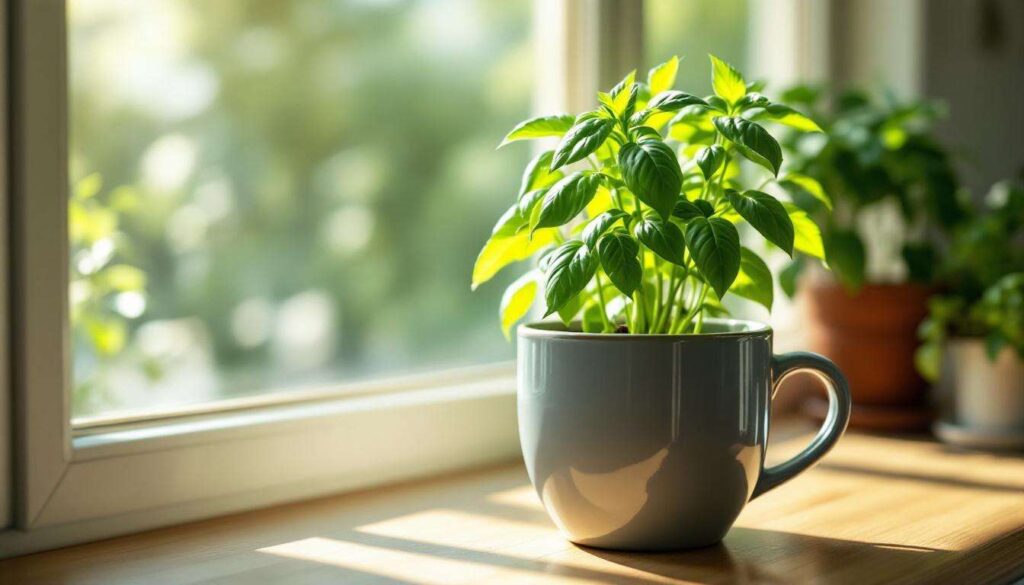
The double pot method creates a self-regulating moisture environment that addresses basil’s primary vulnerability: inconsistent watering. This technique involves placing your basil’s original pot inside a larger decorative container, with water maintained in the space between the two vessels. The outer pot acts as a reservoir, whilst the inner pot’s drainage holes allow roots to access moisture as needed through capillary action.
How the mechanism works
The genius of this system lies in its simplicity. As the soil dries, water gradually wicks upward through the drainage holes, providing consistent hydration without waterlogging. This mimics the natural moisture conditions basil evolved to thrive in, preventing the boom-and-bust cycle of overwatering followed by drought that kills most indoor herbs.
Setting up your double pot system
| Component | Specification | Purpose |
|---|---|---|
| Inner pot | Original nursery pot with drainage holes | Houses plant and soil |
| Outer pot | 2-3 cm larger diameter, no drainage | Water reservoir |
| Water level | 1-2 cm depth in outer pot | Consistent moisture supply |
Once your double pot system is established, selecting the right plant becomes the next crucial consideration.
How to choose your basil plant ?
Assessing plant health at purchase
Not all basil plants offer equal potential for long-term success. When selecting your plant, examine the stem thickness and leaf colour carefully. Robust stems indicate a well-established root system, whilst vibrant green leaves without yellowing or brown spots suggest good overall health. Avoid plants that appear overcrowded in their pots, as they may already be stressed from competition for nutrients.
Identifying problematic specimens
Several warning signs indicate a plant unlikely to thrive:
- Wilting leaves despite moist soil, suggesting root problems
- White powdery coating indicating fungal infection
- Leggy growth with long spaces between leaf sets
- Flowering stems, which signal the plant’s energy is diverted from leaf production
Variety considerations for indoor growing
Whilst sweet basil remains the most popular choice, compact varieties often perform better indoors. Greek basil and bush basil develop dense, bushy growth patterns that suit windowsill cultivation. These varieties naturally produce smaller leaves but compensate with abundant foliage and stronger resistance to indoor growing challenges.
Having selected a healthy specimen, proper watering technique becomes essential for maintaining its vitality.
The importance of watering in this process
Monitoring the reservoir level
The double pot system only functions effectively when the water reservoir remains adequately filled. Check the outer pot daily by lifting the inner pot slightly or inserting a finger into the gap between containers. Maintain approximately 1-2 cm of water depth, refilling before the reservoir completely empties. This prevents the soil from drying out entirely, which can stress the plant and trigger premature flowering.
Water quality considerations
Basil proves sensitive to water chemistry, particularly chlorine and fluoride present in many municipal supplies. Allow tap water to stand overnight before adding it to your reservoir, enabling volatile chemicals to dissipate. Room-temperature water prevents shock to the root system, which cold water can cause, potentially slowing growth and reducing leaf production.
Avoiding common watering mistakes
| Mistake | Consequence | Solution |
|---|---|---|
| Overfilling reservoir | Root rot and fungal issues | Maintain 1-2 cm maximum depth |
| Allowing complete dryness | Stress and leaf drop | Check reservoir daily |
| Watering foliage | Fungal disease and sunburn | Water reservoir only |
Whilst proper watering sustains the plant, daily pinching actively promotes its productivity and longevity.
The daily pinching gesture: benefits and techniques
Why pinching matters
The daily pinch represents the single most important maintenance task for indoor basil cultivation. This simple action prevents flowering, which would otherwise signal the plant to cease leaf production and focus energy on seed development. By removing growing tips, you trigger lateral branching, creating a bushier plant with multiple harvest points rather than a single tall, spindly stem.
Proper pinching technique
Effective pinching requires precision and consistency. Identify the newest growth at the tip of each stem, where you’ll find small leaves emerging between larger established ones. Using your thumb and forefinger, pinch just above a set of larger leaves, removing the growing tip and the tiny leaves above it. This encourages the plant to develop two new stems from the leaf nodes below your pinch point, effectively doubling potential harvest sites.
Timing and frequency
Daily pinching need not involve every stem. Focus on:
- The tallest stems showing most vigorous upward growth
- Any stems developing flower buds, which appear as small pointed clusters
- Stems that have grown noticeably since the previous day
- Central stems that receive the most light and grow fastest
What to do with pinched material
The removed tips, whilst small, contain concentrated flavour and shouldn’t be wasted. Add them directly to salads, scatter over finished dishes, or collect throughout the week for pesto production. This transforms a maintenance task into a continuous mini-harvest, providing immediate culinary benefits whilst promoting plant health.
Beyond watering and pinching, several additional factors influence your basil’s long-term success.
Tips for keeping your basil in top health
Light requirements and positioning
Basil demands substantial light for optimal growth, requiring six to eight hours of bright, indirect sunlight daily. Position your double pot system on a south-facing windowsill where possible, rotating the pot by a quarter turn every few days to ensure even growth. Insufficient light causes leggy, weak stems and pale leaves with diminished flavour. If natural light proves inadequate, particularly during winter months, consider supplementing with a grow light positioned 15-20 cm above the plant.
Temperature and humidity management
Basil thrives in warm conditions between 18-24°C. Avoid placing plants near drafty windows, air conditioning vents, or heating radiators, which create temperature fluctuations that stress the plant. The double pot system naturally increases humidity around the plant through evaporation from the reservoir, but additional misting during dry winter months can prevent leaf edges from browning.
Feeding for sustained production
Continuous leaf harvesting depletes soil nutrients faster than outdoor growing conditions would. Apply a balanced liquid fertiliser at half the recommended strength every two weeks during active growth periods. Organic options such as diluted seaweed extract provide trace minerals that enhance flavour whilst supporting robust growth.
Pest prevention strategies
Indoor basil occasionally attracts pests despite controlled conditions. Common issues include:
- Aphids clustering on tender new growth
- Spider mites causing stippled, yellowing leaves
- Fungus gnats breeding in overly moist soil
- Whiteflies congregating on leaf undersides
Address infestations immediately by washing leaves with diluted washing-up liquid solution, ensuring the reservoir doesn’t become a breeding ground by maintaining appropriate water levels, and isolating affected plants to prevent spread.
The combination of the double pot water reservoir system and consistent daily pinching creates ideal conditions for thriving indoor basil. This method addresses the plant’s fundamental needs: steady moisture without waterlogging and controlled growth that prioritises leaf production over flowering. By selecting healthy plants, monitoring water levels carefully, and removing growing tips regularly, even novice gardeners can maintain productive basil plants for months. The initial investment of a few minutes daily yields substantial returns in fresh herbs, cost savings, and the satisfaction of nurturing a living plant that continuously rewards your attention with flavourful harvests.