



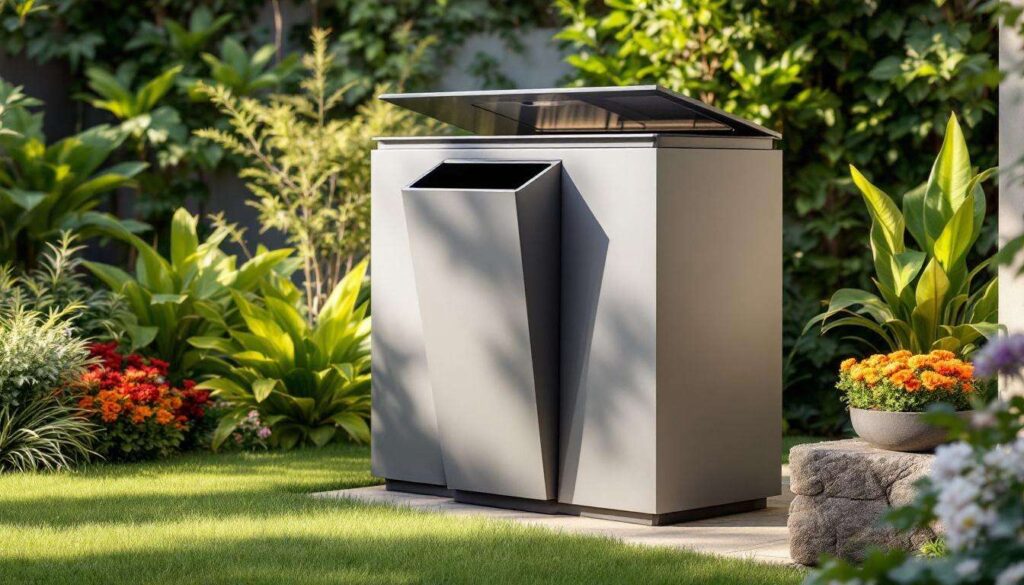
Composting has become an essential practice for environmentally conscious gardeners, yet the unsightly plastic bins that dominate most outdoor spaces often detract from carefully curated garden aesthetics. These bulky containers, whilst functional, rarely complement the visual harmony of a well-designed outdoor area. The solution lies not in abandoning composting altogether, but in reimagining the composter itself as an attractive garden feature that serves both practical and aesthetic purposes.
The problem with traditional compost bins
Standard compost bins present numerous challenges beyond their unappealing appearance. Most commercially available options are constructed from black or green plastic that weathers poorly, developing cracks and discolouration over time. These bins often become focal points for all the wrong reasons, drawing the eye away from beautiful plantings and carefully designed garden elements.
Visual and practical drawbacks
The typical compost bin suffers from several inherent issues that affect both form and function. Their industrial appearance clashes with natural garden settings, creating a jarring contrast that undermines the overall design. Additionally, these bins frequently feature inadequate ventilation systems, leading to odour problems and inefficient decomposition processes.
- Cheap plastic construction that degrades in sunlight
- Limited capacity requiring multiple unsightly units
- Poor integration with existing garden structures
- Difficulty in accessing compost at various stages of decomposition
- Tendency to attract pests due to inadequate sealing
The placement of these bins becomes a constant compromise between accessibility and concealment. Gardeners often relegate them to the furthest corners of their plots, making the composting process inconvenient and reducing the likelihood of maintaining the system properly. This fundamental design flaw has persisted despite growing interest in sustainable gardening practices.
Understanding these limitations naturally leads to exploring alternative approaches that prioritise both functionality and visual appeal.
A design and aesthetic approach
Creating a composter that enhances rather than detracts from your garden requires thoughtful consideration of materials, proportions and placement. The key lies in treating the composter as an intentional design element rather than a necessary evil to be hidden away.
Design principles for attractive composters
Successful compost bin design begins with selecting materials that complement existing garden architecture. Natural timber, particularly cedar or larch, weathers beautifully and integrates seamlessly into garden settings. The structure should feature clean lines and proportions that echo other garden elements such as raised beds, fencing or outbuildings.
| Design element | Aesthetic benefit | Functional advantage |
|---|---|---|
| Slatted timber construction | Natural appearance | Excellent aeration |
| Hinged access panels | Clean, finished look | Easy compost retrieval |
| Modular compartments | Organised appearance | Multiple decomposition stages |
| Planted roof option | Living garden feature | Temperature regulation |
Colour and texture considerations
The finish applied to your DIY composter dramatically affects its visual impact. Natural wood stains in muted tones allow the structure to recede gently into the landscape, whilst darker finishes can create a sophisticated focal point. Consider coordinating the colour scheme with existing garden furniture or architectural features for a cohesive look.
With design principles established, the next step involves gathering the specific components needed to bring this vision to life.
The necessary materials for a DIY composter
Assembling the right materials ensures both the longevity and attractiveness of your custom composter. Quality components may require a slightly higher initial investment but will deliver superior performance and appearance for many years.
Essential structural components
- Pressure-treated timber posts (100mm × 100mm) for corner supports
- Slatted timber panels or individual planks (25mm thickness minimum)
- Galvanised or stainless steel hinges for access doors
- Corrosion-resistant screws and fixings
- Wire mesh or hardware cloth for base and ventilation
- Exterior wood stain or preservative
- Concrete or gravel for foundation stability
Optional enhancement materials
Depending on your design ambitions, several additional materials can elevate both functionality and aesthetics. A removable roof panel protects compost from excessive rainfall whilst providing easy top access. Decorative trim pieces can soften edges and create visual interest, whilst interior dividers allow for a multi-bay system that facilitates different stages of decomposition.
Once all materials are assembled, the construction process follows a logical sequence of straightforward steps.
Simple steps to create your modern composter
Building an attractive composter requires careful planning but involves only basic carpentry skills. The process can typically be completed over a weekend, transforming raw materials into a functional garden asset.
Foundation and framework
Begin by selecting an appropriate location with good drainage and partial shade. Mark out the footprint and prepare a level base using either compacted gravel or concrete paving slabs. Install the four corner posts, ensuring they are perfectly vertical and securely anchored. The posts should extend approximately 900mm above ground level for a comfortable working height.
Wall construction and ventilation
Attach horizontal slats to the corner posts, leaving 10-15mm gaps between each board to facilitate airflow. This spacing is crucial for aerobic decomposition and prevents moisture accumulation. The front panel should incorporate a removable or hinged section extending from ground level to approximately two-thirds of the total height, allowing easy access to finished compost.
Finishing touches
Apply your chosen wood treatment to all surfaces, paying particular attention to end grain and joints where moisture penetration is most likely. Install wire mesh across the base to deter rodents whilst allowing beneficial organisms to enter. Add any decorative elements such as a planted roof or climbing plant supports to further integrate the structure into your garden.
With construction complete, attention turns to positioning and presenting this new feature within the broader garden context.
Incorporating the composter into your garden with style
Strategic placement and thoughtful landscaping can transform a composter from a utilitarian necessity into an attractive garden feature. The goal is to achieve convenient access without compromising visual appeal.
Location and accessibility
Position your composter within reasonable distance of both the kitchen and main growing areas to encourage regular use. Consider creating a dedicated utility zone that groups the composter with other functional elements such as tool storage or a potting bench. This approach creates purpose rather than appearing haphazard.
Softening with planting
Surrounding the composter with appropriate planting helps integrate it into the garden whilst maintaining accessibility. Low-growing herbs such as thyme or chamomile can edge pathways leading to the bin, releasing pleasant scents when brushed against. Climbing plants on adjacent structures create vertical interest without interfering with the composter’s operation.
- Evergreen shrubs provide year-round screening without complete concealment
- Ornamental grasses add movement and texture to the surrounding area
- Shade-tolerant perennials thrive in the microclimate created by the structure
- Edible plants benefit from proximity to nutrient-rich compost
These aesthetic considerations complement the substantial practical advantages that a well-designed composter delivers over time.
The long-term benefits of a sleek DIY composter
Investing time and effort into creating an attractive composter yields dividends that extend well beyond improved garden aesthetics. The benefits accumulate across environmental, financial and practical dimensions.
Environmental and economic advantages
A properly designed composter processes household and garden waste more efficiently than standard bins, producing higher quality compost in shorter timeframes. This superior output reduces or eliminates the need to purchase commercial soil amendments, delivering ongoing cost savings. The improved aeration and moisture control inherent in well-constructed timber bins create optimal conditions for beneficial microorganisms.
| Benefit category | Specific advantage |
|---|---|
| Waste reduction | Diverts 30-40% of household waste from landfill |
| Soil improvement | Produces nutrient-rich amendment worth £15-20 per bag equivalent |
| Carbon footprint | Eliminates transport emissions from commercial compost purchases |
| Property value | Enhances garden appeal for potential buyers |
Practical and social benefits
An attractive, accessible composter encourages consistent use by all household members, maximising waste diversion and compost production. The structure becomes a conversation piece that demonstrates commitment to sustainable living whilst proving that environmental responsibility need not compromise aesthetic standards. Children particularly engage with composting when the bin itself is appealing rather than off-putting.
Garden composting represents one of the most impactful individual environmental actions available to homeowners. By reimagining the composter as an intentional design element rather than an eyesore to be tolerated, gardeners can embrace sustainable practices without sacrificing the visual harmony of their outdoor spaces. The DIY approach outlined here combines practical functionality with aesthetic appeal, proving that environmental responsibility and beautiful garden design are entirely compatible objectives. A well-crafted timber composter serves reliably for decades, quietly transforming waste into valuable soil amendment whilst enhancing rather than detracting from the garden’s overall character.