


Gardeners and agricultural producers have long battled against insect pests that damage crops, reduce yields, and threaten food security. Traditional methods often rely on chemical pesticides, which raise concerns about environmental impact and human health. However, a surprisingly simple solution has emerged from decades of research: aluminium-foil mulch creates reflective surfaces that naturally confuse and deter harmful insects. This non-toxic approach harnesses the power of light reflection to protect plants, offering an environmentally sound alternative that has gained traction in both commercial farming and home gardening. The science behind this method reveals fascinating insights into insect behaviour and vision, demonstrating how a thin layer of reflective material can significantly reduce pest populations without introducing harmful chemicals into the ecosystem.
Understanding the role of aluminium mulch
What constitutes aluminium mulch
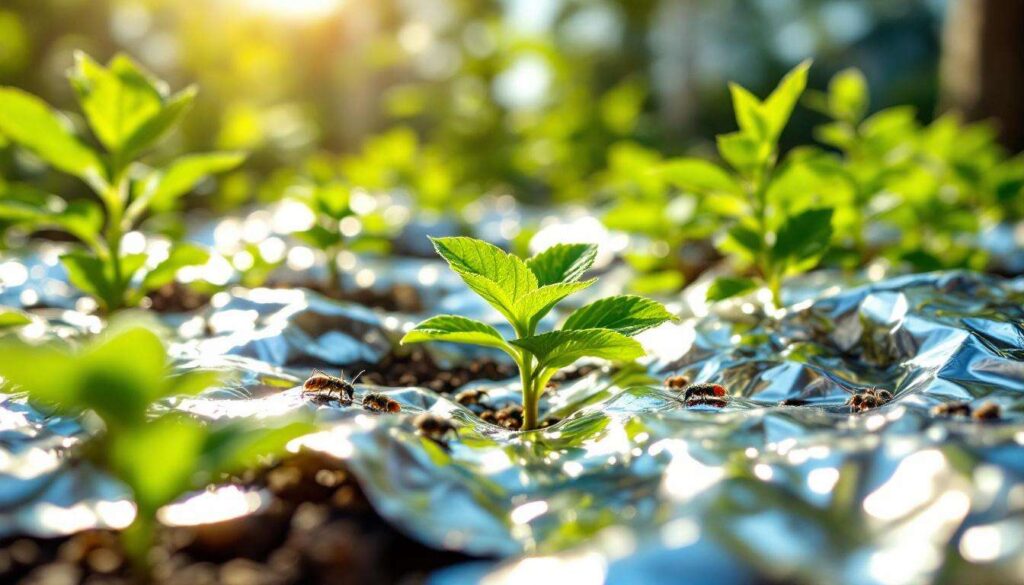
Aluminium mulch consists of thin reflective sheeting placed around the base of plants or across growing beds. This material typically comprises either actual aluminium foil or metalized plastic films that mimic aluminium’s reflective properties. The mulch is laid flat on the soil surface, creating a mirror-like barrier between the ground and the plant canopy. Unlike traditional organic mulches such as straw or wood chips, aluminium mulch serves a dual purpose: it reflects sunlight upward towards the undersides of leaves whilst simultaneously creating visual confusion for approaching insects.
Historical development and agricultural adoption
The use of reflective materials in agriculture dates back several decades, with researchers first documenting its effectiveness in the 1970s. Early experiments focused on controlling aphids in vegetable crops, particularly in greenhouse environments. As understanding of insect vision improved, farmers began implementing reflective mulches more widely. The practice has since expanded to include various crops:
- Tomatoes and peppers in commercial production
- Courgettes and cucumbers in market gardens
- Strawberries and other soft fruits
- Ornamental plants in nurseries
- Young transplants requiring protection during establishment
This growing adoption reflects both the method’s proven effectiveness and increasing demand for sustainable pest management strategies that reduce chemical inputs.
How reflective surfaces function as barriers
The mechanism behind aluminium mulch extends beyond simple reflection. The material creates an environment that fundamentally alters how insects perceive their surroundings. Sunlight bouncing off the reflective surface produces intense, scattered light patterns that overwhelm insect visual systems. This effect is particularly pronounced during peak sunlight hours when insects are most active. Additionally, the mulch moderates soil temperature, reduces weed competition, and conserves moisture, providing multiple benefits beyond pest control. The reflective properties remain effective throughout the growing season, requiring minimal maintenance once properly installed.
The effectiveness of this physical barrier naturally leads to questions about which specific pests are most affected and why certain insects prove particularly vulnerable to reflective surfaces.
Harmful insects and their sense of direction
Insect navigation systems
Many crop-damaging insects rely heavily on visual cues for navigation and host plant location. Their compound eyes detect light wavelengths, polarization patterns, and colour contrasts that guide them towards suitable feeding or egg-laying sites. Aphids, whiteflies, and thrips possess relatively simple visual systems optimized for detecting the contrast between sky and vegetation. These pests typically approach plants from below, searching for the characteristic green hues and shapes that signal nutritious foliage. Their navigation depends on consistent environmental patterns that have remained stable throughout their evolutionary development.
Target pests most affected by reflective mulch
Research has identified specific insect groups that demonstrate significant deterrence when confronted with aluminium mulch:
| Pest Type | Reduction Rate | Primary Crops Affected |
|---|---|---|
| Aphids | 60-90% | Vegetables, ornamentals |
| Whiteflies | 50-80% | Tomatoes, peppers, cucumbers |
| Thrips | 40-70% | Onions, flowers, fruits |
| Cucumber beetles | 30-60% | Cucurbits, beans |
Behavioural responses to environmental disruption
When insects encounter reflective mulch, their typical approach patterns become disrupted. Aphids, for instance, may circle repeatedly above the crop without landing, eventually departing to seek alternative hosts. Whiteflies exhibit similar confusion, with many individuals failing to locate suitable feeding sites despite being in close proximity to plants. This behavioural disruption reduces not only direct feeding damage but also the transmission of plant viruses that many of these insects carry. The cumulative effect creates a protective zone around treated plants that persists as long as the reflective surface remains intact and unobscured by debris.
Understanding these behavioural responses provides the foundation for exploring the optical and sensory mechanisms that make reflective surfaces so effective at disrupting pest activity.
Why shiny surfaces are disorienting for pests
Light reflection and insect vision
Insect compound eyes function differently from mammalian vision systems. Each eye contains numerous individual units called ommatidia, which detect light intensity and direction. Most pest insects have evolved to navigate using predictable light patterns: bright sky above, darker vegetation and soil below. Aluminium mulch disrupts this fundamental orientation by creating intense upward-reflected light that matches or exceeds the brightness of the sky. This creates visual ambiguity that insects cannot easily resolve, as their simple nervous systems lack the processing capacity to adapt quickly to such unusual conditions.
Ultraviolet reflection and spectral confusion
Many insects perceive ultraviolet wavelengths invisible to human eyes. Aluminium surfaces reflect UV light particularly effectively, creating what researchers describe as a “visual noise” that masks the normal signatures insects use to identify plants. The reflected UV radiation appears to insects as a confusing bright zone lacking the characteristic patterns they associate with suitable host plants. This spectral confusion extends beyond simple brightness, interfering with the insects’ ability to detect leaf shapes, plant chemistry indicators, and other visual markers that normally guide their landing decisions.
Motion detection interference
Reflective surfaces also interfere with insects’ motion detection capabilities. As insects fly over aluminium mulch, the constantly changing patterns of reflected light create false movement signals that their visual systems interpret as potential threats or unstable landing zones. This phenomenon particularly affects smaller insects with limited flight control, making them reluctant to approach treated areas. The combination of brightness, spectral confusion, and motion interference creates a multi-layered deterrent effect that proves remarkably effective across diverse pest species.
Beyond its immediate pest control benefits, aluminium mulch offers broader environmental advantages that align with sustainable agricultural practices and ecological stewardship.
Environmental benefits of aluminium mulch
Reduced chemical pesticide dependence
By providing effective pest control through physical means, aluminium mulch significantly reduces reliance on synthetic pesticides. This decrease benefits multiple environmental compartments:
- Soil ecosystems maintain beneficial microorganism populations
- Water sources avoid contamination from pesticide runoff
- Non-target insects, including pollinators, face reduced exposure
- Predatory insects and spiders retain their pest control functions
- Birds and other wildlife encounter fewer toxic residues
Farmers implementing reflective mulch often report using 50-70% fewer pesticide applications, with some operations eliminating certain insecticide treatments entirely during critical early growth periods.
Energy efficiency and carbon footprint
The production of aluminium mulch requires less energy than manufacturing equivalent quantities of chemical pesticides. Furthermore, the mulch provides secondary benefits that improve overall farm efficiency. Reflected light increases photosynthesis on leaf undersides, potentially boosting yields. The material also reduces irrigation needs by minimizing soil moisture evaporation, conserving water resources. These combined effects contribute to a lower carbon footprint for crop production, particularly when mulch materials are reused across multiple growing seasons.
Biodiversity preservation
Chemical pest control often creates unintended casualties among beneficial organisms. Aluminium mulch’s selective action preserves biodiversity by targeting only those insects whose visual navigation makes them susceptible to reflective surfaces. Beneficial insects such as ground beetles, parasitic wasps, and lacewings continue their pest control activities unimpeded. This preservation of natural enemy populations creates a more resilient agricultural ecosystem that requires less external intervention over time.
Translating these environmental benefits into practical results requires proper installation techniques and thoughtful implementation strategies tailored to specific growing conditions.
Application and implementation of reflective mulch
Installation techniques for optimal effectiveness
Successful aluminium mulch application begins with proper soil preparation. The ground should be level, free of large debris, and adequately moistened before laying the reflective material. The mulch is typically installed in strips between plant rows or as complete bed coverage with holes cut for individual plants. Key installation considerations include:
- Ensuring tight soil contact to prevent wind displacement
- Securing edges with soil, pins, or staples
- Maintaining cleanliness to preserve reflective properties
- Positioning plants to maximize reflected light exposure
- Allowing adequate spacing for plant growth and air circulation
The mulch proves most effective when installed at transplanting time or shortly after seedling emergence, providing protection during the vulnerable early growth stages when pest pressure often peaks.
Timing and seasonal considerations
Reflective mulch delivers maximum benefits during periods of high insect activity and intense sunlight. Spring and early summer installations typically provide the greatest pest reduction, as many damaging insects seek out young, tender plants during these periods. The effectiveness may diminish as plant canopies expand and shade the reflective surface, though by this stage, plants have often developed sufficient maturity to tolerate moderate pest pressure. Some growers remove mulch mid-season to facilitate cultivation or apply it selectively to high-value crops requiring extended protection.
Cost-benefit analysis for different scales
| Operation Scale | Initial Investment | Labour Requirements | Expected Return |
|---|---|---|---|
| Home garden | £20-50 | 2-4 hours | Reduced losses, lower chemical costs |
| Market garden | £200-600 | 1-2 days | Increased marketable yield, premium pricing |
| Commercial farm | £1,000-5,000 | 3-7 days | Significant pesticide savings, yield improvement |
The economic viability improves when mulch materials are reused across multiple seasons, with durable products lasting three to five years under careful management.
Real-world experiences from diverse agricultural settings provide valuable insights into the practical performance and limitations of aluminium mulch systems.
Case studies and feedback
Commercial vegetable production results
A tomato grower in southeastern England implemented aluminium mulch across five hectares of field-grown processing tomatoes. Over three seasons, the operation documented a 65% reduction in aphid populations and an 80% decrease in whitefly numbers compared to untreated control areas. Virus transmission rates dropped correspondingly, with tomato yellow leaf curl virus incidence falling from 12% to 3% of plants. The grower reported that pesticide expenditure decreased by £180 per hectare annually, whilst marketable yield increased by 8-12% due to improved plant health and reduced virus-related losses.
Small-scale and organic farming experiences
Organic vegetable producers have particularly embraced reflective mulch as it aligns with certification requirements prohibiting synthetic pesticides. A community-supported agriculture operation in Wales reported that aluminium mulch became their primary aphid management tool for courgettes and cucumbers. The farmers noted that whilst initial installation required additional labour, the subsequent reduction in pest monitoring and intervention time created net labour savings. Customer feedback indicated appreciation for produce grown with minimal inputs, supporting premium pricing that offset material costs.
Challenges and practical limitations
Not all implementations prove equally successful. Some growers report difficulties maintaining reflective properties as dust, soil splash, and organic debris accumulate on surfaces. Wind damage can compromise effectiveness in exposed locations, requiring additional securing measures. The method shows reduced efficacy for pests that approach from above or those with sophisticated visual systems less susceptible to light confusion. Additionally, the aesthetic appearance of reflective mulch may not suit all ornamental applications, and the material requires proper disposal or recycling at end-of-life to avoid environmental concerns.
These practical experiences demonstrate that whilst aluminium mulch offers substantial benefits for pest management, successful implementation requires careful planning, appropriate site selection, and realistic expectations about its capabilities and limitations.
Reflective aluminium mulch represents a valuable tool in the integrated pest management toolkit, offering effective control of numerous damaging insects through purely physical means. By exploiting the visual navigation systems that pests rely upon, this method provides protection without introducing chemicals into agricultural ecosystems. The approach delivers environmental benefits including reduced pesticide use, preserved biodiversity, and lower carbon footprints. Practical implementation requires attention to installation techniques, timing, and maintenance, with effectiveness varying based on pest species, crop type, and growing conditions. Real-world experiences confirm substantial pest reductions and economic benefits across diverse scales, from home gardens to commercial operations. As agriculture continues moving towards sustainable practices, aluminium mulch stands as a proven, accessible option that harnesses natural principles to protect crops whilst supporting ecological health.