
Across Brazilian backyards and gardens, one tree stands out for its remarkable versatility and year-round productivity. The jabuticaba, scientifically known as Plinia cauliflora, has earned its place as a cherished fixture in countless homes throughout Brazil. This distinctive tree offers far more than ornamental value: it produces fruit continuously, provides generous shade during sweltering summers, and its leaves serve as the foundation for traditional herbal infusions. Generations of Brazilian families have cultivated this botanical treasure, passing down knowledge about its care and celebrating its multiple contributions to daily life.
Introduction to the Brazilian backyard tree
The jabuticaba tree belongs to the Myrtaceae family and is native to the Atlantic Forest regions of Brazil. Its name derives from the Tupi language, combining jabuti (tortoise) and caba (place), reflecting indigenous observations of tortoises feeding on fallen fruit. This slow-growing evergreen has adapted perfectly to Brazil’s diverse climates, thriving in regions from Rio Grande do Sul to Minas Gerais.
Origins and natural habitat
The tree’s natural distribution spans several Brazilian states, with particular concentration in:
- São Paulo, where it grows in coastal forests
- Minas Gerais, particularly in mountainous regions
- Rio de Janeiro’s subtropical environments
- Paraná and Santa Catarina’s temperate zones
Wild specimens can reach heights of 10 to 15 metres, though cultivated varieties typically remain more compact. The tree’s unique cauliflorous fruiting pattern sets it apart from most fruit-bearing species, with blossoms and fruit emerging directly from the trunk and older branches rather than from new growth.
Recognition and popularity
Brazilian households have embraced the jabuticaba for its low-maintenance requirements and aesthetic appeal. The tree’s glossy, lance-shaped leaves create dense foliage that remains attractive throughout the year. Its distinctive appearance, combined with practical benefits, has made it a symbol of Brazilian horticultural tradition. Understanding these fundamental characteristics provides context for appreciating the tree’s remarkable qualities.
Characteristics of the Brazilian tree
The jabuticaba presents several distinctive features that contribute to its popularity. Its smooth, mottled bark peels away in patches, revealing lighter wood beneath and creating an attractive textured appearance. The tree’s compact crown and moderate size make it suitable for gardens of various dimensions.
Physical attributes
| Feature | Description |
|---|---|
| Height | 3 to 12 metres in cultivation |
| Leaf size | 5 to 10 centimetres long |
| Fruit diameter | 2 to 4 centimetres |
| Growth rate | Slow to moderate |
Fruiting patterns and productivity
The tree’s most remarkable characteristic is its continuous fruiting cycle. Unlike seasonal fruit trees, jabuticaba can produce multiple harvests throughout the year, with peak production typically occurring during warmer months. The dark purple, almost black fruit grows in clusters directly on the trunk and main branches, creating a striking visual display. Each fruit contains one to four seeds surrounded by sweet, translucent white pulp with a flavour reminiscent of muscadine grapes.
The tree begins flowering within days of favourable conditions, with small white blossoms covering the bark. Fruit matures approximately 30 to 45 days after pollination, allowing for several harvests annually. This extended productivity makes the jabuticaba exceptionally valuable for home cultivation. These productive characteristics naturally lead to exploring the tree’s diverse practical applications.
A tree with multiple benefits: fruit, shade and leaves as infusion
The jabuticaba’s versatility extends well beyond simple fruit production. Brazilian families have discovered numerous ways to utilise every part of this generous tree, maximising its contribution to household needs.
Culinary uses of the fruit
Fresh jabuticaba fruit offers immediate enjoyment, with its sweet-tart flavour and juicy texture. However, the fruit’s short shelf life has inspired creative preservation methods:
- Jellies and jams that capture the fruit’s distinctive taste
- Wines and liqueurs with complex flavour profiles
- Fresh juices and smoothies rich in antioxidants
- Frozen pulp for year-round availability
- Dessert toppings and ice cream flavourings
Shade provision
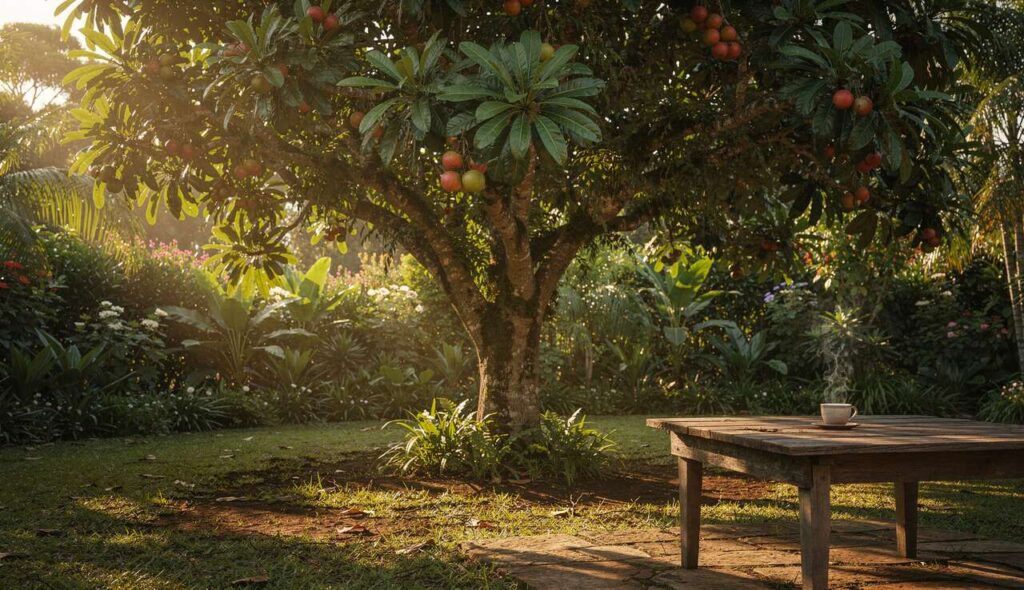
The tree’s dense evergreen canopy creates welcome shade in Brazilian gardens. Its rounded crown spreads 4 to 8 metres, providing substantial coverage for outdoor seating areas. The foliage remains attractive throughout the year, maintaining consistent shade levels regardless of season. Many families strategically plant jabuticaba trees near patios or windows to reduce heat gain during summer months.
Medicinal leaf infusions
Traditional Brazilian medicine has long recognised the therapeutic properties of jabuticaba leaves. The leaves contain tannins, flavonoids and other bioactive compounds that contribute to their medicinal value. Dried leaves are steeped in hot water to create infusions believed to offer several health benefits, including digestive support and anti-inflammatory effects. These traditional uses complement modern scientific interest in the tree’s phytochemical composition. Understanding these benefits naturally raises questions about successfully cultivating this valuable tree.
Cultivating and maintaining the Brazilian tree at home
Growing jabuticaba requires patience but demands relatively modest effort once established. The tree adapts to various conditions whilst maintaining specific preferences that ensure optimal health and productivity.
Planting requirements
Successful cultivation begins with proper site selection and soil preparation. The jabuticaba thrives in slightly acidic soil with pH levels between 5.5 and 6.5. Well-draining soil rich in organic matter provides ideal growing conditions. The tree tolerates partial shade but produces more abundantly in full sun exposure.
Planting considerations include:
- Spacing trees 4 to 6 metres apart for adequate air circulation
- Incorporating compost or aged manure into planting holes
- Ensuring consistent moisture during establishment
- Protecting young trees from strong winds
Ongoing care and maintenance
Mature jabuticaba trees require minimal intervention compared to many fruit species. Regular watering during dry periods supports continuous fruiting, whilst mulching helps retain soil moisture and suppress weeds. Annual applications of balanced organic fertiliser encourage healthy growth and abundant harvests.
Pruning needs remain light, focusing primarily on removing dead or crossing branches. The tree’s naturally attractive form requires little shaping. Pest and disease problems occur infrequently, making the jabuticaba an excellent choice for organic gardening approaches. These straightforward maintenance requirements contribute to the tree’s widespread adoption. Beyond individual gardens, the jabuticaba plays a broader role in environmental stewardship.
The ecological impact of the tree in Brazilian gardens
The jabuticaba contributes significantly to local ecosystems whilst enhancing garden biodiversity. Its presence supports various beneficial organisms and promotes environmental health at the household level.
Supporting wildlife
The tree’s flowers attract numerous pollinators including native bees and butterflies. These insects benefit from the nectar-rich blossoms whilst facilitating fruit production. Birds feed on ripe fruit, dispersing seeds and contributing to natural regeneration. The dense foliage provides nesting sites and shelter for small birds and beneficial insects.
Environmental services
Beyond wildlife support, the jabuticaba offers several ecological benefits:
- Carbon sequestration through steady growth and permanent wood formation
- Soil stabilisation via extensive root systems
- Microclimate moderation through shade and transpiration
- Reduced urban heat island effects in residential areas
The tree’s evergreen nature ensures year-round environmental contributions, maintaining these benefits continuously rather than seasonally. Its modest water requirements once established make it suitable for sustainable landscaping approaches. These ecological advantages complement the tree’s deep connections to Brazilian cultural identity.
The cultural and historical significance of the tree in Brazil
The jabuticaba occupies a cherished place in Brazilian cultural consciousness, representing connections to land, tradition and national identity. Its presence in literature, folklore and daily life reflects centuries of intimate association with Brazilian society.
Historical cultivation
Indigenous peoples utilised jabuticaba long before European colonisation, incorporating the fruit into their diets and traditional practices. Portuguese settlers adopted the tree enthusiastically, establishing it in gardens throughout colonial territories. By the 19th century, jabuticaba had become a standard feature of Brazilian quintas (country estates) and urban gardens alike.
Contemporary cultural relevance
Modern Brazil continues celebrating this distinctive tree through various expressions. Regional festivals honour jabuticaba harvests, featuring fruit-based delicacies and traditional preparations. The phrase “cada um no seu galho” (each to their own branch) references the tree whilst conveying the importance of respecting individual differences. Artisans craft decorative items inspired by the tree’s distinctive fruiting pattern, whilst chefs incorporate jabuticaba into contemporary Brazilian cuisine.
The tree symbolises Brazilian resilience and abundance, thriving with modest care whilst providing generously. Its slow growth reminds gardeners of the value of patience and long-term thinking. These cultural associations ensure the jabuticaba’s continued prominence in Brazilian gardens and hearts.
The jabuticaba exemplifies how a single tree species can enrich multiple aspects of human life. Its year-round fruit production, generous shade provision and medicinal leaf properties address practical needs whilst its ecological contributions support environmental health. The tree’s cultural significance deepens its value, connecting contemporary Brazilians to historical traditions and shared national identity. For those willing to exercise patience during its establishment phase, the jabuticaba rewards with decades of reliable productivity and beauty, embodying the enduring relationship between Brazilians and their natural heritage.