

Indoor herb gardening has gained remarkable popularity amongst home cooks and wellness enthusiasts seeking fresh flavours and natural remedies at their fingertips. Yet despite the apparent simplicity of cultivating basil, thyme, or rosemary on a kitchen windowsill, many gardeners struggle with wilting leaves, stunted growth, and premature plant death. The culprit often lies not in the quality of soil or sunlight, but in a fundamental misunderstanding of proper watering techniques. Superficial sprinkling might seem adequate, yet it fails to deliver the moisture depth that herb roots require for robust development. Deep watering represents a transformative approach that encourages roots to grow downwards, establishing stronger plants capable of withstanding environmental stresses whilst producing abundant, flavourful foliage.
Understanding the importance of deep watering
The science behind root development
Deep watering fundamentally alters how herb roots develop and function within their containers. When water penetrates thoroughly through the soil profile, roots are encouraged to extend downwards in search of moisture, creating extensive root systems that anchor plants securely and increase their capacity to absorb nutrients. Shallow watering, by contrast, trains roots to remain near the surface where they become vulnerable to rapid drying and temperature fluctuations. This superficial root development produces weaker plants with diminished resilience against stress.
Research in horticultural science demonstrates that plants with deeper root systems exhibit superior drought tolerance and nutrient uptake efficiency. For containerised herbs, this translates to more vigorous growth, enhanced flavour concentration in leaves, and improved resistance to common pests and diseases. The physiological benefits extend beyond mere survival: deeply rooted herbs produce higher quantities of essential oils, the aromatic compounds that make culinary herbs so valuable.
Moisture retention and soil health
Consistent deep watering maintains optimal soil moisture levels that support beneficial microbial activity. These microscopic organisms break down organic matter, releasing nutrients in forms accessible to plant roots. When soil experiences repeated cycles of complete drying and shallow wetting, microbial populations decline, reducing the soil’s biological fertility. Deep irrigation creates stable moisture gradients that sustain these essential ecosystems.
| Watering method | Root depth | Plant resilience | Flavour intensity |
|---|---|---|---|
| Shallow frequent watering | 2-4 cm | Low | Moderate |
| Deep infrequent watering | 8-15 cm | High | Strong |
Beyond microbial health, thorough watering prevents salt accumulation in the upper soil layers. Fertiliser residues and minerals from tap water can concentrate near the surface when watering remains shallow, creating toxic conditions that damage tender roots. Deep irrigation flushes these salts downward and eventually out through drainage holes, maintaining a healthier growing environment.
These foundational principles establish why watering technique matters as much as frequency, setting the stage for practical implementation strategies.
Key steps for effective irrigation
Preparing containers for optimal drainage
Successful deep watering begins with proper container preparation. Every pot must feature adequate drainage holes to prevent waterlogging, which suffocates roots and promotes fungal diseases. Placing a layer of gravel or broken pottery shards at the container bottom creates space for excess water to accumulate before draining, preventing soil from blocking holes.
- Select pots with multiple drainage holes rather than single central openings
- Use saucers beneath containers to catch runoff whilst protecting surfaces
- Elevate pots slightly using feet or small blocks to improve air circulation beneath
- Choose containers sized appropriately for mature plant dimensions
The thorough watering process
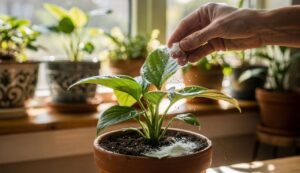
Effective deep watering follows a deliberate sequence that ensures complete soil saturation. Begin by checking soil moisture with a finger inserted to knuckle depth; proceed only if the soil feels dry at this level. Apply water slowly at the soil surface, allowing it to percolate gradually rather than rushing across the top and spilling over edges. Continue until water begins emerging from drainage holes, indicating that moisture has penetrated the entire root zone.
After this initial saturation, wait approximately ten minutes, then water again with a second application. This technique addresses the hydrophobic nature of very dry potting mix, which initially repels water. The first watering re-wets the soil surface, enabling the second application to penetrate more effectively. This double-watering method proves particularly valuable when containers have dried excessively between irrigations.
With containers properly prepared and watering technique established, attention turns to the tools that facilitate this process.
Tools and techniques for optimal watering
Selecting appropriate watering equipment
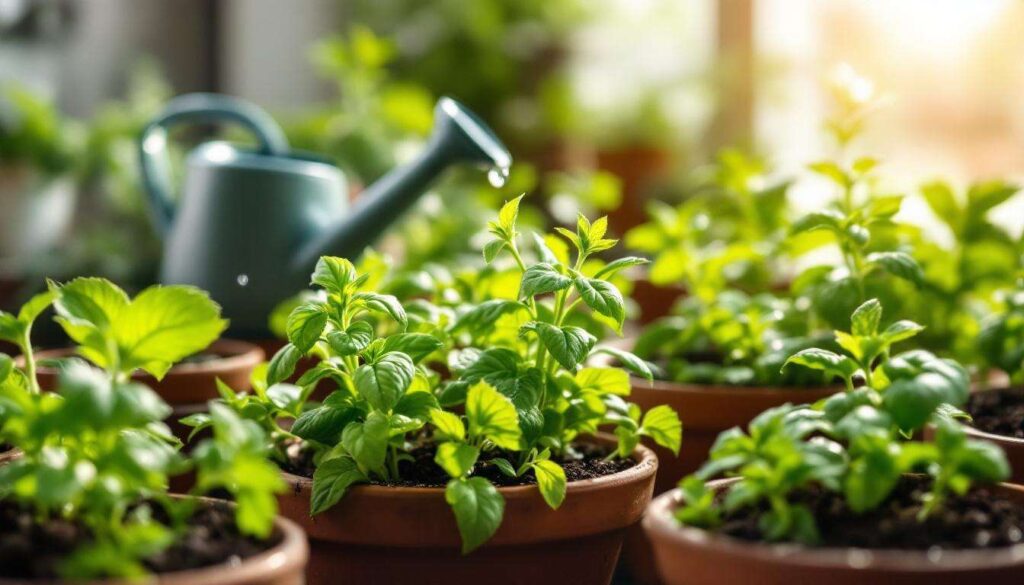
The right tools transform watering from a haphazard chore into a precise cultivation practice. Long-spouted watering cans offer superior control, directing water beneath foliage directly onto soil surfaces where it’s needed. This targeted delivery prevents leaf wetting, which can encourage fungal problems on herbs like basil and oregano. For larger collections, watering wands with adjustable flow rates provide comfortable reach whilst maintaining gentle water pressure that won’t disturb soil or damage delicate stems.
| Tool | Best application | Advantages |
|---|---|---|
| Long-spouted can | Small collections | Precision, control, no electricity required |
| Watering wand | Multiple containers | Reach, adjustable flow, reduced strain |
| Bottom-watering tray | Moisture-sensitive herbs | Even distribution, prevents overwatering |
| Moisture metre | All situations | Accurate readings, eliminates guesswork |
Advanced watering methods
Bottom watering represents an alternative technique particularly suited to herbs prone to crown rot, such as lavender and rosemary. By placing containers in trays filled with water, plants absorb moisture upwards through capillary action. This method ensures thorough saturation whilst keeping foliage and stems dry. Allow containers to sit in water for twenty to thirty minutes, then remove and drain excess.
Self-watering containers incorporate built-in reservoirs that supply consistent moisture through wicking systems. These prove invaluable for gardeners with irregular schedules or those cultivating particularly thirsty herbs like mint and chives. However, even self-watering systems require monitoring to prevent reservoir depletion or overflow.
Understanding when and how often to deploy these tools requires knowledge of timing patterns.
Frequency and ideal timing for watering
Establishing a responsive watering schedule
Contrary to rigid calendar-based approaches, effective watering responds to actual plant needs rather than arbitrary schedules. Environmental factors including temperature, humidity, light intensity, and air circulation dramatically influence how quickly soil dries. A flexible assessment-based routine proves far more successful than watering every set number of days.
Most indoor herbs thrive when soil dries slightly between waterings, typically requiring irrigation every four to seven days during active growth periods. Mediterranean herbs like thyme, sage, and oregano prefer drier conditions, tolerating longer intervals between waterings. Moisture-loving varieties including basil, parsley, and mint require more frequent attention, particularly during warm weather or in low-humidity environments.
Optimal timing within the day
Morning watering offers distinct advantages for indoor herb cultivation. Plants absorb moisture most efficiently during daylight hours when photosynthesis occurs, utilising water for metabolic processes and growth. Early application ensures foliage that becomes accidentally wet dries quickly, reducing fungal disease risks. Evening watering, whilst sometimes necessary, leaves plants sitting in moisture overnight when cooler temperatures slow evaporation, potentially encouraging root rot and mildew.
- Water between 6:00 and 10:00 for optimal absorption
- Avoid midday watering when rapid evaporation wastes water
- Reserve evening watering only for emergency situations
- Adjust timing seasonally as daylight patterns shift
Recognising when plants actually require water depends on accurate assessment techniques.
Monitoring plant water needs
Physical assessment methods
Developing sensitivity to plant signals enables precise watering decisions. The finger test remains the most accessible assessment tool: insert a finger into soil to the second knuckle, watering only when this depth feels dry. For deeper containers, wooden skewers or chopsticks inserted to the pot bottom provide information about moisture at root level; withdraw and examine for soil adhesion and dampness.
Visual and tactile plant indicators offer additional guidance. Slight leaf drooping often signals water stress, though this symptom can also indicate overwatering, making soil assessment essential for accurate diagnosis. Pot weight provides another reliable indicator; lift containers regularly to learn the difference between saturated and dry weight, enabling quick assessment without disturbing soil.
Technology-assisted monitoring
Moisture metres eliminate guesswork by providing numerical readings of soil water content. Insert the probe to mid-root depth and consult the gauge, which typically displays readings from dry to wet on a numbered scale. Most herbs perform optimally when readings fall in the moderately moist range, avoiding both extremes. For serious herb cultivators managing numerous containers, these devices justify their modest cost through improved plant health and reduced losses.
Smart watering systems with integrated sensors represent the premium option, automatically adjusting irrigation based on real-time moisture measurements. These prove particularly valuable for travellers or those cultivating herbs in commercial quantities, though their complexity and expense exceed most home gardeners’ requirements.
Even with sophisticated monitoring, certain common mistakes undermine watering efforts.
Errors to avoid when watering indoor herbs
Overwatering pitfalls
Excessive watering ranks as the leading cause of indoor herb failure, creating anaerobic soil conditions that suffocate roots and promote devastating fungal pathogens. Many gardeners mistakenly believe more water equals healthier plants, maintaining constantly saturated soil that prevents roots from accessing oxygen. Chronically wet conditions manifest through yellowing leaves, mushy stems, and foul-smelling soil teeming with harmful bacteria.
- Never water on a fixed schedule without checking soil moisture
- Ensure containers drain completely after each watering
- Avoid leaving pots sitting in water-filled saucers
- Reduce watering frequency during winter dormancy periods
Inadequate watering mistakes
Conversely, insufficient watering stresses plants and limits productivity. Frequent light sprinklings that wet only the surface create the illusion of adequate care whilst leaving deeper roots parched. This approach encourages shallow root development and produces weak, flavourless herbs vulnerable to environmental stresses. Allowing soil to become bone-dry between waterings damages fine root hairs, reducing plants’ ability to absorb water even when it becomes available.
Water quality considerations
Tap water quality significantly impacts herb health, yet many gardeners overlook this factor. Heavily chlorinated water can damage beneficial soil organisms, whilst high mineral content leads to salt accumulation. Allowing tap water to stand overnight permits chlorine to dissipate, whilst periodic flushing with distilled or rainwater prevents mineral buildup. Extremely hard water may require filtration or exclusive use of alternative sources for sensitive herbs.
Temperature matters as well: ice-cold water shocks roots and slows nutrient uptake. Room-temperature water ensures comfortable absorption and maintains stable soil temperatures that support microbial activity and root function.
Mastering deep-watering techniques transforms indoor herb cultivation from a frustrating endeavour into a rewarding practice yielding abundant, flavourful harvests. The principles outlined here establish that successful watering extends beyond simple moisture delivery, encompassing root development, soil health, precise timing, and attentive monitoring. By encouraging downward root growth through thorough irrigation, employing appropriate tools and techniques, responding to actual plant needs rather than arbitrary schedules, and avoiding common pitfalls, gardeners create optimal conditions for thriving herbs. These practices require initial attention and adjustment to individual growing conditions, yet they quickly become intuitive habits that support vigorous plants capable of providing fresh culinary and medicinal herbs throughout the seasons. The investment in proper watering methodology yields returns measured not merely in plant survival, but in the exceptional quality and productivity that distinguish truly successful indoor herb gardens.